






"Sub-Saharan Africa" region includes following countries:
 Cabo Verde
 Benin
Benin Gambia
 Ghana
Ghana Guinea
 Côte d'Ivoire
 Liberia
 Mali
Mali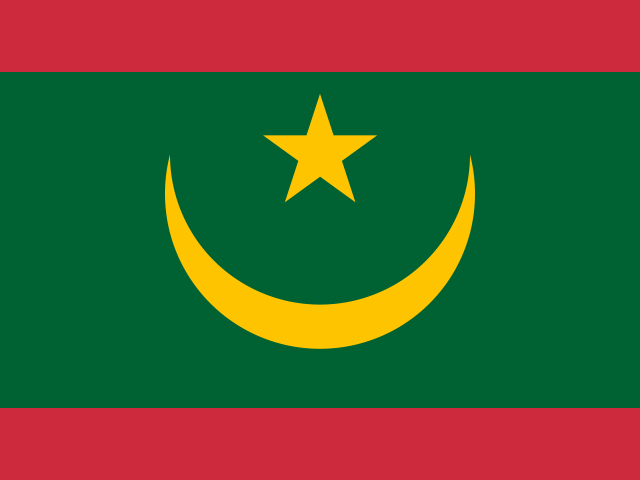 Mauritania
 Niger
Niger Nigeria
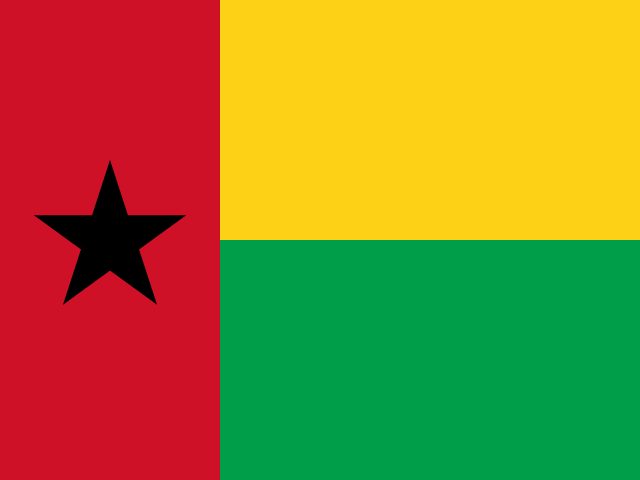 Guinea-Bissau
 Saint Helena, Ascension and Tristan da Cunha
 Senegal
 Sierra Leone
 Togo
Togo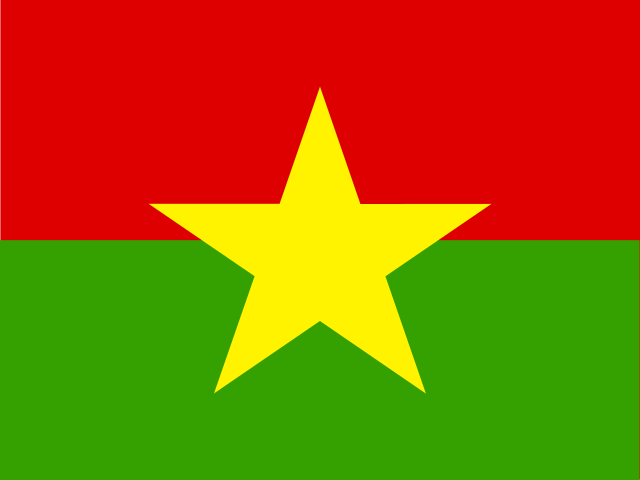 Burkina Faso
 British Indian Ocean Territory
 Burundi
 Comoros
 Mayotte
 Ethiopia
 Eritrea
 French Southern Territories
 Djibouti
 Kenya
Kenya Madagascar
 Malawi
 Mauritius
 Mozambique
 Reunion
 Rwanda
 Seychelles
 Somalia
 Zimbabwe
 South Sudan
 Uganda
 Tanzania
 Zambia
 Angola
 Cameroon
 Central African Republic
 Chad
Chad Congo
Congo Democratic Republic of the Congo
 Equatorial Guinea
 Gabon
Gabon Sao Tome and Principe
 Botswana
 Lesotho
 Namibia
 South Africa
 Eswatini
Earlier Report Observations
From 2018 to 2020, the Sub-Saharan African market for sunflower, safflower, or cottonseed oil experienced a significant expansion in local production capabilities. In Benin, the development of new peanut and sunflower oil plants, equipped with machinery adapted to process local cotton and soybean seeds, laid the foundation for increased domestic output. This was reinforced by the broader adoption of oil extraction machines suited to regional raw materials. Concurrently, in Côte d'Ivoire, the entry of new players into sunflower oil production, supported by small-scale machines and partnerships promoting rain-fed sunflower agriculture, boosted refining capacities for both local and imported crude oils. By 2020, the installation of small processing plants in Cameroon further contributed to rising production volumes.
The period from 2021 to 2022 saw the market influenced by international trade shifts and continued industrial investment. Increased exports of packaged sunflower oil from Turkey affected supply dynamics in West African markets like Senegal. Domestically, refining capacities were strengthened in Cameroon through new agro-industrial complexes employing advanced technologies such as neutralization and deodorization, enhancing the quality and volume of locally produced oil. These developments supported steady production growth even as total market volume fluctuated due to changing import and export levels.
In 2023, production moderated to 983 thousand tons while the market size reached 1 611 thousand tons. Early 2024 data indicates a continued adjustment in trade flows, with imports falling to 577 thousand tons and exports dropping to 44 thousand tons.
Table of content
- 1. Disclaimer
- 2. Terms of use of the report
- 3. Product codes in the statistical classifications used in the report
-
4. Key Market Indicators and Trends
-
4.1. Key Market Indicators
-
4.1.1. In kind
- 4.1.1.1. Production, 2018-2023
- 4.1.1.2. Imports, 2018-2024
- 4.1.1.3. Exports, 2018-2024
- 4.1.1.4. Market size, 2018-2023
-
4.1.1. In kind
- 4.2. Market Trends and Factors
-
4.1. Key Market Indicators
-
5. Production
-
5.1. Production in Sub-Saharan Africa
- 5.1.1. Annual dynamics of production in Sub-Saharan Africa in kind, 2018-2023, K t
-
5.2. Global production by Country, 2018-2023
- 5.2.1. Annual dynamics of production by macroregions in kind, 2018-2023, K t
- 5.2.2. Dynamics of production structure by macroregions in kind, 2018-2023
- 5.2.3. Annual dynamics of production by country in kind, 2018-2023, K t
- 5.2.4. Structure of production by countries in kind, 2018-2023
- 5.2.5. Dynamics of peoduction structure by countries in kind, 2018-2023
-
5.1. Production in Sub-Saharan Africa
-
6. Imports
-
6.1. Imports (Direct Data*)
- 6.1.1. Imports - Total information
-
6.1.2. Imports in kind, K t
- 6.1.2.1. Annual dynamics of product's imports to Cabo Verde in kind, 2018-2024, K t
- 6.1.2.2. Dynamics of product's imports in kind to Cabo Verde by countries, 2018-2024, K t
- 6.1.2.3. Structure of product's imports in kind by countries, 2018-2024
-
6.1.3. Imports in value, M $ US
- 6.1.3.1. Annual dynamics of product's imports to Cabo Verde in value, 2018-2024, M $ US
- 6.1.3.2. Dynamics of product's imports in value to Cabo Verde by countries, 2018-2024, M $ US
- 6.1.3.3. Structure of product's imports in value by countries, 2018-2024
-
6.1.4. Average price of product's imports, $ US/t
- 6.1.4.1. Annual dynamics of average price of product's imports to Cabo Verde, 2018-2024, $ US/t
- 6.1.4.2. Dynamics of average price of product's imports to Cabo Verde by countries, 2018-2024, $ US/t
-
6.2. Imports (Mirror Data)
- 6.2.1. Imports - Total information
-
6.2.2. Imports in kind, K t
- 6.2.2.1. Annual dynamics of product's imports to Cabo Verde in kind, 2018-2024, K t
- 6.2.2.2. Dynamics of product's imports in kind to Cabo Verde by countries, 2018-2024, K t
- 6.2.2.3. Structure of product's imports in kind by countries, 2018-2024
-
6.2.3. Imports in value, M $ US
- 6.2.3.1. Annual dynamics of product's imports to Cabo Verde in value, 2018-2024, M $ US
- 6.2.3.2. Dynamics of product's imports in value to Cabo Verde by countries, 2018-2024, M $ US
- 6.2.3.3. Structure of product's imports in value by countries, 2018-2024
-
6.2.4. Average price of product's imports, $ US/t
- 6.2.4.1. Annual dynamics of average price of product's imports to Cabo Verde, 2018-2024, $ US/t
- 6.2.4.2. Dynamics of average price of product's imports to Cabo Verde by countries, 2018-2024, $ US/t
-
6.1. Imports (Direct Data*)
-
7. Exports
-
7.1. Exports (Direct Data*)
- 7.1.1. Exports - Total information
-
7.1.2. Exports in kind, K t
- 7.1.2.1. Annual dynamics of product's exports from Cabo Verde in kind, 2018-2024, K t
- 7.1.2.2. Dynamics of product's exports in kind from Cabo Verde by countries, 2018-2024, K t
- 7.1.2.3. Structure of product's exports in kind by countries, 2018-2024
-
7.1.3. Exports in value, M $ US
- 7.1.3.1. Annual dynamics of product's exports from Cabo Verde in value, 2018-2024, M $ US
- 7.1.3.2. Dynamics of product's exports in value from Cabo Verde by countries, 2018-2024, M $ US
- 7.1.3.3. Structure of product's exports in value by countries, 2018-2024
-
7.1.4. Average price of product's exports, $ US/t
- 7.1.4.1. Annual dynamics of average price of product's exports from Cabo Verde, 2018-2024, $ US/t
- 7.1.4.2. Dynamics of average price of product's exports from Cabo Verde by countries, 2018-2024, $ US/t
-
7.2. Exports (Mirror Data)
- 7.2.1. Exports - Total information
-
7.2.2. Exports in kind, K t
- 7.2.2.1. Annual dynamics of product's exports from Cabo Verde in kind, 2018-2024, K t
- 7.2.2.2. Dynamics of product's exports in kind from Cabo Verde by countries, 2018-2024, K t
- 7.2.2.3. Structure of product's exports in kind by countries, 2018-2024
-
7.2.3. Exports in value, M $ US
- 7.2.3.1. Annual dynamics of product's exports from Cabo Verde in value, 2018-2024, M $ US
- 7.2.3.2. Dynamics of product's exports in value from Cabo Verde by countries, 2018-2024, M $ US
- 7.2.3.3. Structure of product's exports in value by countries, 2018-2024
-
7.2.4. Average price of product's exports, $ US/t
- 7.2.4.1. Annual dynamics of average price of product's exports from Cabo Verde, 2018-2024, $ US/t
- 7.2.4.2. Dynamics of average price of product's exports from Cabo Verde by countries, 2018-2024, $ US/t
-
7.1. Exports (Direct Data*)
-
8. Trade balance
-
8.1. Trade balance (Direct Data)
- 8.1.1. In kind, K t
- 8.1.2. In value, M $ US
-
8.2. Trade balance (Mirror Data)
- 8.2.1. In kind, K t
- 8.2.2. In value, M $ US
-
8.1. Trade balance (Direct Data)
-
9. Top buying and selling countries, 2018-2024
-
9.1. Direct Data
- 9.1.1. Import in Value by Countries-buyers
- 9.1.2. Export in Value by Countries-suppliers
-
9.2. Mirror Data
- 9.2.1. Import in Value by Countries-buyers
- 9.2.2. Export in Value by Countries-suppliers
-
9.1. Direct Data
Production sunflower, safflower or cottonseed oil and fractions in Sub-Saharan Africa
In kind, 2017-2020, K t
Top producers of sunflower, safflower or cottonseed oil and fractions, 2017-2020
World map of production of sunflower, safflower or cottonseed oil and fractions, 2017-2020
In 2019, Sub-Saharan Africa produced 860.2 thousand tons of sunflower, safflower, or cottonseed oil and fractions, marking the lowest output in recent years with a 3.0% decline. Production rebounded in 2020, reaching 952.4 thousand tons—a 10.7% increase from 2019. Over the 2017-2020 period, overall production grew by 7.8%, averaging a 2.5% compound annual growth rate.
Annual dynamics of production in Sub-Saharan Africa in kind, 2017-2020, K t
| Parameter | 2018 | 2019 | 2020 | CAGR | |
|---|---|---|---|---|---|
| 1 | Change from last year | 0.4% | (3.0%) | 10.7% | 2.5% |
Exports sunflower, safflower or cottonseed oil and fractions from Sub-Saharan Africa
Exports in kind, K t
Export volumes of sunflower, safflower, or cottonseed oil and fractions from Sub-Saharan Africa showed significant volatility from 2017 to 2020. In 2018, exports hit their lowest point at 58 thousand tons, representing a sharp 58.9% drop from the previous year. They then surged by 103.4% in 2019, only to fall again in 2020 to 87 thousand tons—a 26.6% decrease from 2019. The peak occurred in 2017, with volumes 2.4 times higher than the 2018 low.
Annual dynamics of product's exports from Sub-Saharan Africa in kind, 2017-2020, K t
| Parameter | 2018 | 2019 | 2020 | CAGR | |
|---|---|---|---|---|---|
| 1 | Change from last year | (58.9%) | 103.4% | (26.6%) | (15.1%) |
From 2017 to 2020, Switzerland, Saudi Arabia, and India were the top buyers of sunflower, safflower, or cottonseed oil and fractions from Sub-Saharan Africa. Switzerland accounted for 7.3% of exports in kind, Saudi Arabia for 1.0%, and India for 0.9%, together making up 9.1% of total export volumes.
Structure of product's exports in kind by countries, 2017-2020
World map of product's exports from Sub-Saharan Africa in kind, 2017-2020
Exports in value, M $ US
The value of sunflower, safflower, or cottonseed oil and fractions exports from Sub-Saharan Africa declined for the third year in a row in 2020, totaling 128.7 million US dollars—a 10.0% year-over-year drop. Between 2017 and 2020, exports fell by 19.7%, with an average annual decrease of 7.0%.
Annual dynamics of product's exports from Sub-Saharan Africa in value, 2017-2020, M $ US
| Parameter | 2018 | 2019 | 2020 | CAGR | |
|---|---|---|---|---|---|
| 1 | Change from last year | (9.6%) | (1.3%) | (10.0%) | (7.0%) |
Between 2017 and 2020, Switzerland and India were the leading destinations for Sub-Saharan Africa's exports of sunflower, safflower, or cottonseed oil and fractions in value terms. Together, they represented 17.8% of total export revenues.
Structure of product's exports in value by countries, 2017-2020
World map of product's exports from Sub-Saharan Africa in value, 2017-2020
Imports sunflower, safflower or cottonseed oil and fractions to Sub-Saharan Africa
Imports in kind, K t
Imports of sunflower, safflower, or cottonseed oil and fractions into Sub-Saharan Africa rose for the third consecutive year in 2020, reaching approximately 1 357 thousand tons—a dramatic 101.8% increase from 2019. Over the 2017-2020 period, imports grew by 254.7%, with a compound annual growth rate of 52.5%.
Annual dynamics of product's imports to Sub-Saharan Africa in kind, 2017-2020, K t
| Parameter | 2018 | 2019 | 2020 | CAGR | |
|---|---|---|---|---|---|
| 1 | Change from last year | 7.8% | 63.0% | 101.8% | 52.5% |
From 2017 to 2020, Turkey, Bulgaria, and Ukraine were the primary sources for Sub-Saharan Africa's imports of sunflower, safflower, or cottonseed oil and fractions in volume terms. Turkey supplied 42.0% of imports, Bulgaria 12.0%, and Ukraine 7.7%, collectively accounting for 61.8% of total import volumes.
Structure of product's imports in kind by countries, 2017-2020
World map of product's imports to Sub-Saharan Africa in kind, 2017-2020
Imports in value, M $ US
The value of sunflower, safflower, or cottonseed oil and fractions imports into Sub-Saharan Africa increased for the third straight year in 2020, totaling 985.7 million US dollars—a 63.6% rise from the previous year. Between 2017 and 2020, import values grew by 139.1%, averaging a 33.7% annual increase.
Annual dynamics of product's imports to Sub-Saharan Africa in value, 2017-2020, M $ US
| Parameter | 2018 | 2019 | 2020 | CAGR | |
|---|---|---|---|---|---|
| 1 | Change from last year | 6.2% | 37.6% | 63.6% | 33.7% |
In the 2017-2020 period, Turkey, Bulgaria, and Ukraine dominated the value structure of Sub-Saharan Africa's imports of sunflower, safflower, or cottonseed oil and fractions. Turkey contributed 38.2% of import value, Bulgaria 11.1%, and Ukraine 8.1%, together making up 57.4% of total import spending.
Structure of product's imports in value by countries, 2017-2020
World map of product's imports to Sub-Saharan Africa in value, 2017-2020
Related Reports





In-depth market research on this product
Global Sunflower Seeds Market 2021–2031: Size, Share, Trends and Forecast
Global market report: size, trends and forecast to 2031 · 184 pages
Global Cottonseed Oil Market 2021–2031: Size, Share, Trends and Forecast
Global market report: size, trends and forecast to 2031 · 186 pages
Why Choose Us?
Only Verified Data
No Hidden Costs or Separate Fees
Smarter Subscription Pricing
Contact Our Team
Submit your inquiry using the form below — our team will get back to you within 24 hours.