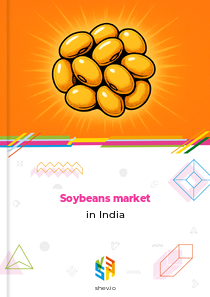







Earlier Report Observations
The soybean market volume in India began the period at 13.2 million tonnes in 2018, then contracted to 11.4 million tonnes the following year. It rebounded to 13.0 million tonnes in 2020.
In 2021, a peak in soybean prices driven by weather and demand shifts coincided with a market expansion to 13.6 million tonnes. The following year, global supply-demand dynamics pushed prices higher and supported a surge in volume to 15.4 million tonnes.
By 2023, increased global production led to price declines and reduced domestic output, pulling the market down to 13.8 million tonnes. During this phase, India's soybean imports rose substantially, and domestic prices fell below the Minimum Support Price, reflecting oversupply conditions.
Table of content
- 1. Disclaimer
- 2. Terms of use of the report
- 3. Product codes in the statistical classifications used in the report
-
4. Key Market Indicators and Trends
-
4.1. Key Market Indicators
-
4.1.1. In kind
- 4.1.1.1. Production, 2018-2023
- 4.1.1.2. Imports, 2018-2024
- 4.1.1.3. Exports, 2018-2024
- 4.1.1.4. Market size, 2018-2023
-
4.1.1. In kind
- 4.2. Market Trends and Factors
-
4.1. Key Market Indicators
-
5. Production
-
5.1. Production in India
- 5.1.1. Annual dynamics of production in India in kind, 2018-2023, K t
- 5.1.2. Annual dynamics of production in India in value, 2018-2023, $ US
-
5.2. Global production by Country, 2018-2023
- 5.2.1. Annual dynamics of production by macroregions in kind, 2018-2023, K t
- 5.2.2. Dynamics of production structure by macroregions in kind, 2018-2023
- 5.2.3. Annual dynamics of production by country in kind, 2018-2023, K t
- 5.2.4. Structure of production by countries in kind, 2018-2023
- 5.2.5. Dynamics of peoduction structure by countries in kind, 2018-2023
-
5.1. Production in India
-
6. Imports
-
6.1. Imports (Direct Data*)
- 6.1.1. Imports - Total information
-
6.1.2. Imports in kind, K t
- 6.1.2.1. Annual dynamics of product's imports to India in kind, 2018-2024, K t
- 6.1.2.2. Dynamics of product's imports in kind to India by countries, 2018-2024, K t
- 6.1.2.3. Structure of product's imports in kind by countries, 2018-2024
-
6.1.3. Imports in value, M $ US
- 6.1.3.1. Annual dynamics of product's imports to India in value, 2018-2024, M $ US
- 6.1.3.2. Dynamics of product's imports in value to India by countries, 2018-2024, M $ US
- 6.1.3.3. Structure of product's imports in value by countries, 2018-2024
-
6.1.4. Average price of product's imports, $ US/t
- 6.1.4.1. Annual dynamics of average price of product's imports to India, 2018-2024, $ US/t
- 6.1.4.2. Dynamics of average price of product's imports to India by countries, 2018-2024, $ US/t
-
6.2. Imports (Mirror Data)
- 6.2.1. Imports - Total information
-
6.2.2. Imports in kind, K t
- 6.2.2.1. Annual dynamics of product's imports to India in kind, 2018-2024, K t
- 6.2.2.2. Dynamics of product's imports in kind to India by countries, 2018-2024, K t
- 6.2.2.3. Structure of product's imports in kind by countries, 2018-2024
-
6.2.3. Imports in value, M $ US
- 6.2.3.1. Annual dynamics of product's imports to India in value, 2018-2024, M $ US
- 6.2.3.2. Dynamics of product's imports in value to India by countries, 2018-2024, M $ US
- 6.2.3.3. Structure of product's imports in value by countries, 2018-2024
-
6.2.4. Average price of product's imports, $ US/t
- 6.2.4.1. Annual dynamics of average price of product's imports to India, 2018-2024, $ US/t
- 6.2.4.2. Dynamics of average price of product's imports to India by countries, 2018-2024, $ US/t
-
6.1. Imports (Direct Data*)
-
7. Exports
-
7.1. Exports (Direct Data*)
- 7.1.1. Exports - Total information
-
7.1.2. Exports in kind, K t
- 7.1.2.1. Annual dynamics of product's exports from India in kind, 2018-2024, K t
- 7.1.2.2. Dynamics of product's exports in kind from India by countries, 2018-2024, K t
- 7.1.2.3. Structure of product's exports in kind by countries, 2018-2024
-
7.1.3. Exports in value, M $ US
- 7.1.3.1. Annual dynamics of product's exports from India in value, 2018-2024, M $ US
- 7.1.3.2. Dynamics of product's exports in value from India by countries, 2018-2024, M $ US
- 7.1.3.3. Structure of product's exports in value by countries, 2018-2024
-
7.1.4. Average price of product's exports, $ US/t
- 7.1.4.1. Annual dynamics of average price of product's exports from India, 2018-2024, $ US/t
- 7.1.4.2. Dynamics of average price of product's exports from India by countries, 2018-2024, $ US/t
-
7.2. Exports (Mirror Data)
- 7.2.1. Exports - Total information
-
7.2.2. Exports in kind, K t
- 7.2.2.1. Annual dynamics of product's exports from India in kind, 2018-2024, K t
- 7.2.2.2. Dynamics of product's exports in kind from India by countries, 2018-2024, K t
- 7.2.2.3. Structure of product's exports in kind by countries, 2018-2024
-
7.2.3. Exports in value, M $ US
- 7.2.3.1. Annual dynamics of product's exports from India in value, 2018-2024, M $ US
- 7.2.3.2. Dynamics of product's exports in value from India by countries, 2018-2024, M $ US
- 7.2.3.3. Structure of product's exports in value by countries, 2018-2024
-
7.2.4. Average price of product's exports, $ US/t
- 7.2.4.1. Annual dynamics of average price of product's exports from India, 2018-2024, $ US/t
- 7.2.4.2. Dynamics of average price of product's exports from India by countries, 2018-2024, $ US/t
-
7.1. Exports (Direct Data*)
-
8. Trade balance
-
8.1. Trade balance (Direct Data)
- 8.1.1. In kind, K t
- 8.1.2. In value, M $ US
-
8.2. Trade balance (Mirror Data)
- 8.2.1. In kind, K t
- 8.2.2. In value, M $ US
-
8.1. Trade balance (Direct Data)
-
9. Top buying and selling countries, 2018-2024
-
9.1. Direct Data
- 9.1.1. Import in Value by Countries-buyers
- 9.1.2. Export in Value by Countries-suppliers
-
9.2. Mirror Data
- 9.2.1. Import in Value by Countries-buyers
- 9.2.2. Export in Value by Countries-suppliers
-
9.1. Direct Data
Production soybeans in India
In kind, 2017-2020, K t
India ranked 5th globally in soybean production from 2017 to 2020.
Top producers of soybeans, 2017-2020
World map of production of soybeans, 2017-2020
In 2020, India produced 12 610 K t of soybeans, marking a robust 12.3% increase compared to the previous year. Between 2017 and 2020, production grew by 15.3%, which translates to an annualized rate of 4.9%. The highest production level was recorded in 2018 at 13 268 K t, with the largest annual increase of 21.4% that year. In contrast, 2019 saw the largest decline of 15.4%.
Annual dynamics of production in India in kind, 2017-2020, K t
| Parameter | 2018 | 2019 | 2020 | CAGR | |
|---|---|---|---|---|---|
| 1 | Change from last year | 21.4% | (15.4%) | 12.3% | 4.9% |
In value, 2017-2020, M $ US
In 2020, India's soybean output was valued at 7 726 M $ US, representing a 17.8% increase from the prior year. From 2017 to 2020, production value rose by 24.3%, equating to an annualized growth rate of 7.5%. The peak value occurred in 2018 at 7 757 M $ US, with the largest annual increase of 24.8% that year. The largest decline was in 2019, at 15.4%.
Annual dynamics of production in India in value, 2017-2020, M $ US
| Parameter | 2018 | 2019 | 2020 | CAGR | |
|---|---|---|---|---|---|
| 1 | Change from last year | 24.8% | (15.4%) | 17.8% | 7.5% |
Exports soybeans from India
Exports in kind, K t
India's soybean export volume declined for the third consecutive year in 2020, reaching 72.0 K t, which is a sharp 30.6% decrease from the previous year. Over the 2017-2020 period, exports fell by 75.4%, with a compound annual growth rate of -37.3%.
Annual dynamics of product's exports from India in kind, 2017-2020, K t
| Parameter | 2018 | 2019 | 2020 | CAGR | |
|---|---|---|---|---|---|
| 1 | Change from last year | (28.3%) | (50.6%) | (30.6%) | (37.3%) |
From 2017 to 2020, the United States and Canada were the leading destinations for India's soybean exports in kind, together accounting for 81.1% of total flows, while the remaining share was distributed among other countries.
Structure of product's exports in kind by countries, 2017-2020
World map of product's exports from India in kind, 2017-2020
Exports in value, M $ US
India's soybean export value declined for the third consecutive year in 2020, totaling 44.1 M $ US, a dramatic 27.2% drop compared to 2019. Over the 2017-2020 period, export value decreased by 73.5%, with a compound annual growth rate of -35.7%.
Annual dynamics of product's exports from India in value, 2017-2020, M $ US
| Parameter | 2018 | 2019 | 2020 | CAGR | |
|---|---|---|---|---|---|
| 1 | Change from last year | (26.2%) | (50.6%) | (27.2%) | (35.7%) |
From 2017 to 2020, India's soybean exports in value terms were primarily directed towards the United States and Canada, which together held an 81.1% share of total flows, with other destinations playing a secondary role.
Structure of product's exports in value by countries, 2017-2020
World map of product's exports from India in value, 2017-2020
Imports soybeans to India
Imports in kind, K t
India's soybean import volume increased for the third consecutive year in 2020, with imports reaching 1 000 K t, up by 120.2% from the previous year. Over the 2017-2020 period, imports surged by 549.8%, with a compound annual growth rate of 86.6%.
Annual dynamics of product's imports to India in kind, 2017-2020, K t
| Parameter | 2018 | 2019 | 2020 | CAGR | |
|---|---|---|---|---|---|
| 1 | Change from last year | 107.3% | 42.4% | 120.2% | 86.6% |
Throughout 2017 to 2020, Benin, Ethiopia, and Togo formed the core of India's soybean imports in kind, with shares of 33.8%, 22.4%, and 17.8%, respectively, together accounting for 74.1% of total flows.
Structure of product's imports in kind by countries, 2017-2020
World map of product's imports to India in kind, 2017-2020
Imports in value, M $ US
India's soybean import value increased for the third consecutive year in 2020, amounting to 292.1 M $ US, a significant 160.0% rise versus the previous year. Over the 2017-2020 period, import value grew by 663.9%, with a compound annual growth rate of 96.9%.
Annual dynamics of product's imports to India in value, 2017-2020, M $ US
| Parameter | 2018 | 2019 | 2020 | CAGR | |
|---|---|---|---|---|---|
| 1 | Change from last year | 105.6% | 42.9% | 160.0% | 96.9% |
Throughout 2017 to 2020, Benin, Ethiopia, and Togo were the main sources for India's soybean imports in value terms, with shares of 34.4%, 21.8%, and 18.1%, respectively, together making up 74.3% of total flows.
Structure of product's imports in value by countries, 2017-2020
World map of product's imports to India in value, 2017-2020
Related Reports

2026-03-28
2026-03-28
2026-03-28
Soybeans market in the Philippines
2026-03-28


2026-03-28
2026-03-28

Primary sugar crops market in India
2026-03-30
In-depth market research on this product
Global Soybean Meal Market 2021–2031: Size, Share, Trends and Forecast
Global market report: size, trends and forecast to 2031 · 196 pages
Why Choose Us?
Only Verified Data
No Hidden Costs or Separate Fees
Smarter Subscription Pricing
Contact Our Team
Submit your inquiry using the form below — our team will get back to you within 24 hours.