






"SADC" region includes following countries:
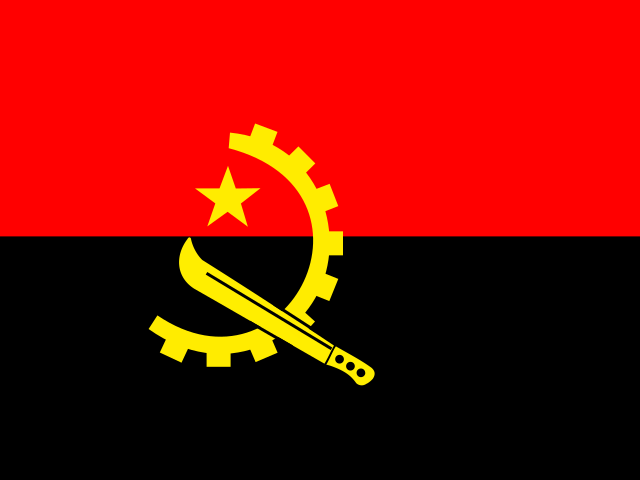 Angola
 Botswana
 Comoros
 Democratic Republic of the Congo
 Eswatini
 Lesotho
 Madagascar
 Malawi
 Mauritius
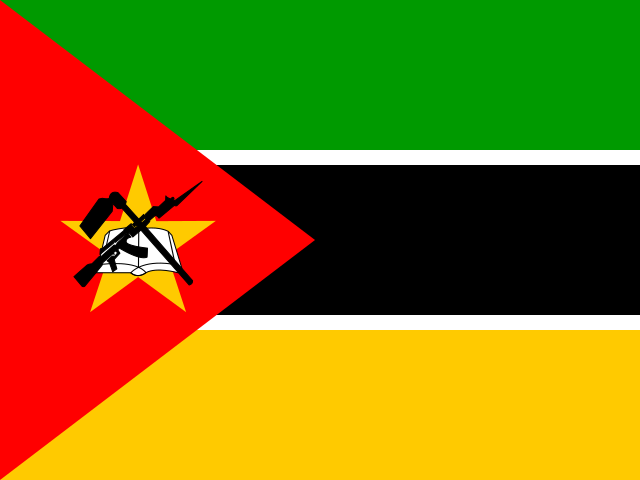 Mozambique
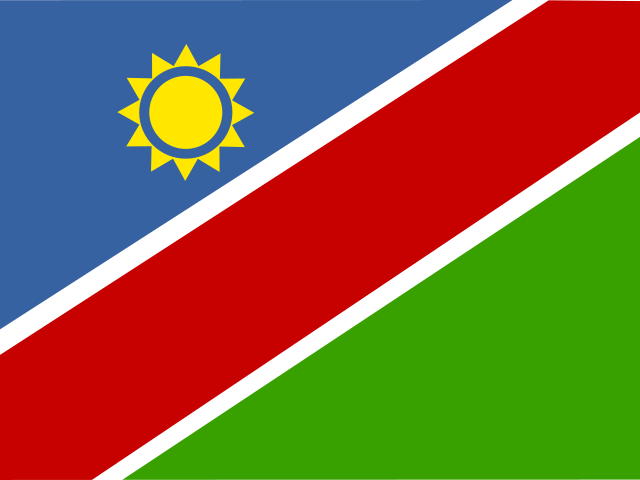 Namibia
 Seychelles
 South Africa
 Tanzania
 Zambia
 Zimbabwe
Earlier Report Observations
In 2018, the introduction of HACCP-based regulations for meat processors and a listeriosis outbreak led to stricter production standards and inspection regimes. The following year, African Swine Fever cases in neighboring Mozambique triggered tighter import controls, reducing pork imports, while new classification and labeling rules under the Meat Safety Act affected domestic production. These factors contributed to a decline in the pork market size to 991 thousand metric tons in 2019. By 2020, a surge in international pork prices due to ASF increased import costs, prompting retailers to promote locally-produced chilled pork, which helped the market recover to 1,118 thousand metric tons.
From 2021 onward, continued ASF outbreaks in Southern Africa reinforced import-substitution incentives, supported by government pilot subsidies for small-scale pork processors. The release of a beef market value-chain profile also encouraged pork exports within SADC. In 2022, new standards for raw meat products, mandating flavor descriptors and moisture limits, influenced product development, and a temporary rebate on anti-dumping duties for poultry signaled active trade policy adjustments. By 2023, rising feed price volatility due to global commodity shocks raised production costs, but producers adapted by shifting focus to chilled pork lines to maintain margins. As a result, the market grew steadily, reaching 1,285 thousand metric tons in 2023.
Table of content
- 1. Disclaimer
- 2. Terms of use of the report
- 3. Product codes in the statistical classifications used in the report
-
4. Key Market Indicators and Trends
-
4.1. Key Market Indicators
-
4.1.1. In kind
- 4.1.1.1. Production, 2018-2023
- 4.1.1.2. Imports, 2018-2024
- 4.1.1.3. Exports, 2018-2024
- 4.1.1.4. Market size, 2018-2023
-
4.1.1. In kind
- 4.2. Market Trends and Factors
-
4.1. Key Market Indicators
-
5. Production
-
5.1. Production in SADC
- 5.1.1. Annual dynamics of production in SADC in kind, 2018-2023, K t
-
5.2. Global production by Country, 2018-2023
- 5.2.1. Annual dynamics of production by macroregions in kind, 2018-2023, K t
- 5.2.2. Dynamics of production structure by macroregions in kind, 2018-2023
- 5.2.3. Annual dynamics of production by country in kind, 2018-2023, K t
- 5.2.4. Structure of production by countries in kind, 2018-2023
- 5.2.5. Dynamics of peoduction structure by countries in kind, 2018-2023
-
5.1. Production in SADC
-
6. Imports
-
6.1. Imports (Direct Data*)
- 6.1.1. Imports - Total information
-
6.1.2. Imports in kind, K t
- 6.1.2.1. Annual dynamics of product's imports to Angola in kind, 2018-2024, K t
- 6.1.2.2. Dynamics of product's imports in kind to Angola by countries, 2018-2024, K t
- 6.1.2.3. Structure of product's imports in kind by countries, 2018-2024
-
6.1.3. Imports in value, M $ US
- 6.1.3.1. Annual dynamics of product's imports to Angola in value, 2018-2024, M $ US
- 6.1.3.2. Dynamics of product's imports in value to Angola by countries, 2018-2024, M $ US
- 6.1.3.3. Structure of product's imports in value by countries, 2018-2024
-
6.1.4. Average price of product's imports, $ US/t
- 6.1.4.1. Annual dynamics of average price of product's imports to Angola, 2018-2024, $ US/t
- 6.1.4.2. Dynamics of average price of product's imports to Angola by countries, 2018-2024, $ US/t
-
6.2. Imports (Mirror Data)
- 6.2.1. Imports - Total information
-
6.2.2. Imports in kind, K t
- 6.2.2.1. Annual dynamics of product's imports to Angola in kind, 2018-2024, K t
- 6.2.2.2. Dynamics of product's imports in kind to Angola by countries, 2018-2024, K t
- 6.2.2.3. Structure of product's imports in kind by countries, 2018-2024
-
6.2.3. Imports in value, M $ US
- 6.2.3.1. Annual dynamics of product's imports to Angola in value, 2018-2024, M $ US
- 6.2.3.2. Dynamics of product's imports in value to Angola by countries, 2018-2024, M $ US
- 6.2.3.3. Structure of product's imports in value by countries, 2018-2024
-
6.2.4. Average price of product's imports, $ US/t
- 6.2.4.1. Annual dynamics of average price of product's imports to Angola, 2018-2024, $ US/t
- 6.2.4.2. Dynamics of average price of product's imports to Angola by countries, 2018-2024, $ US/t
-
6.1. Imports (Direct Data*)
-
7. Exports
-
7.1. Exports (Direct Data*)
- 7.1.1. Exports - Total information
-
7.1.2. Exports in kind, K t
- 7.1.2.1. Annual dynamics of product's exports from Angola in kind, 2018-2024, K t
- 7.1.2.2. Dynamics of product's exports in kind from Angola by countries, 2018-2024, K t
- 7.1.2.3. Structure of product's exports in kind by countries, 2018-2024
-
7.1.3. Exports in value, M $ US
- 7.1.3.1. Annual dynamics of product's exports from Angola in value, 2018-2024, M $ US
- 7.1.3.2. Dynamics of product's exports in value from Angola by countries, 2018-2024, M $ US
- 7.1.3.3. Structure of product's exports in value by countries, 2018-2024
-
7.1.4. Average price of product's exports, $ US/t
- 7.1.4.1. Annual dynamics of average price of product's exports from Angola, 2018-2024, $ US/t
- 7.1.4.2. Dynamics of average price of product's exports from Angola by countries, 2018-2024, $ US/t
-
7.2. Exports (Mirror Data)
- 7.2.1. Exports - Total information
-
7.2.2. Exports in kind, K t
- 7.2.2.1. Annual dynamics of product's exports from Angola in kind, 2018-2024, K t
- 7.2.2.2. Dynamics of product's exports in kind from Angola by countries, 2018-2024, K t
- 7.2.2.3. Structure of product's exports in kind by countries, 2018-2024
-
7.2.3. Exports in value, M $ US
- 7.2.3.1. Annual dynamics of product's exports from Angola in value, 2018-2024, M $ US
- 7.2.3.2. Dynamics of product's exports in value from Angola by countries, 2018-2024, M $ US
- 7.2.3.3. Structure of product's exports in value by countries, 2018-2024
-
7.2.4. Average price of product's exports, $ US/t
- 7.2.4.1. Annual dynamics of average price of product's exports from Angola, 2018-2024, $ US/t
- 7.2.4.2. Dynamics of average price of product's exports from Angola by countries, 2018-2024, $ US/t
-
7.1. Exports (Direct Data*)
-
8. Trade balance
-
8.1. Trade balance (Direct Data)
- 8.1.1. In kind, K t
- 8.1.2. In value, M $ US
-
8.2. Trade balance (Mirror Data)
- 8.2.1. In kind, K t
- 8.2.2. In value, M $ US
-
8.1. Trade balance (Direct Data)
-
9. Top buying and selling countries, 2018-2024
-
9.1. Direct Data
- 9.1.1. Import in Value by Countries-buyers
- 9.1.2. Export in Value by Countries-suppliers
-
9.2. Mirror Data
- 9.2.1. Import in Value by Countries-buyers
- 9.2.2. Export in Value by Countries-suppliers
-
9.1. Direct Data
Production pork in SADC
In kind, 2017-2020, K t
Top producers of pork, 2017-2020
World map of production of pork, 2017-2020
In 2020, SADC produced 1 052 K t of pork, marking a significant year-over-year increase of 16.1%. Over the 2017-2020 period, production grew by 32.7%, with a compound annual growth rate of 9.9%. The most notable decline occurred in 2019 at 3.5%, while the largest increase was recorded in 2018 at 18.5%.
Annual dynamics of production in SADC in kind, 2017-2020, K t
| Parameter | 2018 | 2019 | 2020 | CAGR | |
|---|---|---|---|---|---|
| 1 | Change from last year | 18.5% | (3.5%) | 16.1% | 9.9% |
Exports pork from SADC
Exports in kind, K t
Following two years of decline, cross-border pork shipments from SADC rebounded in 2020. Exports reached 4.7 K t, representing a substantial 42.5% increase compared to the previous year. Over the 2017-2020 period, exports decreased by 10.3%, with a compound annual growth rate of -3.6%. The lowest export volume was recorded in 2019 at 3.3 K t, while the most significant decline occurred in 2018 at 31.7%.
Annual dynamics of product's exports from SADC in kind, 2017-2020, K t
| Parameter | 2018 | 2019 | 2020 | CAGR | |
|---|---|---|---|---|---|
| 1 | Change from last year | (31.7%) | (7.8%) | 42.5% | (3.6%) |
From 2017 to 2020, Hong Kong (accounting for 2.3% of exports in kind), the United Arab Emirates (0.7%), and China (0.6%) were the primary destinations for SADC pork exports. Together, these three markets represented 3.6% of total exports in kind.
Structure of product's exports in kind by countries, 2017-2020
World map of product's exports from SADC in kind, 2017-2020
Exports in value, M $ US
Pork exports from SADC declined for the third consecutive year in 2020, totaling 23.3 M $ US. This reflected a 7.9% decrease compared to the previous year. Over the 2017-2020 period, exports fell by 10.4%, with a compound annual growth rate of -3.6%.
Annual dynamics of product's exports from SADC in value, 2017-2020, M $ US
| Parameter | 2018 | 2019 | 2020 | CAGR | |
|---|---|---|---|---|---|
| 1 | Change from last year | (0.1%) | (2.6%) | (7.9%) | (3.6%) |
Throughout 2017-2020, Hong Kong (2.2% of exports in value terms), the United Arab Emirates (2.1%), and China (0.9%) formed the key group of trading partners for SADC pork exports. Collectively, these three markets accounted for 5.2% of total export value.
Structure of product's exports in value by countries, 2017-2020
World map of product's exports from SADC in value, 2017-2020
Imports pork to SADC
Imports in kind, K t
Pork imports into SADC declined for the second consecutive year in 2020, reaching 70.5 K t. This represented a 19.6% decrease compared to 2019. Between 2017 and 2020, imports fell by 50.9%, equating to an annualized decline of 21.1%. The peak import volume was recorded in 2018 at 160.7 K t. The most significant decline occurred in 2019 at 45.4%, while the largest increase was observed in 2018 at 11.9%.
Annual dynamics of product's imports to SADC in kind, 2017-2020, K t
| Parameter | 2018 | 2019 | 2020 | CAGR | |
|---|---|---|---|---|---|
| 1 | Change from last year | 11.9% | (45.4%) | (19.6%) | (21.1%) |
From 2017 to 2020, Brazil, Germany, and Portugal remained the dominant sources for pork imports into SADC, collectively accounting for 68.9% of total import volumes.
Structure of product's imports in kind by countries, 2017-2020
World map of product's imports to SADC in kind, 2017-2020
Imports in value, M $ US
Pork imports into SADC declined for the second consecutive year in 2020, totaling 114.3 M $ US. This represented a 19.8% year-over-year decrease. Between 2017 and 2020, imports fell by 45.1%, equating to an annualized decline of 18.1%. The highest import value was recorded in 2018 at 213.0 M $ US. The most significant decline occurred in 2019 at 33.1%, while the largest increase was observed in 2018 at 2.3%.
Annual dynamics of product's imports to SADC in value, 2017-2020, M $ US
| Parameter | 2018 | 2019 | 2020 | CAGR | |
|---|---|---|---|---|---|
| 1 | Change from last year | 2.3% | (33.1%) | (19.8%) | (18.1%) |
From 2017 to 2020, Brazil (32.1% of imports in value terms), Germany (20.2%), and Portugal (8.1%) were the largest suppliers of pork to SADC. Together, these three countries accounted for 60.3% of total import value.
Structure of product's imports in value by countries, 2017-2020
World map of product's imports to SADC in value, 2017-2020
Related Reports

2026-03-27
2026-03-27
2026-03-27
2026-03-27
Goose meat and offal market in SADC
2026-03-27


Fresh or chilled goose meat market in SADC
2026-03-30

Fresh or chilled duck meat market in SADC
2026-03-30
Why Choose Us?
Only Verified Data
No Hidden Costs or Separate Fees
Smarter Subscription Pricing
Contact Our Team
Submit your inquiry using the form below — our team will get back to you within 24 hours.