






"Sub-Saharan Africa" region includes following countries:
 Cabo Verde
 Benin
Benin Gambia
 Ghana
Ghana Guinea
 Côte d'Ivoire
 Liberia
 Mali
Mali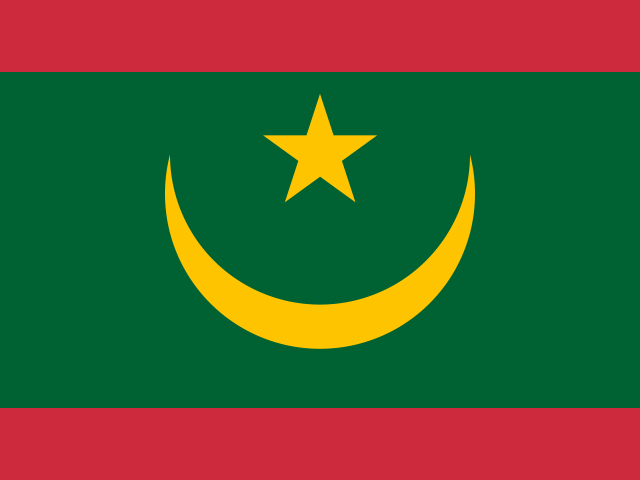 Mauritania
 Niger
Niger Nigeria
 Guinea-Bissau
 Saint Helena, Ascension and Tristan da Cunha
 Senegal
 Sierra Leone
 Togo
Togo Burkina Faso
 British Indian Ocean Territory
 Burundi
 Comoros
 Mayotte
 Ethiopia
 Eritrea
 French Southern Territories
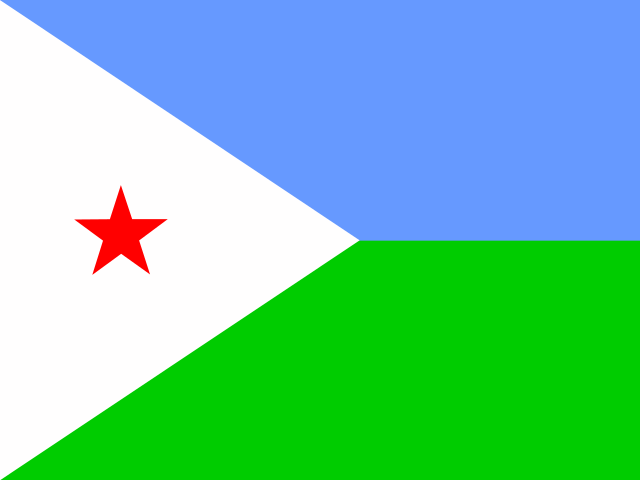 Djibouti
 Kenya
Kenya Madagascar
 Malawi
 Mauritius
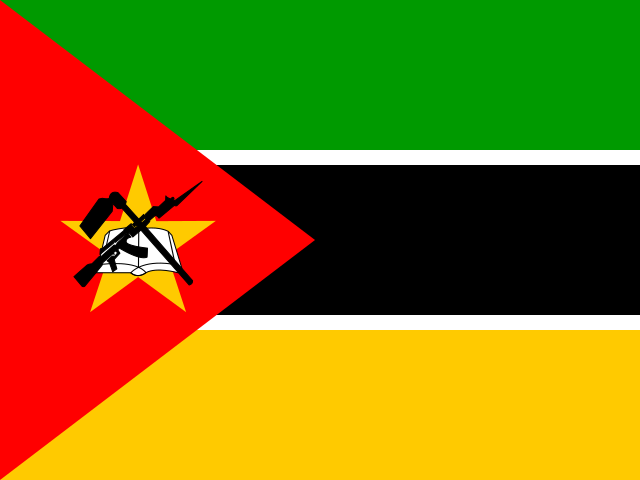 Mozambique
 Reunion
 Rwanda
 Seychelles
 Somalia
 Zimbabwe
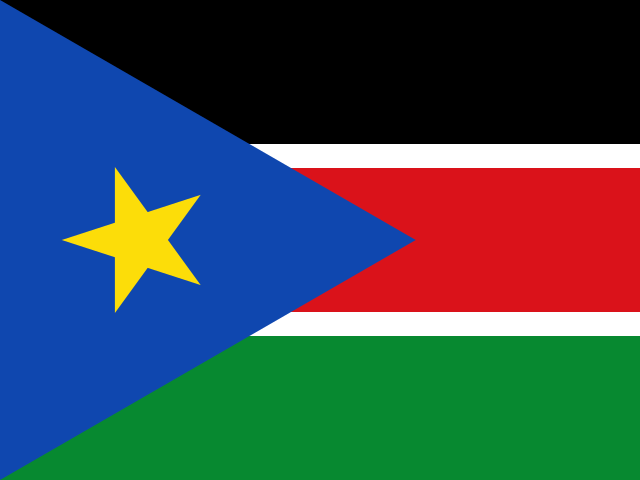 South Sudan
 Uganda
 Tanzania
 Zambia
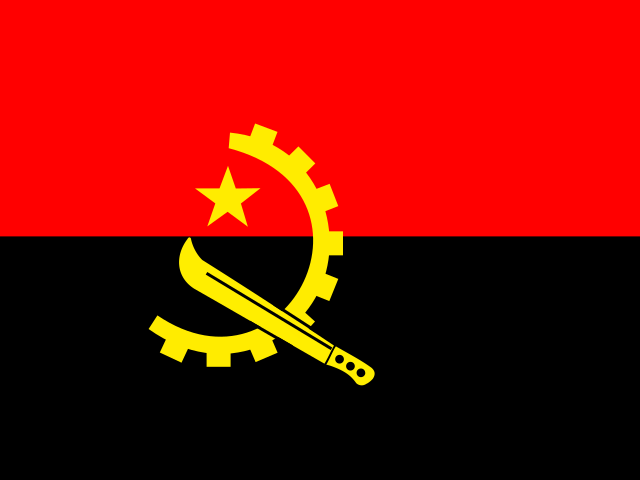 Angola
 Cameroon
 Central African Republic
 Chad
Chad Congo
Congo Democratic Republic of the Congo
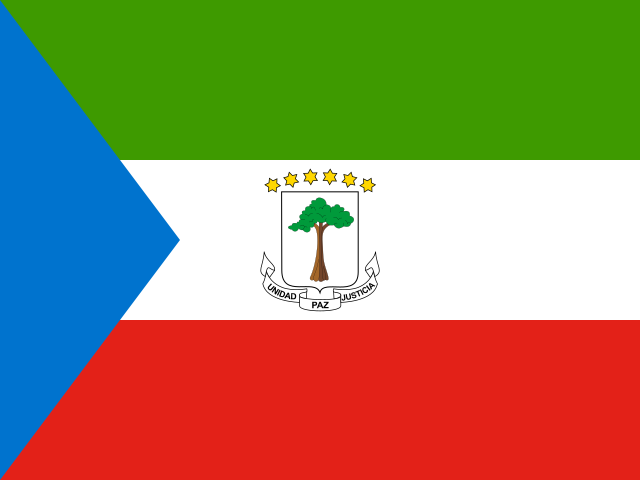 Equatorial Guinea
 Gabon
Gabon Sao Tome and Principe
 Botswana
 Lesotho
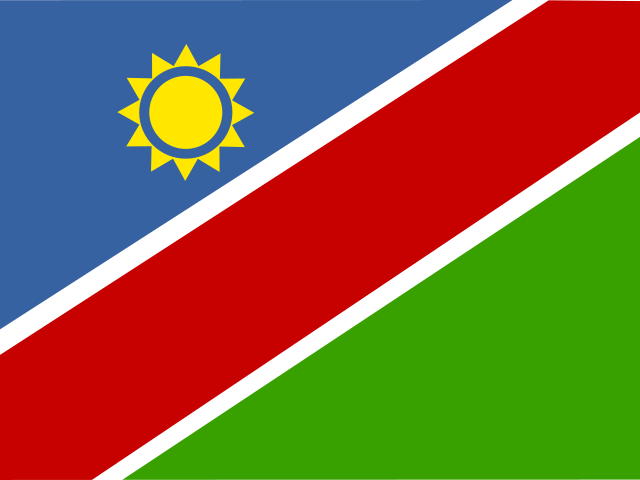 Namibia
 South Africa
 Eswatini
Earlier Report Observations
In 2018, the market volume for oil seeds and oleaginous fruits in Sub-Saharan Africa stood at 1 267 thousand tons. By 2019, it increased to 1 278 thousand tons, supported by the region's shift in agricultural exports away from cocoa toward oil seeds, which encouraged production. However, in 2020, the COVID-19 pandemic reduced the market volume to 1 256 thousand tons as disruptions highlighted the strategic importance of local production for food security.
After a slight rise to 1 260 thousand tons in 2021, the market expanded significantly to 1 313 thousand tons in 2022. This growth coincided with the integration of oil seeds into innovative crop rotation systems in southern Africa, aimed at improving soil health and reducing fertilizer use. In 2023, the market volume stabilized at 1 317 thousand tons, while increased Russian exports of oil seeds to Africa influenced supply conditions.
By 2024, the region saw continued development in oil seed production, such as a fivefold increase in soybean output in Togo since 2015, pointing to further potential market expansion amid improving economic prospects.
Table of content
- 1. Disclaimer
- 2. Terms of use of the report
- 3. Product codes in the statistical classifications used in the report
-
4. Key Market Indicators and Trends
-
4.1. Key Market Indicators
-
4.1.1. In kind
- 4.1.1.1. Production, 2018-2023
- 4.1.1.2. Imports, 2018-2024
- 4.1.1.3. Exports, 2018-2024
- 4.1.1.4. Market size, 2018-2023
-
4.1.1. In kind
- 4.2. Market Trends and Factors
-
4.1. Key Market Indicators
-
5. Production
-
5.1. Production in Sub-Saharan Africa
- 5.1.1. Annual dynamics of production in Sub-Saharan Africa in kind, 2018-2023, K t
-
5.2. Global production by Country, 2018-2023
- 5.2.1. Annual dynamics of production by macroregions in kind, 2018-2023, K t
- 5.2.2. Dynamics of production structure by macroregions in kind, 2018-2023
- 5.2.3. Annual dynamics of production by country in kind, 2018-2023, K t
- 5.2.4. Structure of production by countries in kind, 2018-2023
- 5.2.5. Dynamics of peoduction structure by countries in kind, 2018-2023
-
5.1. Production in Sub-Saharan Africa
-
6. Imports
-
6.1. Imports (Direct Data*)
- 6.1.1. Imports - Total information
-
6.1.2. Imports in kind, K t
- 6.1.2.1. Annual dynamics of product's imports to Cabo Verde in kind, 2018-2024, K t
- 6.1.2.2. Dynamics of product's imports in kind to Cabo Verde by countries, 2018-2024, K t
- 6.1.2.3. Structure of product's imports in kind by countries, 2018-2024
-
6.1.3. Imports in value, M $ US
- 6.1.3.1. Annual dynamics of product's imports to Cabo Verde in value, 2018-2024, M $ US
- 6.1.3.2. Dynamics of product's imports in value to Cabo Verde by countries, 2018-2024, M $ US
- 6.1.3.3. Structure of product's imports in value by countries, 2018-2024
-
6.1.4. Average price of product's imports, $ US/t
- 6.1.4.1. Annual dynamics of average price of product's imports to Cabo Verde, 2018-2024, $ US/t
- 6.1.4.2. Dynamics of average price of product's imports to Cabo Verde by countries, 2018-2024, $ US/t
-
6.2. Imports (Mirror Data)
- 6.2.1. Imports - Total information
-
6.2.2. Imports in kind, K t
- 6.2.2.1. Annual dynamics of product's imports to Cabo Verde in kind, 2018-2024, K t
- 6.2.2.2. Dynamics of product's imports in kind to Cabo Verde by countries, 2018-2024, K t
- 6.2.2.3. Structure of product's imports in kind by countries, 2018-2024
-
6.2.3. Imports in value, M $ US
- 6.2.3.1. Annual dynamics of product's imports to Cabo Verde in value, 2018-2024, M $ US
- 6.2.3.2. Dynamics of product's imports in value to Cabo Verde by countries, 2018-2024, M $ US
- 6.2.3.3. Structure of product's imports in value by countries, 2018-2024
-
6.2.4. Average price of product's imports, $ US/t
- 6.2.4.1. Annual dynamics of average price of product's imports to Cabo Verde, 2018-2024, $ US/t
- 6.2.4.2. Dynamics of average price of product's imports to Cabo Verde by countries, 2018-2024, $ US/t
-
6.1. Imports (Direct Data*)
-
7. Exports
-
7.1. Exports (Direct Data*)
- 7.1.1. Exports - Total information
-
7.1.2. Exports in kind, K t
- 7.1.2.1. Annual dynamics of product's exports from Cabo Verde in kind, 2018-2024, K t
- 7.1.2.2. Dynamics of product's exports in kind from Cabo Verde by countries, 2018-2024, K t
- 7.1.2.3. Structure of product's exports in kind by countries, 2018-2024
-
7.1.3. Exports in value, M $ US
- 7.1.3.1. Annual dynamics of product's exports from Cabo Verde in value, 2018-2024, M $ US
- 7.1.3.2. Dynamics of product's exports in value from Cabo Verde by countries, 2018-2024, M $ US
- 7.1.3.3. Structure of product's exports in value by countries, 2018-2024
-
7.1.4. Average price of product's exports, $ US/t
- 7.1.4.1. Annual dynamics of average price of product's exports from Cabo Verde, 2018-2024, $ US/t
- 7.1.4.2. Dynamics of average price of product's exports from Cabo Verde by countries, 2018-2024, $ US/t
-
7.2. Exports (Mirror Data)
- 7.2.1. Exports - Total information
-
7.2.2. Exports in kind, K t
- 7.2.2.1. Annual dynamics of product's exports from Cabo Verde in kind, 2018-2024, K t
- 7.2.2.2. Dynamics of product's exports in kind from Cabo Verde by countries, 2018-2024, K t
- 7.2.2.3. Structure of product's exports in kind by countries, 2018-2024
-
7.2.3. Exports in value, M $ US
- 7.2.3.1. Annual dynamics of product's exports from Cabo Verde in value, 2018-2024, M $ US
- 7.2.3.2. Dynamics of product's exports in value from Cabo Verde by countries, 2018-2024, M $ US
- 7.2.3.3. Structure of product's exports in value by countries, 2018-2024
-
7.2.4. Average price of product's exports, $ US/t
- 7.2.4.1. Annual dynamics of average price of product's exports from Cabo Verde, 2018-2024, $ US/t
- 7.2.4.2. Dynamics of average price of product's exports from Cabo Verde by countries, 2018-2024, $ US/t
-
7.1. Exports (Direct Data*)
-
8. Trade balance
-
8.1. Trade balance (Direct Data)
- 8.1.1. In kind, K t
- 8.1.2. In value, M $ US
-
8.2. Trade balance (Mirror Data)
- 8.2.1. In kind, K t
- 8.2.2. In value, M $ US
-
8.1. Trade balance (Direct Data)
-
9. Top buying and selling countries, 2018-2024
-
9.1. Direct Data
- 9.1.1. Import in Value by Countries-buyers
- 9.1.2. Export in Value by Countries-suppliers
-
9.2. Mirror Data
- 9.2.1. Import in Value by Countries-buyers
- 9.2.2. Export in Value by Countries-suppliers
-
9.1. Direct Data
Production oil seeds and oleaginous fruits in Sub-Saharan Africa
In kind, 2017-2020, K t
Top producers of oil seeds and oleaginous fruits, 2017-2020
World map of production of oil seeds and oleaginous fruits, 2017-2020
Sub-Saharan Africa's production of oil seeds and oleaginous fruits saw a decline after two consecutive years of growth. In 2020, the region produced 1 464 thousand tons, marking a modest 8.1% decrease from the previous year. Looking at the broader period from 2017 to 2020, production actually increased by 5.5%, with an average annual growth rate of 1.8%. The peak was reached in 2019 at 1 594 thousand tons, which also saw the largest annual increase of 7.3%.
Annual dynamics of production in Sub-Saharan Africa in kind, 2017-2020, K t
| Parameter | 2018 | 2019 | 2020 | CAGR | |
|---|---|---|---|---|---|
| 1 | Change from last year | 7.1% | 7.3% | (8.1%) | 1.8% |
Exports oil seeds and oleaginous fruits from Sub-Saharan Africa
Exports in kind, K t
In 2020, Sub-Saharan Africa's exports of oil seeds and oleaginous fruits totaled 219.4 thousand tons, showing a sharp decline of 31.2% compared to 2019. Over the four-year span from 2017 to 2020, exports decreased by 35.5%, translating to an average annual drop of 13.6%. The most significant decline occurred in 2018 at 34.3%, while the largest increase was recorded in 2019 with a 42.7% rise.
Annual dynamics of product's exports from Sub-Saharan Africa in kind, 2017-2020, K t
| Parameter | 2018 | 2019 | 2020 | CAGR | |
|---|---|---|---|---|---|
| 1 | Change from last year | (34.3%) | 42.7% | (31.2%) | (13.6%) |
From 2017 to 2020, Denmark, India, and the United States were the primary destinations for Sub-Saharan Africa's exports of oil seeds and oleaginous fruits in volume terms. Denmark accounted for 56.4% of exports, India for 8.1%, and the United States for 4.7%, together making up 69.2% of the total export volume.
Structure of product's exports in kind by countries, 2017-2020
World map of product's exports from Sub-Saharan Africa in kind, 2017-2020
Exports in value, M $ US
After two years of growth, Sub-Saharan Africa's exports of oil seeds and oleaginous fruits in value terms declined. In 2020, exports amounted to 151.9 million US dollars, representing a 27.8% drop from the previous year. However, over the period from 2017 to 2020, exports increased by 49.4%, with an average annual growth rate of 14.3%. The highest value was recorded in 2019 at 210.3 million US dollars, which also saw the largest annual increase of 58.6%.
Annual dynamics of product's exports from Sub-Saharan Africa in value, 2017-2020, M $ US
| Parameter | 2018 | 2019 | 2020 | CAGR | |
|---|---|---|---|---|---|
| 1 | Change from last year | 30.4% | 58.6% | (27.8%) | 14.3% |
Between 2017 and 2020, Denmark, India, and the United States were the main markets for Sub-Saharan Africa's exports of oil seeds and oleaginous fruits in value terms. Denmark contributed 52.1% of export value, India 8.9%, and the United States 8.0%, together accounting for 69.0% of total export flows.
Structure of product's exports in value by countries, 2017-2020
World map of product's exports from Sub-Saharan Africa in value, 2017-2020
Imports oil seeds and oleaginous fruits to Sub-Saharan Africa
Imports in kind, K t
The import market for oil seeds and oleaginous fruits in Sub-Saharan Africa showed significant volatility from 2017 to 2020. Imports reached their lowest point in 2017 and peaked in 2020, with a 3.3-fold difference between these years. In 2020, imports stood at 11.4 thousand tons, marking a steep increase of 221.6% compared to 2019. The largest decline was recorded in 2019 at 22.9%.
Annual dynamics of product's imports to Sub-Saharan Africa in kind, 2017-2020, K t
| Parameter | 2018 | 2019 | 2020 | CAGR | |
|---|---|---|---|---|---|
| 1 | Change from last year | 31.4% | (22.9%) | 221.6% | 48.2% |
From 2017 to 2020, Malaysia and China were the top sources for Sub-Saharan Africa's imports of oil seeds and oleaginous fruits in volume terms, though their combined share was relatively small at 1.4% of total import flows.
Structure of product's imports in kind by countries, 2017-2020
World map of product's imports to Sub-Saharan Africa in kind, 2017-2020
Imports in value, M $ US
Import values for oil seeds and oleaginous fruits in Sub-Saharan Africa exhibited notable volatility between 2017 and 2020. The lowest point was in 2019, and the peak was in 2020, with a 3.1-fold difference. In 2020, imports totaled 8.8 million US dollars, showing a steep increase of 210.9% from the previous year. The largest decline occurred in 2019 at 18.8%.
Annual dynamics of product's imports to Sub-Saharan Africa in value, 2017-2020, M $ US
| Parameter | 2018 | 2019 | 2020 | CAGR | |
|---|---|---|---|---|---|
| 1 | Change from last year | 19.5% | (18.8%) | 210.9% | 44.5% |
Between 2017 and 2020, China, Turkey, and the Netherlands were the largest suppliers of oil seeds and oleaginous fruits to Sub-Saharan Africa in value terms. China accounted for 6.5% of import value, Turkey for 2.9%, and the Netherlands for 2.5%, together making up 11.9% of total imports. This reflects a diversified import structure with contributions from multiple countries.
Structure of product's imports in value by countries, 2017-2020
World map of product's imports to Sub-Saharan Africa in value, 2017-2020
Related Reports


Sunflower seeds market in Sub-Saharan Africa
2026-03-28

Copra market in Sub-Saharan Africa
2026-03-28

Sugar beet market in Sub-Saharan Africa
2026-03-28

Why Choose Us?
Only Verified Data
No Hidden Costs or Separate Fees
Smarter Subscription Pricing
Contact Our Team
Submit your inquiry using the form below — our team will get back to you within 24 hours.