






"Africa" region includes following countries:
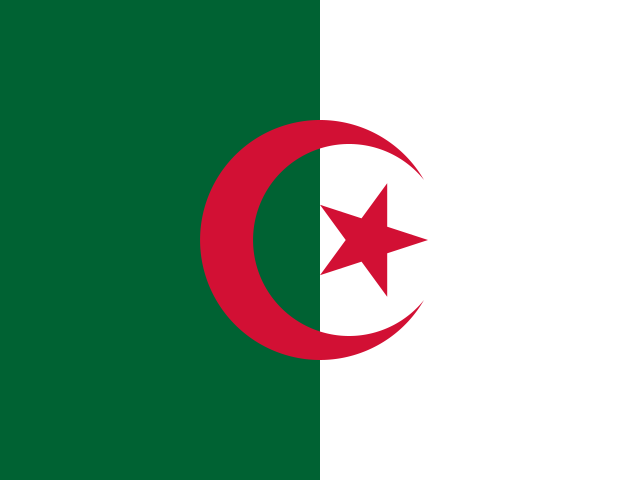 Algeria
 Libya
Libya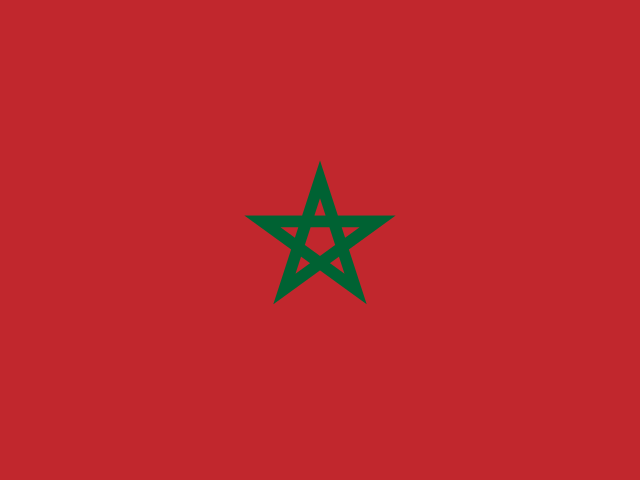 Morocco
 Sudan
Sudan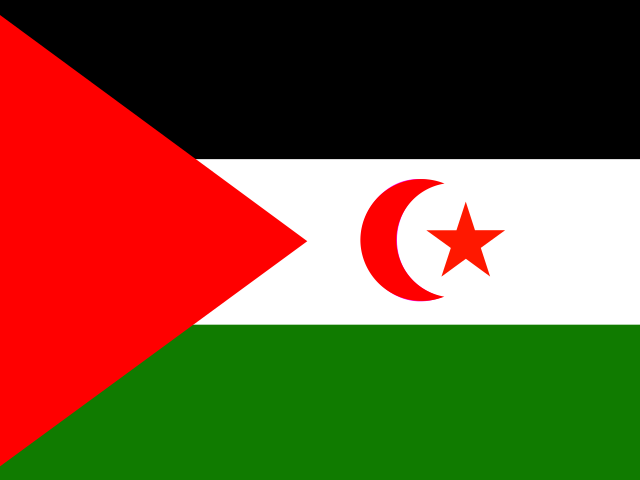 Western Sahara
 Tunisia
 Egypt
Egypt Cabo Verde
 Benin
Benin Gambia
 Ghana
Ghana Guinea
 Côte d'Ivoire
 Liberia
 Mali
Mali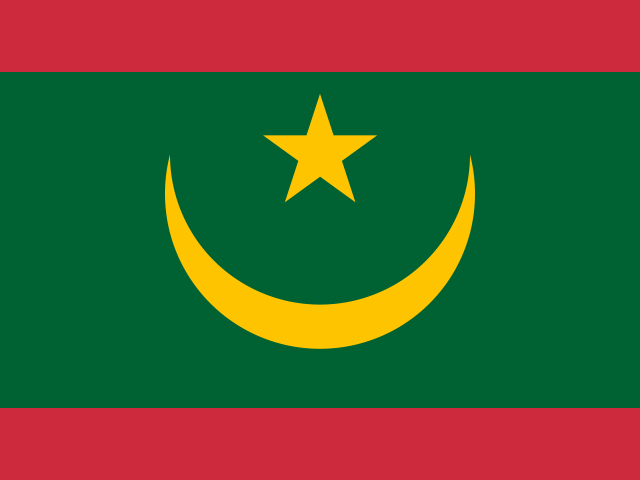 Mauritania
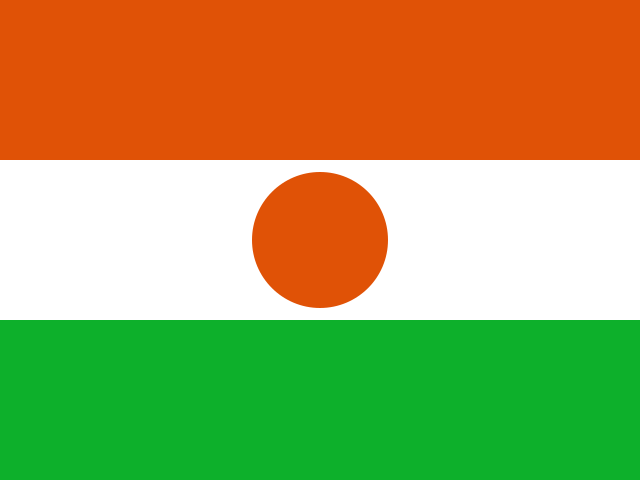 Niger
Niger Nigeria
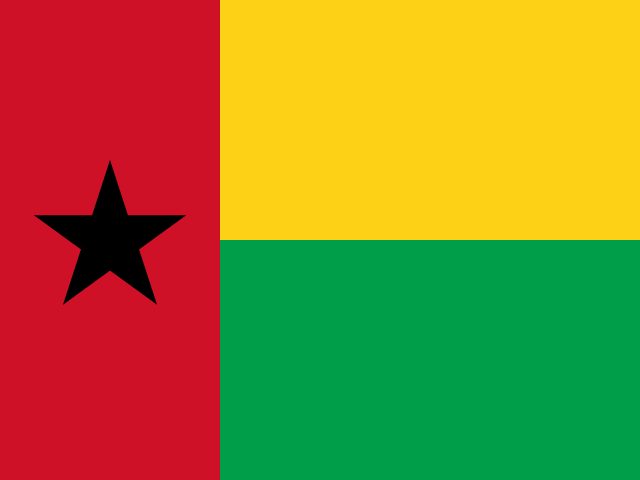 Guinea-Bissau
 Saint Helena, Ascension and Tristan da Cunha
 Senegal
 Sierra Leone
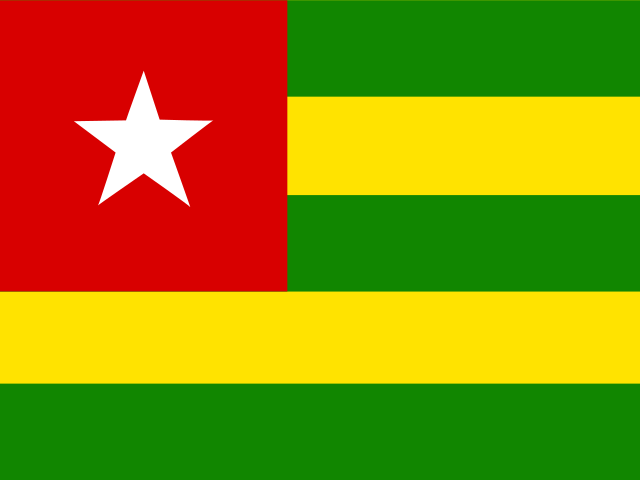 Togo
Togo Burkina Faso
 British Indian Ocean Territory
 Burundi
 Comoros
 Mayotte
 Ethiopia
 Eritrea
 French Southern Territories
 Djibouti
 Kenya
Kenya Madagascar
 Malawi
 Mauritius
 Mozambique
 Reunion
 Rwanda
 Seychelles
 Somalia
 Zimbabwe
 South Sudan
 Uganda
 Tanzania
 Zambia
 Angola
 Cameroon
 Central African Republic
 Chad
Chad Congo
Congo Democratic Republic of the Congo
 Equatorial Guinea
 Gabon
Gabon Sao Tome and Principe
 Botswana
 Lesotho
 Namibia
 South Africa
 Eswatini
Earlier Report Observations
The milk powder market in South Africa experienced significant volume swings between 2018 and 2023. A weak domestic economy subdued consumer demand, contributing to a market contraction in 2019. The COVID-19 pandemic reversed this trend in 2020, as the broader dairy sector performed robustly and more raw milk was channeled into processed products, driving market volume to a peak. Subsequent years saw a gradual recalibration, with a modest recovery in 2022 coinciding with slightly higher global skim milk powder production.
Structural consolidation within the dairy industry was a persistent theme. Major corporate moves, such as Sea Harvest's acquisition of Ladismith Cheese and the buyout offer for Clover in 2018, highlighted a trend of fewer but larger operators. This consolidation, alongside ongoing closures of smaller producers, increased raw milk output per remaining farm but also influenced the supply landscape for milk powder.
Regulatory and global factors further shaped the market. The enforcement of food safety rules in 2020 restricted direct raw milk sales, supporting industrial processing. Later, rising farmgate milk prices and herd contractions tightened local supply, while global events like reduced whole milk powder output in New Zealand affected international trade flows, evident in the rise of imports to 953 thousand tonnes in 2024.
Table of content
- 1. Disclaimer
- 2. Terms of use of the report
- 3. Product codes in the statistical classifications used in the report
-
4. Key Market Indicators and Trends
-
4.1. Key Market Indicators
-
4.1.1. In kind
- 4.1.1.1. Production, 2018-2023
- 4.1.1.2. Imports, 2018-2024
- 4.1.1.3. Exports, 2018-2024
- 4.1.1.4. Market size, 2018-2023
-
4.1.1. In kind
- 4.2. Market Trends and Factors
-
4.1. Key Market Indicators
-
5. Production
-
5.1. Production in Africa
- 5.1.1. Annual dynamics of production in Africa in kind, 2018-2023, t
-
5.2. Global production by Country, 2018-2023
- 5.2.1. Annual dynamics of production by macroregions in kind, 2018-2023, t
- 5.2.2. Dynamics of production structure by macroregions in kind, 2018-2023
- 5.2.3. Annual dynamics of production by country in kind, 2018-2023, t
- 5.2.4. Structure of production by countries in kind, 2018-2023
- 5.2.5. Dynamics of peoduction structure by countries in kind, 2018-2023
-
5.1. Production in Africa
-
6. Imports
-
6.1. Imports (Direct Data*)
- 6.1.1. Imports - Total information
-
6.1.2. Imports in kind, K t
- 6.1.2.1. Annual dynamics of product's imports to Algeria in kind, 2018-2024, K t
- 6.1.2.2. Dynamics of product's imports in kind to Algeria by countries, 2018-2024, K t
- 6.1.2.3. Structure of product's imports in kind by countries, 2018-2024
-
6.1.3. Imports in value, M $ US
- 6.1.3.1. Annual dynamics of product's imports to Algeria in value, 2018-2024, M $ US
- 6.1.3.2. Dynamics of product's imports in value to Algeria by countries, 2018-2024, M $ US
- 6.1.3.3. Structure of product's imports in value by countries, 2018-2024
-
6.1.4. Average price of product's imports, $ US/kg
- 6.1.4.1. Annual dynamics of average price of product's imports to Algeria, 2018-2024, $ US/kg
- 6.1.4.2. Dynamics of average price of product's imports to Algeria by countries, 2018-2024, $ US/kg
-
6.2. Imports (Mirror Data)
- 6.2.1. Imports - Total information
-
6.2.2. Imports in kind, K t
- 6.2.2.1. Annual dynamics of product's imports to Algeria in kind, 2018-2024, K t
- 6.2.2.2. Dynamics of product's imports in kind to Algeria by countries, 2018-2024, K t
- 6.2.2.3. Structure of product's imports in kind by countries, 2018-2024
-
6.2.3. Imports in value, M $ US
- 6.2.3.1. Annual dynamics of product's imports to Algeria in value, 2018-2024, M $ US
- 6.2.3.2. Dynamics of product's imports in value to Algeria by countries, 2018-2024, M $ US
- 6.2.3.3. Structure of product's imports in value by countries, 2018-2024
-
6.2.4. Average price of product's imports, $ US/kg
- 6.2.4.1. Annual dynamics of average price of product's imports to Algeria, 2018-2024, $ US/kg
- 6.2.4.2. Dynamics of average price of product's imports to Algeria by countries, 2018-2024, $ US/kg
-
6.1. Imports (Direct Data*)
-
7. Exports
-
7.1. Exports (Direct Data*)
- 7.1.1. Exports - Total information
-
7.1.2. Exports in kind, K t
- 7.1.2.1. Annual dynamics of product's exports from Algeria in kind, 2018-2024, K t
- 7.1.2.2. Dynamics of product's exports in kind from Algeria by countries, 2018-2024, K t
- 7.1.2.3. Structure of product's exports in kind by countries, 2018-2024
-
7.1.3. Exports in value, M $ US
- 7.1.3.1. Annual dynamics of product's exports from Algeria in value, 2018-2024, M $ US
- 7.1.3.2. Dynamics of product's exports in value from Algeria by countries, 2018-2024, M $ US
- 7.1.3.3. Structure of product's exports in value by countries, 2018-2024
-
7.1.4. Average price of product's exports, $ US/kg
- 7.1.4.1. Annual dynamics of average price of product's exports from Algeria, 2018-2024, $ US/kg
- 7.1.4.2. Dynamics of average price of product's exports from Algeria by countries, 2018-2024, $ US/kg
-
7.2. Exports (Mirror Data)
- 7.2.1. Exports - Total information
-
7.2.2. Exports in kind, K t
- 7.2.2.1. Annual dynamics of product's exports from Algeria in kind, 2018-2024, K t
- 7.2.2.2. Dynamics of product's exports in kind from Algeria by countries, 2018-2024, K t
- 7.2.2.3. Structure of product's exports in kind by countries, 2018-2024
-
7.2.3. Exports in value, M $ US
- 7.2.3.1. Annual dynamics of product's exports from Algeria in value, 2018-2024, M $ US
- 7.2.3.2. Dynamics of product's exports in value from Algeria by countries, 2018-2024, M $ US
- 7.2.3.3. Structure of product's exports in value by countries, 2018-2024
-
7.2.4. Average price of product's exports, $ US/kg
- 7.2.4.1. Annual dynamics of average price of product's exports from Algeria, 2018-2024, $ US/kg
- 7.2.4.2. Dynamics of average price of product's exports from Algeria by countries, 2018-2024, $ US/kg
-
7.1. Exports (Direct Data*)
-
8. Trade balance
-
8.1. Trade balance (Direct Data)
- 8.1.1. In kind, K t
- 8.1.2. In value, M $ US
-
8.2. Trade balance (Mirror Data)
- 8.2.1. In kind, K t
- 8.2.2. In value, M $ US
-
8.1. Trade balance (Direct Data)
-
9. Top buying and selling countries, 2018-2024
-
9.1. Direct Data
- 9.1.1. Import in Value by Countries-buyers
- 9.1.2. Export in Value by Countries-suppliers
-
9.2. Mirror Data
- 9.2.1. Import in Value by Countries-buyers
- 9.2.2. Export in Value by Countries-suppliers
-
9.1. Direct Data
Production milk powder in Africa
In kind, 2017-2020, t
Top producers of milk powder, 2017-2020
World map of production of milk powder, 2017-2020
In 2019, Africa produced 33 212 tonnes of milk powder, which was the lowest output during the 2017-2020 period. Production then rebounded in 2020, reaching 36 369 tonnes - a 9.5% increase compared to the previous year. The highest production level was recorded in 2018 at 45 457 tonnes, representing a 31.6% surge from 2017. However, 2019 saw the most significant decline of 26.9%. Overall, between 2017 and 2020, milk powder production in Africa grew by 5.3%, with an average annual growth rate of 1.7%.
Annual dynamics of production in Africa in kind, 2017-2020, t
| Parameter | 2018 | 2019 | 2020 | CAGR | |
|---|---|---|---|---|---|
| 1 | Change from last year | 31.6% | (26.9%) | 9.5% | 1.7% |
Exports milk powder from Africa
Exports in kind, K t
Milk powder exports from Africa have grown for two consecutive years. In 2018, exports hit their lowest point at 25 000 tonnes, marking a substantial 35.8% decrease. The trend reversed in 2020 when exports reached 35 000 tonnes, showing a strong 19.6% year-over-year increase. Despite this recent growth, exports between 2017 and 2020 declined by 11.7% overall, which translates to an average annual decrease of 4.1%.
Annual dynamics of product's exports from Africa in kind, 2017-2020, K t
| Parameter | 2018 | 2019 | 2020 | CAGR | |
|---|---|---|---|---|---|
| 1 | Change from last year | (35.8%) | 14.9% | 19.6% | (4.1%) |
Between 2017 and 2020, Africa's milk powder exports were distributed across numerous destinations rather than concentrated in a few key markets. Saudi Arabia accounted for 2.2% of exports, while Iraq and the United Arab Emirates each represented 0.8%. Together, these three countries made up just 3.8% of total export volumes, indicating a highly diversified export structure.
Structure of product's exports in kind by countries, 2017-2020
World map of product's exports from Africa in kind, 2017-2020
Exports in value, M $ US
Following two years of decline, Africa's milk powder exports in value terms showed improvement in 2020. The lowest point occurred in 2019 at $111 million, which represented a 12.8% decrease. In 2020, exports recovered to $117 million, marking a modest 5.8% increase compared to the previous year. However, over the entire 2017-2020 period, export values fell by 16.1%, equivalent to an average annual decline of 5.7%.
Annual dynamics of product's exports from Africa in value, 2017-2020, M $ US
| Parameter | 2018 | 2019 | 2020 | CAGR | |
|---|---|---|---|---|---|
| 1 | Change from last year | (9.1%) | (12.8%) | 5.8% | (5.7%) |
From 2017 to 2020, Africa's milk powder exports in value terms displayed a balanced distribution across trading partners. Saudi Arabia accounted for 4.6% of export value, Iraq for 1.7%, and Jordan for 1.4%. These three countries together represented just 7.7% of total export value, with the remaining 92.3% distributed among numerous other destinations.
Structure of product's exports in value by countries, 2017-2020
World map of product's exports from Africa in value, 2017-2020
Imports milk powder to Africa
Imports in kind, K t
Africa's milk powder imports showed consistent growth between 2017 and 2020. In 2019, imports reached their lowest point at 915 000 tonnes, representing a 5.7% decline. The following year saw a strong recovery, with imports climbing to 1 089 000 tonnes in 2020 - a 19.1% increase compared to 2019. Over the four-year period, imports grew by 17%, with an average annual growth rate of 5.4%.
Annual dynamics of product's imports to Africa in kind, 2017-2020, K t
| Parameter | 2018 | 2019 | 2020 | CAGR | |
|---|---|---|---|---|---|
| 1 | Change from last year | 4.2% | (5.7%) | 19.1% | 5.4% |
Between 2017 and 2020, New Zealand was Africa's largest supplier of milk powder by volume, accounting for 23.0% of imports. France followed with 9.9%, and the Netherlands with 7.8%. Together, these three countries represented 40.7% of total import volumes, reflecting a diversified supplier base with no single country dominating the market.
Structure of product's imports in kind by countries, 2017-2020
World map of product's imports to Africa in kind, 2017-2020
Imports in value, M $ US
After two years of contraction, Africa's milk powder imports in value terms rebounded strongly in 2020. The lowest import value was recorded in 2019 at $2 490 million, following a 3.3% decline in 2018. In 2020, imports surged to $3 183 million, representing a substantial 27.8% year-over-year increase. Over the 2017-2020 period, import values grew by 20.9%, equivalent to an average annual growth rate of 6.5%.
Annual dynamics of product's imports to Africa in value, 2017-2020, M $ US
| Parameter | 2018 | 2019 | 2020 | CAGR | |
|---|---|---|---|---|---|
| 1 | Change from last year | (3.3%) | (2.1%) | 27.8% | 6.5% |
From 2017 to 2020, Africa's milk powder imports in value terms came from a wide range of supplier countries. New Zealand accounted for 26.1% of import value, France for 9.2%, and the Netherlands for 8.9%. Together, these three countries represented 44.3% of total import value, indicating a diversified sourcing strategy rather than reliance on a few key suppliers.
Structure of product's imports in value by countries, 2017-2020
World map of product's imports to Africa in value, 2017-2020
Related Reports

Milk powder market in Western Europe
2026-03-30
Milk powder market in Northern America
2026-03-30
2026-03-30




Cheese and curd market in Africa
2026-03-27
In-depth market research on this product
Global Skimmed Milk Powder Market 2021–2031: Size, Share, Trends and Forecast
Global market report: size, trends and forecast to 2031 · 192 pages
Global Whole Milk Powder Market 2021–2031: Size, Share, Trends and Forecast
Global market report: size, trends and forecast to 2031 · 214 pages
Why Choose Us?
Only Verified Data
No Hidden Costs or Separate Fees
Smarter Subscription Pricing
Contact Our Team
Submit your inquiry using the form below — our team will get back to you within 24 hours.