






"Africa" region includes following countries:
 Algeria
 Libya
Libya Morocco
 Sudan
Sudan Western Sahara
 Tunisia
 Egypt
Egypt Cabo Verde
 Benin
Benin Gambia
 Ghana
Ghana Guinea
 Côte d'Ivoire
 Liberia
 Mali
Mali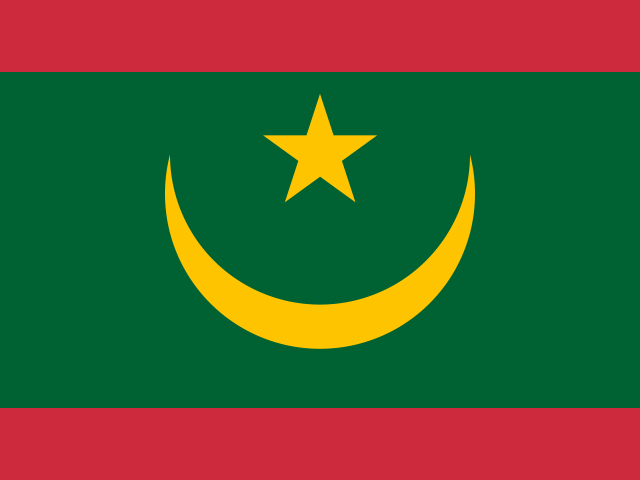 Mauritania
 Niger
Niger Nigeria
 Guinea-Bissau
 Saint Helena, Ascension and Tristan da Cunha
 Senegal
 Sierra Leone
 Togo
Togo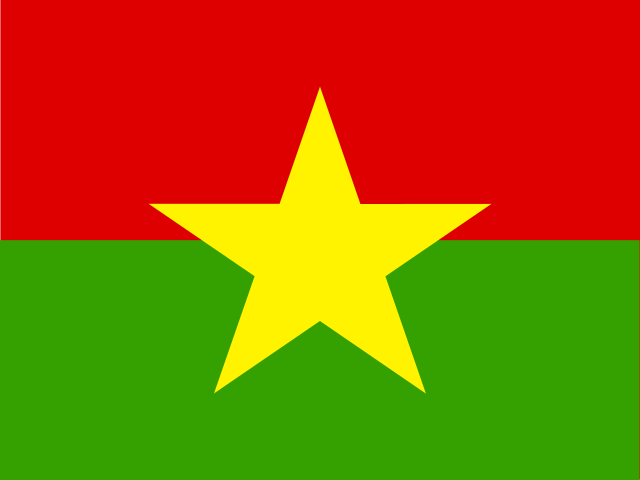 Burkina Faso
 British Indian Ocean Territory
 Burundi
 Comoros
 Mayotte
 Ethiopia
 Eritrea
 French Southern Territories
 Djibouti
 Kenya
Kenya Madagascar
 Malawi
 Mauritius
 Mozambique
 Reunion
 Rwanda
 Seychelles
 Somalia
 Zimbabwe
 South Sudan
 Uganda
 Tanzania
 Zambia
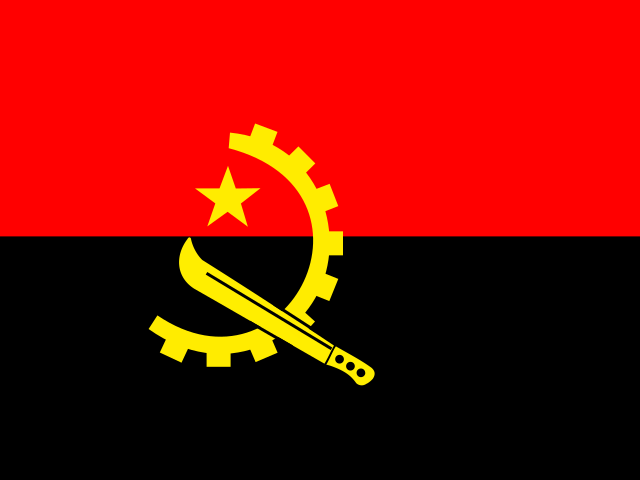 Angola
 Cameroon
 Central African Republic
 Chad
Chad Congo
Congo Democratic Republic of the Congo
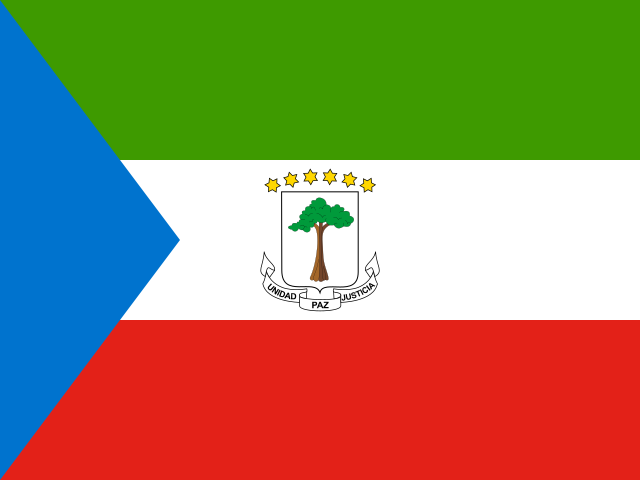 Equatorial Guinea
 Gabon
Gabon Sao Tome and Principe
 Botswana
 Lesotho
 Namibia
 South Africa
 Eswatini
Earlier Report Observations
Production of maize starch in South Africa showed moderate growth from 943 thousand tons in 2018 to 1 043 thousand tons in 2023, despite annual fluctuations linked largely to weather patterns. Drought conditions in 2018 and 2019 reduced maize plantings and yields, putting upward pressure on raw material prices and constraining starch output. The COVID-19 pandemic in 2020 indirectly affected the market through currency depreciation, which made exports more competitive and supported external demand. From 2021 onward, favorable early-season rains allowed for better crop establishment, though subsequent dry spells during grain filling limited yield potential. Severe El Niño-related drought in 2022 further tightened maize supply, yet starch production continued to expand, supported by steady regional demand from neighboring African countries.
The market structure played a significant role throughout the period. The starch industry has remained highly concentrated, dominated by a single major player such as Ingrain, which limited competition and investment in new technologies. Mandatory fortification of maize with vitamins and minerals, enforced by South African legislation, sustained industrial processing requirements. However, insufficient effluent infrastructure hindered plans to expand production of higher-value modified starch, capping growth potential. Export demand, particularly from within the Southern African Development Community (SADC), provided a consistent outlet for South African maize and starch, helping to offset variable local consumption.
In more recent years, the adoption of genetically modified seeds, used on about 85% of maize area, helped maintain productivity under challenging climatic conditions. However, changing consumer preferences toward bread, rice, and pasta began to slightly reduce local maize demand for food use. The combination of persistent drought risks, currency volatility affecting input costs and export competitiveness, and regulatory frameworks shaped the market's trajectory, leading to a gradual increase in both production and overall market size over the full period.
Table of content
- 1. Disclaimer
- 2. Terms of use of the report
- 3. Product codes in the statistical classifications used in the report
-
4. Key Market Indicators and Trends
-
4.1. Key Market Indicators
-
4.1.1. In kind
- 4.1.1.1. Production, 2018-2023
- 4.1.1.2. Imports, 2018-2024
- 4.1.1.3. Exports, 2018-2024
- 4.1.1.4. Market size, 2018-2023
-
4.1.1. In kind
- 4.2. Market Trends and Factors
-
4.1. Key Market Indicators
-
5. Production
-
5.1. Production in Africa
- 5.1.1. Annual dynamics of production in Africa in kind, 2018-2023, K t
-
5.2. Global production by Country, 2018-2023
- 5.2.1. Annual dynamics of production by macroregions in kind, 2018-2023, K t
- 5.2.2. Dynamics of production structure by macroregions in kind, 2018-2023
- 5.2.3. Annual dynamics of production by country in kind, 2018-2023, K t
- 5.2.4. Structure of production by countries in kind, 2018-2023
- 5.2.5. Dynamics of peoduction structure by countries in kind, 2018-2023
-
5.1. Production in Africa
-
6. Imports
-
6.1. Imports (Direct Data*)
- 6.1.1. Imports - Total information
-
6.1.2. Imports in kind, K t
- 6.1.2.1. Annual dynamics of product's imports to Algeria in kind, 2018-2024, K t
- 6.1.2.2. Dynamics of product's imports in kind to Algeria by countries, 2018-2024, K t
- 6.1.2.3. Structure of product's imports in kind by countries, 2018-2024
-
6.1.3. Imports in value, M $ US
- 6.1.3.1. Annual dynamics of product's imports to Algeria in value, 2018-2024, M $ US
- 6.1.3.2. Dynamics of product's imports in value to Algeria by countries, 2018-2024, M $ US
- 6.1.3.3. Structure of product's imports in value by countries, 2018-2024
-
6.1.4. Average price of product's imports, $ US/t
- 6.1.4.1. Annual dynamics of average price of product's imports to Algeria, 2018-2024, $ US/t
- 6.1.4.2. Dynamics of average price of product's imports to Algeria by countries, 2018-2024, $ US/t
-
6.2. Imports (Mirror Data)
- 6.2.1. Imports - Total information
-
6.2.2. Imports in kind, K t
- 6.2.2.1. Annual dynamics of product's imports to Algeria in kind, 2018-2024, K t
- 6.2.2.2. Dynamics of product's imports in kind to Algeria by countries, 2018-2024, K t
- 6.2.2.3. Structure of product's imports in kind by countries, 2018-2024
-
6.2.3. Imports in value, M $ US
- 6.2.3.1. Annual dynamics of product's imports to Algeria in value, 2018-2024, M $ US
- 6.2.3.2. Dynamics of product's imports in value to Algeria by countries, 2018-2024, M $ US
- 6.2.3.3. Structure of product's imports in value by countries, 2018-2024
-
6.2.4. Average price of product's imports, $ US/t
- 6.2.4.1. Annual dynamics of average price of product's imports to Algeria, 2018-2024, $ US/t
- 6.2.4.2. Dynamics of average price of product's imports to Algeria by countries, 2018-2024, $ US/t
-
6.1. Imports (Direct Data*)
-
7. Exports
-
7.1. Exports (Direct Data*)
- 7.1.1. Exports - Total information
-
7.1.2. Exports in kind, K t
- 7.1.2.1. Annual dynamics of product's exports from Algeria in kind, 2018-2024, K t
- 7.1.2.2. Dynamics of product's exports in kind from Algeria by countries, 2018-2024, K t
- 7.1.2.3. Structure of product's exports in kind by countries, 2018-2024
-
7.1.3. Exports in value, M $ US
- 7.1.3.1. Annual dynamics of product's exports from Algeria in value, 2018-2024, M $ US
- 7.1.3.2. Dynamics of product's exports in value from Algeria by countries, 2018-2024, M $ US
- 7.1.3.3. Structure of product's exports in value by countries, 2018-2024
-
7.1.4. Average price of product's exports, $ US/t
- 7.1.4.1. Annual dynamics of average price of product's exports from Algeria, 2018-2024, $ US/t
- 7.1.4.2. Dynamics of average price of product's exports from Algeria by countries, 2018-2024, $ US/t
-
7.2. Exports (Mirror Data)
- 7.2.1. Exports - Total information
-
7.2.2. Exports in kind, K t
- 7.2.2.1. Annual dynamics of product's exports from Algeria in kind, 2018-2024, K t
- 7.2.2.2. Dynamics of product's exports in kind from Algeria by countries, 2018-2024, K t
- 7.2.2.3. Structure of product's exports in kind by countries, 2018-2024
-
7.2.3. Exports in value, M $ US
- 7.2.3.1. Annual dynamics of product's exports from Algeria in value, 2018-2024, M $ US
- 7.2.3.2. Dynamics of product's exports in value from Algeria by countries, 2018-2024, M $ US
- 7.2.3.3. Structure of product's exports in value by countries, 2018-2024
-
7.2.4. Average price of product's exports, $ US/t
- 7.2.4.1. Annual dynamics of average price of product's exports from Algeria, 2018-2024, $ US/t
- 7.2.4.2. Dynamics of average price of product's exports from Algeria by countries, 2018-2024, $ US/t
-
7.1. Exports (Direct Data*)
-
8. Trade balance
-
8.1. Trade balance (Direct Data)
- 8.1.1. In kind, K t
- 8.1.2. In value, M $ US
-
8.2. Trade balance (Mirror Data)
- 8.2.1. In kind, K t
- 8.2.2. In value, M $ US
-
8.1. Trade balance (Direct Data)
-
9. Top buying and selling countries, 2018-2024
-
9.1. Direct Data
- 9.1.1. Import in Value by Countries-buyers
- 9.1.2. Export in Value by Countries-suppliers
-
9.2. Mirror Data
- 9.2.1. Import in Value by Countries-buyers
- 9.2.2. Export in Value by Countries-suppliers
-
9.1. Direct Data
Production maize starch in Africa
In kind, 2017-2020, K t
Top producers of maize starch, 2017-2020
World map of production of maize starch, 2017-2020
Africa's maize starch production declined for the second consecutive year. In 2020, production reached 932.1 K t, remaining broadly stable compared to 2019. Over the 2017-2020 period, production increased by 9.9%, with a compound annual growth rate of 3.2%. The highest production volume was recorded in 2018 at 942.9 K t. The largest year-on-year decline occurred in 2019 at 0.6%, while the largest increase was in 2018 at 11.2%.
Annual dynamics of production in Africa in kind, 2017-2020, K t
| Parameter | 2018 | 2019 | 2020 | CAGR | |
|---|---|---|---|---|---|
| 1 | Change from last year | 11.2% | (0.6%) | (0.5%) | 3.2% |
In value, 2017-2020, M $ US
In 2020, Africa's maize starch output was valued at 427.1 M $ US, marking a 1.9% increase from the previous year. Over the 2017-2020 period, production value grew by 11.9%, with a compound annual growth rate of 3.8%. The peak value was recorded in 2018 at 490.2 M $ US. The largest decline occurred in 2019 at 14.5%, while the largest increase was in 2018 at 28.5%.
Annual dynamics of production in Africa in value, 2017-2020, M $ US
| Parameter | 2018 | 2019 | 2020 | CAGR | |
|---|---|---|---|---|---|
| 1 | Change from last year | 28.5% | (14.5%) | 1.9% | 3.8% |
Exports maize starch from Africa
Exports in kind, K t
The market exhibited an unstable trend throughout the period. Export volumes reached their lowest point in 2017 and peaked in 2019, showing a 2.1-fold difference between these years. In 2020, maize starch deliveries from Africa stood at 86.4 K t, representing a slight 0.8% decrease from the previous year. The maximum volume was recorded in 2019 at 87.1 K t, with the largest increase occurring that same year at 78.4%.
Annual dynamics of product's exports from Africa in kind, 2017-2020, K t
| Parameter | 2018 | 2019 | 2020 | CAGR | |
|---|---|---|---|---|---|
| 1 | Change from last year | 17.2% | 78.4% | (0.8%) | 27.5% |
Between 2017 and 2020, Africa's maize starch exports in kind were distributed across a wide range of markets. Syria accounted for 14.6% of exports, Saudi Arabia for 12.6%, and Asia (not elsewhere specified) for 8.2%. Together, these three markets represented just 35.3% of total flows, with the remaining 64.7% shared among numerous other countries.
Structure of product's exports in kind by countries, 2017-2020
World map of product's exports from Africa in kind, 2017-2020
Exports in value, M $ US
Maize starch exports from Africa increased for the third consecutive year. In 2020, exports reached 39.6 M $ US, marking a 1.7% gain from the previous year. Between 2017 and 2020, exports grew by 111.3%, equating to an annualized growth rate of 28.3%.
Annual dynamics of product's exports from Africa in value, 2017-2020, M $ US
| Parameter | 2018 | 2019 | 2020 | CAGR | |
|---|---|---|---|---|---|
| 1 | Change from last year | 35.4% | 53.4% | 1.7% | 28.3% |
From 2017 to 2020, Africa's maize starch exports in value terms were distributed across a diverse range of partner countries. Syria accounted for 13.9% of export value, Saudi Arabia for 12.1%, and Asia (not elsewhere specified) for 7.6%. Together, these three markets represented just 33.6% of total export flows.
Structure of product's exports in value by countries, 2017-2020
World map of product's exports from Africa in value, 2017-2020
Imports maize starch to Africa
Imports in kind, K t
Maize starch imports into Africa increased for the second consecutive year. In 2020, imports amounted to 241.7 K t, representing a robust 21.3% increase compared to the previous year. Over the 2017-2020 period, imports grew by 42.7%, with a compound annual growth rate of 12.6%. The lowest import volume was recorded in 2018 at 146.0 K t. The largest decline occurred in 2018 at 13.8%, while the largest increase was in 2019 at 36.5%.
Annual dynamics of product's imports to Africa in kind, 2017-2020, K t
| Parameter | 2018 | 2019 | 2020 | CAGR | |
|---|---|---|---|---|---|
| 1 | Change from last year | (13.8%) | 36.5% | 21.3% | 12.6% |
Between 2017 and 2020, three main markets dominated Africa's maize starch imports in kind: Turkey, India, and China together accounted for 64.1% of total imports.
Structure of product's imports in kind by countries, 2017-2020
World map of product's imports to Africa in kind, 2017-2020
Imports in value, M $ US
Maize starch imports into Africa increased for the second consecutive year. In 2020, Africa imported 121.4 M $ US worth of maize starch, representing a 40.9% increase year-over-year. Over the 2017-2020 period, import value grew by 51.2%, with a compound annual growth rate of 14.8%. The lowest value was recorded in 2018 at 68.3 M $ US, with the largest decline occurring that same year at 14.9%.
Annual dynamics of product's imports to Africa in value, 2017-2020, M $ US
| Parameter | 2018 | 2019 | 2020 | CAGR | |
|---|---|---|---|---|---|
| 1 | Change from last year | (14.9%) | 26.0% | 40.9% | 14.8% |
From 2017 to 2020, three markets stood out as the main destinations for Africa's maize starch imports in value terms: Turkey accounted for 39.2% of import value, India for 13.0%, and China for 10.8%. Together, these three markets represented 63.1% of total import flows.
Structure of product's imports in value by countries, 2017-2020
World map of product's imports to Africa in value, 2017-2020
Related Reports

Maize starch market in Americas
2026-03-28
Maize starch market in Sub-Saharan Africa
2026-03-28
Maize starch market in Slovakia
2026-03-28
Maize starch market in Colombia
2026-03-28

Potato starch market in Africa
2026-03-28

2026-03-28

2026-03-28
Why Choose Us?
Only Verified Data
No Hidden Costs or Separate Fees
Smarter Subscription Pricing
Contact Our Team
Submit your inquiry using the form below — our team will get back to you within 24 hours.