






"Africa" region includes following countries:
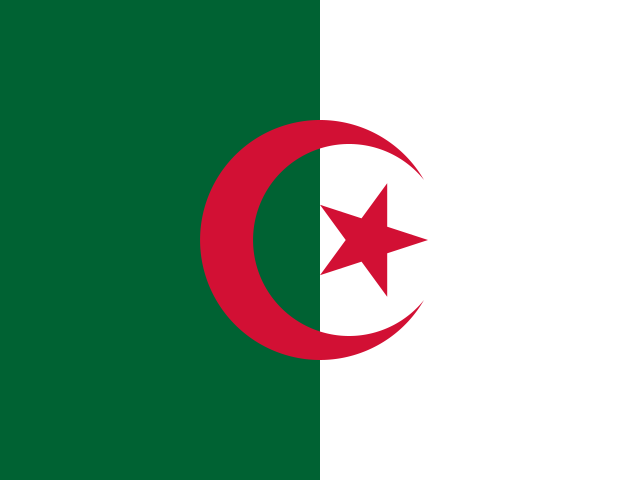 Algeria
 Libya
Libya Morocco
 Sudan
Sudan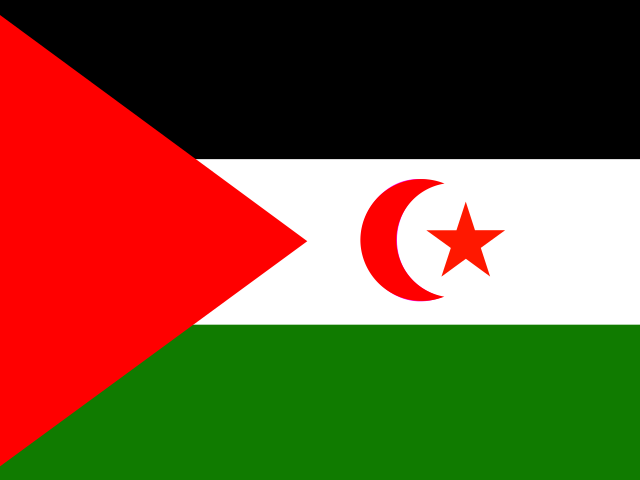 Western Sahara
 Tunisia
 Egypt
Egypt Cabo Verde
 Benin
Benin Gambia
 Ghana
Ghana Guinea
 Côte d'Ivoire
 Liberia
 Mali
Mali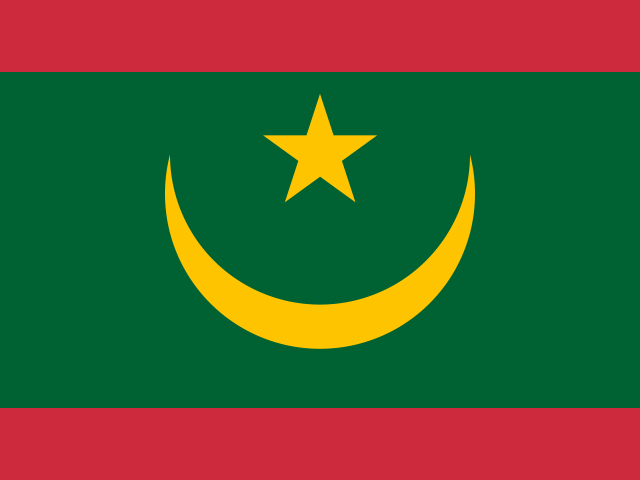 Mauritania
 Niger
Niger Nigeria
 Guinea-Bissau
 Saint Helena, Ascension and Tristan da Cunha
 Senegal
 Sierra Leone
 Togo
Togo Burkina Faso
 British Indian Ocean Territory
 Burundi
 Comoros
 Mayotte
 Ethiopia
 Eritrea
 French Southern Territories
 Djibouti
 Kenya
Kenya Madagascar
 Malawi
 Mauritius
 Mozambique
 Reunion
 Rwanda
 Seychelles
 Somalia
 Zimbabwe
 South Sudan
 Uganda
 Tanzania
 Zambia
 Angola
 Cameroon
 Central African Republic
 Chad
Chad Congo
Congo Democratic Republic of the Congo
 Equatorial Guinea
 Gabon
Gabon Sao Tome and Principe
 Botswana
 Lesotho
 Namibia
 South Africa
 Eswatini
Earlier Report Observations
The African ginger market volume fluctuated between 2018 and 2020, reaching 806.2 thousand tons by the end of the period. The adoption of the African Continental Free Trade Area (AfCFTA) agreement in 2018, which entered into force in May 2019, began reducing intra-continental trade barriers. Concurrently, the emergence of new ginger-infused beverage and value-added product segments started to boost consumer interest and demand.
Market volume continued to expand, peaking at 844.7 thousand tons in 2022 before declining to 827.8 thousand tons in 2023. Government interventions and expanded sourcing networks by international companies helped mitigate the impact of a severe ginger blight epidemic in Nigeria, supporting overall production. Rising consumer demand for organic and natural ginger products also drove growth. However, a sharp 17% surge in Nigerian exports to Europe and the Middle East in 2023 redirected substantial volumes abroad, reducing domestic availability.
In 2024, ginger blight disease persisted in Nigeria, affecting output, while global price volatility and strong consumer trends toward health-focused foods maintained ginger's market relevance. Investments by companies in advanced processing equipment and quality certification aimed to enhance competitiveness, and the AfCFTA continued to facilitate intra-African trade.
Table of content
- 1. Disclaimer
- 2. Terms of use of the report
- 3. Product codes in the statistical classifications used in the report
-
4. Key Market Indicators and Trends
-
4.1. Key Market Indicators
-
4.1.1. In kind
- 4.1.1.1. Production, 2018-2023
- 4.1.1.2. Imports, 2018-2024
- 4.1.1.3. Exports, 2018-2024
- 4.1.1.4. Market size, 2018-2023
-
4.1.1. In kind
- 4.2. Market Trends and Factors
-
4.1. Key Market Indicators
-
5. Production
-
5.1. Production in Africa
- 5.1.1. Annual dynamics of production in Africa in kind, 2018-2023, K t
-
5.2. Global production by Country, 2018-2023
- 5.2.1. Annual dynamics of production by macroregions in kind, 2018-2023, K t
- 5.2.2. Dynamics of production structure by macroregions in kind, 2018-2023
- 5.2.3. Annual dynamics of production by country in kind, 2018-2023, K t
- 5.2.4. Structure of production by countries in kind, 2018-2023
- 5.2.5. Dynamics of peoduction structure by countries in kind, 2018-2023
-
5.1. Production in Africa
-
6. Imports
-
6.1. Imports (Direct Data*)
- 6.1.1. Imports - Total information
-
6.1.2. Imports in kind, t
- 6.1.2.1. Annual dynamics of product's imports to Algeria in kind, 2018-2024, t
- 6.1.2.2. Dynamics of product's imports in kind to Algeria by countries, 2018-2024, t
- 6.1.2.3. Structure of product's imports in kind by countries, 2018-2024
-
6.1.3. Imports in value, K $ US
- 6.1.3.1. Annual dynamics of product's imports to Algeria in value, 2018-2024, K $ US
- 6.1.3.2. Dynamics of product's imports in value to Algeria by countries, 2018-2024, K $ US
- 6.1.3.3. Structure of product's imports in value by countries, 2018-2024
-
6.1.4. Average price of product's imports, $ US/t
- 6.1.4.1. Annual dynamics of average price of product's imports to Algeria, 2018-2024, $ US/t
- 6.1.4.2. Dynamics of average price of product's imports to Algeria by countries, 2018-2024, $ US/t
-
6.2. Imports (Mirror Data)
- 6.2.1. Imports - Total information
-
6.2.2. Imports in kind, t
- 6.2.2.1. Annual dynamics of product's imports to Algeria in kind, 2018-2024, t
- 6.2.2.2. Dynamics of product's imports in kind to Algeria by countries, 2018-2024, t
- 6.2.2.3. Structure of product's imports in kind by countries, 2018-2024
-
6.2.3. Imports in value, K $ US
- 6.2.3.1. Annual dynamics of product's imports to Algeria in value, 2018-2024, K $ US
- 6.2.3.2. Dynamics of product's imports in value to Algeria by countries, 2018-2024, K $ US
- 6.2.3.3. Structure of product's imports in value by countries, 2018-2024
-
6.2.4. Average price of product's imports, $ US/t
- 6.2.4.1. Annual dynamics of average price of product's imports to Algeria, 2018-2024, $ US/t
- 6.2.4.2. Dynamics of average price of product's imports to Algeria by countries, 2018-2024, $ US/t
-
6.1. Imports (Direct Data*)
-
7. Exports
-
7.1. Exports (Direct Data*)
- 7.1.1. Exports - Total information
-
7.1.2. Exports in kind, t
- 7.1.2.1. Annual dynamics of product's exports from Algeria in kind, 2018-2024, t
- 7.1.2.2. Dynamics of product's exports in kind from Algeria by countries, 2018-2024, t
- 7.1.2.3. Structure of product's exports in kind by countries, 2018-2024
-
7.1.3. Exports in value, K $ US
- 7.1.3.1. Annual dynamics of product's exports from Algeria in value, 2018-2024, K $ US
- 7.1.3.2. Dynamics of product's exports in value from Algeria by countries, 2018-2024, K $ US
- 7.1.3.3. Structure of product's exports in value by countries, 2018-2024
-
7.1.4. Average price of product's exports, $ US/t
- 7.1.4.1. Annual dynamics of average price of product's exports from Algeria, 2018-2024, $ US/t
- 7.1.4.2. Dynamics of average price of product's exports from Algeria by countries, 2018-2024, $ US/t
-
7.2. Exports (Mirror Data)
- 7.2.1. Exports - Total information
-
7.2.2. Exports in kind, t
- 7.2.2.1. Annual dynamics of product's exports from Algeria in kind, 2018-2024, t
- 7.2.2.2. Dynamics of product's exports in kind from Algeria by countries, 2018-2024, t
- 7.2.2.3. Structure of product's exports in kind by countries, 2018-2024
-
7.2.3. Exports in value, K $ US
- 7.2.3.1. Annual dynamics of product's exports from Algeria in value, 2018-2024, K $ US
- 7.2.3.2. Dynamics of product's exports in value from Algeria by countries, 2018-2024, K $ US
- 7.2.3.3. Structure of product's exports in value by countries, 2018-2024
-
7.2.4. Average price of product's exports, $ US/t
- 7.2.4.1. Annual dynamics of average price of product's exports from Algeria, 2018-2024, $ US/t
- 7.2.4.2. Dynamics of average price of product's exports from Algeria by countries, 2018-2024, $ US/t
-
7.1. Exports (Direct Data*)
-
8. Trade balance
-
8.1. Trade balance (Direct Data)
- 8.1.1. In kind, t
- 8.1.2. In value, K $ US
-
8.2. Trade balance (Mirror Data)
- 8.2.1. In kind, t
- 8.2.2. In value, K $ US
-
8.1. Trade balance (Direct Data)
-
9. Top buying and selling countries, 2018-2024
-
9.1. Direct Data
- 9.1.1. Import in Value by Countries-buyers
- 9.1.2. Export in Value by Countries-suppliers
-
9.2. Mirror Data
- 9.2.1. Import in Value by Countries-buyers
- 9.2.2. Export in Value by Countries-suppliers
-
9.1. Direct Data
Production ginger in Africa
In kind, 2017-2020, K t
Top producers of ginger, 2017-2020
World map of production of ginger, 2017-2020
After two consecutive years of decline, ginger production in Africa increased in 2020. That year, Africa produced 796.9 thousand tonnes of ginger, representing a 3.5% increase compared to 2019. Over the period from 2017 to 2020, production decreased by 14%, which translates to an average annual decline of 4.9%. The lowest production level was recorded in 2019 at 769.8 thousand tonnes. The most significant year-on-year drop occurred in 2018, when production fell by 16.5%.
Annual dynamics of production in Africa in kind, 2017-2020, K t
| Parameter | 2018 | 2019 | 2020 | CAGR | |
|---|---|---|---|---|---|
| 1 | Change from last year | (16.5%) | (0.5%) | 3.5% | (4.9%) |
In value, 2017-2020, M $ US
Following a two-year decline, the value of ginger production in Africa rose in 2020. That year, Africa's ginger output was valued at 1 597 million US dollars, marking a 17.9% increase compared to 2019. Between 2017 and 2020, the production value decreased by 27.8%, corresponding to a compound annual growth rate (CAGR) of -10.3%. The lowest value was recorded in 2019 at 1 355 million US dollars. The most substantial decline took place in 2018, when the value dropped by 31.3%.
Annual dynamics of production in Africa in value, 2017-2020, M $ US
| Parameter | 2018 | 2019 | 2020 | CAGR | |
|---|---|---|---|---|---|
| 1 | Change from last year | (31.3%) | (10.9%) | 17.9% | (10.3%) |
Exports ginger from Africa
Exports in kind, t
The export market for ginger from Africa showed considerable volatility during this period. Exports reached their lowest point in 2017 and peaked in 2020, with a 6.4-fold difference between these years. In 2020, Africa exported 8 941 tonnes of ginger, which represents a 175.4% increase compared to 2019. The largest decline occurred in 2019, when exports fell by 16.0%.
Annual dynamics of product's exports from Africa in kind, 2017-2020, t
| Parameter | 2018 | 2019 | 2020 | CAGR | |
|---|---|---|---|---|---|
| 1 | Change from last year | 174.7% | (16.0%) | 175.4% | 85.2% |
Between 2017 and 2020, the largest buyers of African ginger by volume were India (13.1% of total exports), the United Arab Emirates (6.9%), and Germany (3.9%). However, even combined, these three countries accounted for just 23.9% of Africa's total ginger exports, indicating a highly diversified partner base.
Structure of product's exports in kind by countries, 2017-2020
World map of product's exports from Africa in kind, 2017-2020
Exports in value, K $ US
The value of ginger exports from Africa experienced significant fluctuations during this period. Export values reached their lowest point in 2017 and peaked in 2020, showing a 5.3-fold difference between these years. In 2020, Africa's ginger exports were valued at 17 920 thousand US dollars, representing a 213.5% increase compared to 2019. The most substantial decline occurred in 2019, when export value dropped by 24.8%.
Annual dynamics of product's exports from Africa in value, 2017-2020, K $ US
| Parameter | 2018 | 2019 | 2020 | CAGR | |
|---|---|---|---|---|---|
| 1 | Change from last year | 126.2% | (24.8%) | 213.5% | 74.7% |
From 2017 to 2020, Africa's ginger export market by value was characterized by broad diversification. The top three buyers were India (12.9% of total export value), Germany (11.2%), and the United Arab Emirates (9.2%). Together, these countries accounted for only 33.3% of Africa's total ginger export value, with many other countries holding smaller but meaningful shares.
Structure of product's exports in value by countries, 2017-2020
World map of product's exports from Africa in value, 2017-2020
Imports ginger to Africa
Imports in kind, t
In 2020, Africa imported 18 298 tonnes of ginger, representing a 7.3% increase compared to 2019. Between 2017 and 2020, ginger imports to Africa grew by 59.1%, which corresponds to an average annual growth rate of 16.7%. The highest import volume was recorded in 2018 at 18 525 tonnes. The most significant decline occurred in 2019, when imports fell by 7.9%, while the largest increase took place in 2018, with imports rising by 61.0%.
Annual dynamics of product's imports to Africa in kind, 2017-2020, t
| Parameter | 2018 | 2019 | 2020 | CAGR | |
|---|---|---|---|---|---|
| 1 | Change from last year | 61.0% | (7.9%) | 7.3% | 16.7% |
From 2017 to 2020, Africa's ginger imports by volume came from a wide range of partner countries. The top three suppliers were China (24.9% of total imports), India (16.0%), and the United Arab Emirates (3.7%). Together, these countries accounted for 44.6% of Africa's total ginger imports by volume.
Structure of product's imports in kind by countries, 2017-2020
World map of product's imports to Africa in kind, 2017-2020
Imports in value, K $ US
In 2020, the value of ginger imports to Africa reached 47 409 thousand US dollars, marking a 42.3% increase compared to 2019. Over the period from 2017 to 2020, import values grew by 31.2%, corresponding to a compound annual growth rate (CAGR) of 9.5%. The lowest import value was recorded in 2019 at 33 324 thousand US dollars. The most substantial decline occurred in 2019, when import value fell by 11.9%.
Annual dynamics of product's imports to Africa in value, 2017-2020, K $ US
| Parameter | 2018 | 2019 | 2020 | CAGR | |
|---|---|---|---|---|---|
| 1 | Change from last year | 4.7% | (11.9%) | 42.3% | 9.5% |
Throughout the period from 2017 to 2020, the key suppliers of ginger to Africa by value were China (26.8% of total import value), India (26.2%), and the United Arab Emirates (4.4%). Together, these three countries represented 57.4% of Africa's total ginger import value.
Structure of product's imports in value by countries, 2017-2020
World map of product's imports to Africa in value, 2017-2020
Related Reports

2026-03-28
Ginger market in the United States
2026-03-28
2026-03-28
Ginger market in the Philippines
2026-03-28

2026-03-28


2026-03-28

2026-03-28
Why Choose Us?
Only Verified Data
No Hidden Costs or Separate Fees
Smarter Subscription Pricing
Contact Our Team
Submit your inquiry using the form below — our team will get back to you within 24 hours.