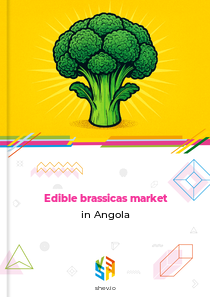







Earlier Report Observations
The market for fresh or chilled edible brassicas in Angola saw steady growth from 2018 to 2020, with volume rising from 292 thousand tons to 304 thousand tons. This increase was supported by the government's National Development Plan 2018-2022 and the launch of the PRODESI program in 2020, both aimed at boosting local agricultural production.
In 2021, market volume dropped to 265 thousand tons as structural limitations such as inadequate infrastructure, limited access to modern technology, and import dependency constrained output. However, production rebounded in the following years, reaching 274 thousand tons in 2022 and 284 thousand tons in 2023, fueled by efforts to enhance domestic supply through initiatives like the Planagrão grain development plan and regulatory changes that simplified business procedures and reduced bureaucracy.
During 2024, authorities further prioritized local products for the Strategic Food Reserve and continued to promote agro-industry, while e-commerce platforms for fresh food began to gain traction in Luanda despite logistical hurdles and inflationary pressures affecting prices.
Table of content
- 1. Disclaimer
- 2. Terms of use of the report
- 3. Product codes in the statistical classifications used in the report
-
4. Key Market Indicators and Trends
-
4.1. Key Market Indicators
-
4.1.1. In kind
- 4.1.1.1. Production, 2018-2023
- 4.1.1.2. Imports, 2018-2024
- 4.1.1.3. Exports, 2018-2024
- 4.1.1.4. Market size, 2018-2023
-
4.1.1. In kind
- 4.2. Market Trends and Factors
-
4.1. Key Market Indicators
-
5. Production
-
5.1. Production in Angola
- 5.1.1. Annual dynamics of production in Angola in kind, 2018-2023, K t
- 5.1.2. Annual dynamics of production in Angola in value, 2018-2023, $ US
-
5.2. Global production by Country, 2018-2023
- 5.2.1. Annual dynamics of production by macroregions in kind, 2018-2023, K t
- 5.2.2. Dynamics of production structure by macroregions in kind, 2018-2023
- 5.2.3. Annual dynamics of production by country in kind, 2018-2023, K t
- 5.2.4. Structure of production by countries in kind, 2018-2023
- 5.2.5. Dynamics of peoduction structure by countries in kind, 2018-2023
-
5.1. Production in Angola
-
6. Exports
-
6.1. Exports (Direct Data)
- 6.1.1. Exports - Total information
-
6.1.2. Exports in kind, t
- 6.1.2.1. Annual dynamics of product's exports from Angola in kind, 2018-2024, t
- 6.1.2.2. Dynamics of product's exports in kind from Angola by countries, 2018-2024, t
- 6.1.2.3. Structure of product's exports in kind by countries, 2018-2024
-
6.1.3. Exports in value, K $ US
- 6.1.3.1. Annual dynamics of product's exports from Angola in value, 2018-2024, K $ US
- 6.1.3.2. Dynamics of product's exports in value from Angola by countries, 2018-2024, K $ US
- 6.1.3.3. Structure of product's exports in value by countries, 2018-2024
-
6.1.4. Average price of product's exports, $ US/t
- 6.1.4.1. Annual dynamics of average price of product's exports from Angola, 2018-2024, $ US/t
- 6.1.4.2. Dynamics of average price of product's exports from Angola by countries, 2018-2024, $ US/t
-
6.2. Exports (Mirror Data)
- 6.2.1. Exports - Total information
-
6.2.2. Exports in kind, t
- 6.2.2.1. Annual dynamics of product's exports from Angola in kind, 2018-2024, t
- 6.2.2.2. Dynamics of product's exports in kind from Angola by countries, 2018-2024, t
- 6.2.2.3. Structure of product's exports in kind by countries, 2018-2024
-
6.2.3. Exports in value, K $ US
- 6.2.3.1. Annual dynamics of product's exports from Angola in value, 2018-2024, K $ US
- 6.2.3.2. Dynamics of product's exports in value from Angola by countries, 2018-2024, K $ US
- 6.2.3.3. Structure of product's exports in value by countries, 2018-2024
-
6.2.4. Average price of product's exports, $ US/t
- 6.2.4.1. Annual dynamics of average price of product's exports from Angola, 2018-2024, $ US/t
- 6.2.4.2. Dynamics of average price of product's exports from Angola by countries, 2018-2024, $ US/t
-
6.1. Exports (Direct Data)
-
7. Imports
-
7.1. Imports (Direct Data)
- 7.1.1. Imports - Total information
-
7.1.2. Imports in kind, t
- 7.1.2.1. Annual dynamics of product's imports to Angola in kind, 2018-2024, t
- 7.1.2.2. Dynamics of product's imports in kind to Angola by countries, 2018-2024, t
- 7.1.2.3. Structure of product's imports in kind by countries, 2018-2024
-
7.1.3. Imports in value, K $ US
- 7.1.3.1. Annual dynamics of product's imports to Angola in value, 2018-2024, K $ US
- 7.1.3.2. Dynamics of product's imports in value to Angola by countries, 2018-2024, K $ US
- 7.1.3.3. Structure of product's imports in value by countries, 2018-2024
-
7.1.4. Average price of product's imports, $ US/t
- 7.1.4.1. Annual dynamics of average price of product's imports to Angola, 2018-2024, $ US/t
- 7.1.4.2. Dynamics of average price of product's imports to Angola by countries, 2018-2024, $ US/t
-
7.2. Imports (Mirror Data)
- 7.2.1. Imports - Total information
-
7.2.2. Imports in kind, t
- 7.2.2.1. Annual dynamics of product's imports to Angola in kind, 2018-2024, t
- 7.2.2.2. Dynamics of product's imports in kind to Angola by countries, 2018-2024, t
- 7.2.2.3. Structure of product's imports in kind by countries, 2018-2024
-
7.2.3. Imports in value, K $ US
- 7.2.3.1. Annual dynamics of product's imports to Angola in value, 2018-2024, K $ US
- 7.2.3.2. Dynamics of product's imports in value to Angola by countries, 2018-2024, K $ US
- 7.2.3.3. Structure of product's imports in value by countries, 2018-2024
-
7.2.4. Average price of product's imports, $ US/t
- 7.2.4.1. Annual dynamics of average price of product's imports to Angola, 2018-2024, $ US/t
- 7.2.4.2. Dynamics of average price of product's imports to Angola by countries, 2018-2024, $ US/t
-
7.1. Imports (Direct Data)
-
8. Trade balance
-
8.1. Trade balance (Direct Data)
- 8.1.1. In kind, t
- 8.1.2. In value, K $ US
-
8.2. Trade balance (Mirror Data)
- 8.2.1. In kind, t
- 8.2.2. In value, K $ US
-
8.1. Trade balance (Direct Data)
-
9. Top buying and selling countries, 2018-2024
-
9.1. Direct Data
- 9.1.1. Import in Value by Countries-buyers
- 9.1.2. Export in Value by Countries-suppliers
-
9.2. Mirror Data
- 9.2.1. Import in Value by Countries-buyers
- 9.2.2. Export in Value by Countries-suppliers
-
9.1. Direct Data
Production edible brassicas in Angola
In kind, 2017-2020, K t
Top producers of edible brassicas, 2017-2020
World map of production of edible brassicas, 2017-2020
Edible brassicas production in Angola has increased for the third consecutive year. In 2020, Angola produced 304.3 thousand tonnes of edible brassicas, which represents a 3.6% increase compared to 2019. Between 2017 and 2020, production grew by 8.1%, translating to an average annual growth rate of 2.6%.
Annual dynamics of production in Angola in kind, 2017-2020, K t
| Parameter | 2018 | 2019 | 2020 | CAGR | |
|---|---|---|---|---|---|
| 1 | Change from last year | 3.8% | 0.6% | 3.6% | 2.6% |
Exports edible brassicas from Angola
Exports in kind, t
The market for edible brassicas exports from Angola experienced significant fluctuations during this period. Exports reached their lowest point in 2019 at 0.5 tonnes, which was a 68.1% decline from the previous year. In 2020, exports rebounded dramatically to 2.1 tonnes, marking a 299.6% increase compared to 2019. Overall, exports varied by 6.2-fold between the high in 2017 and the low in 2019.
Annual dynamics of product's exports from Angola in kind, 2017-2020, t
| Parameter | 2018 | 2019 | 2020 | CAGR | |
|---|---|---|---|---|---|
| 1 | Change from last year | (49.8%) | (68.1%) | 299.6% | (13.8%) |
From 2017 to 2020, Spain, the Bahamas, and France were the principal buyers of edible brassicas from Angola. Spain accounted for 37.7% of exports in kind, the Bahamas for 32.1%, and France for 6.2%. Together, these three countries represented 76.0% of Angola's total edible brassicas exports in kind during this period.
Structure of product's exports in kind by countries, 2017-2020
World map of product's exports from Angola in kind, 2017-2020
Exports in value, K $ US
The value of edible brassicas exports from Angola showed volatility over the observed period. The minimum value was recorded in 2018 at 2.2 thousand US dollars, which represented a 74.9% decline from the previous year. In 2020, exports totalled 3.0 thousand US dollars, a 28.1% increase compared to 2019. Overall, export values varied by 4-fold between the maximum in 2017 and the minimum in 2018.
Annual dynamics of product's exports from Angola in value, 2017-2020, K $ US
| Parameter | 2018 | 2019 | 2020 | CAGR | |
|---|---|---|---|---|---|
| 1 | Change from last year | (74.9%) | 4.2% | 28.1% | (30.6%) |
From 2017 to 2020, Spain, the Bahamas, and France formed the main group of destinations for Angola's edible brassicas exports in value terms. Spain accounted for 39.0% of export value, the Bahamas for 31.9%, and France for 5.6%. Combined, these three markets represented 76.5% of total export flows in value during this period.
Structure of product's exports in value by countries, 2017-2020
World map of product's exports from Angola in value, 2017-2020
Imports edible brassicas to Angola
Imports in kind, t
Angola's imports of edible brassicas declined for the second consecutive year. In 2020, Angola imported 289.3 tonnes of edible brassicas, marking a dramatic decline of 63.1% compared to 2019. The maximum value was recorded in 2018 at 289.3 tonnes, which represented a 40.2% increase from the previous year. Between 2017 and 2020, imports decreased by 59.2%, with a compound annual growth rate of -25.8%.
Annual dynamics of product's imports to Angola in kind, 2017-2020, t
| Parameter | 2018 | 2019 | 2020 | CAGR | |
|---|---|---|---|---|---|
| 1 | Change from last year | 40.2% | (21.1%) | (63.1%) | (25.8%) |
Throughout 2017 to 2020, South Africa, Belgium, and Portugal were the key partners for Angola's edible brassicas imports in kind. South Africa accounted for 44.2% of imports in kind, Belgium for 31.4%, and Portugal for 16.0%. Together, these three countries accounted for 91.6% of total import flows in kind.
Structure of product's imports in kind by countries, 2017-2020
World map of product's imports to Angola in kind, 2017-2020
Imports in value, K $ US
Angola's edible brassicas imports declined for the third consecutive year. In 2020, imports totalled 90.2 thousand US dollars, representing a sharp drop of 55.5% compared to 2019. Between 2017 and 2020, imports decreased by 82.9%, equating to an annualized decline rate of 44.5%.
Annual dynamics of product's imports to Angola in value, 2017-2020, K $ US
| Parameter | 2018 | 2019 | 2020 | CAGR | |
|---|---|---|---|---|---|
| 1 | Change from last year | (1.1%) | (61.1%) | (55.5%) | (44.5%) |
Throughout 2017 to 2020, the three largest markets for Angola's edible brassicas imports in value terms were South Africa, Belgium, and Portugal. Together, these countries accounted for 94.2% of total import flows in value during this period.
Structure of product's imports in value by countries, 2017-2020
World map of product's imports to Angola in value, 2017-2020
Related Reports

Edible brassicas market in Suriname
2026-03-27
Edible brassicas market in Honduras
2026-03-27
Edible brassicas market in Bangladesh
2026-03-27

2026-03-27
Sweet potatoe market in Angola
2026-03-27

Alliaceous vegetables market in Angola
2026-03-27

Dried shelled beans market in Angola
2026-03-27
Why Choose Us?
Only Verified Data
No Hidden Costs or Separate Fees
Smarter Subscription Pricing
Contact Our Team
Submit your inquiry using the form below — our team will get back to you within 24 hours.