






"Northern Europe" region includes following countries:
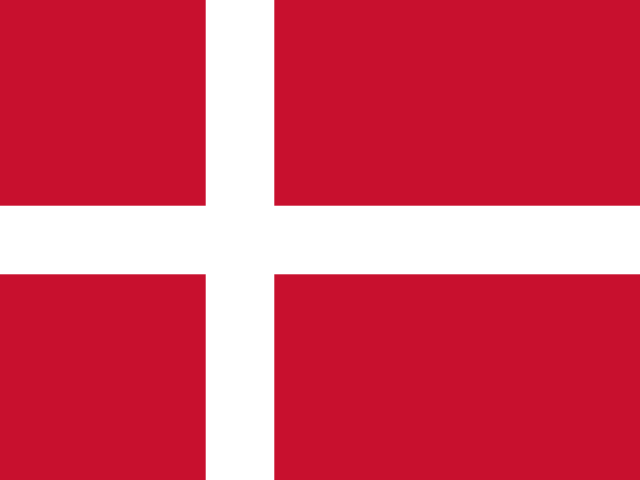 Denmark
 Estonia
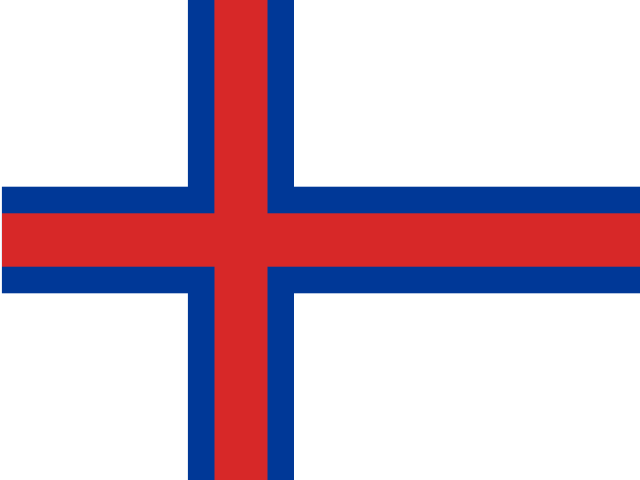 Faroe Islands
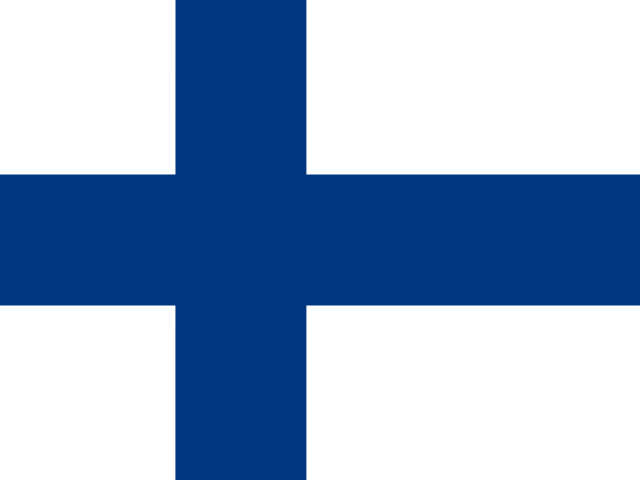 Finland
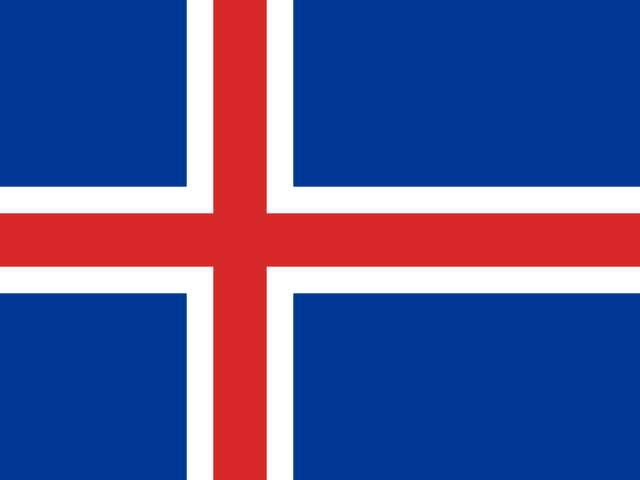 Iceland
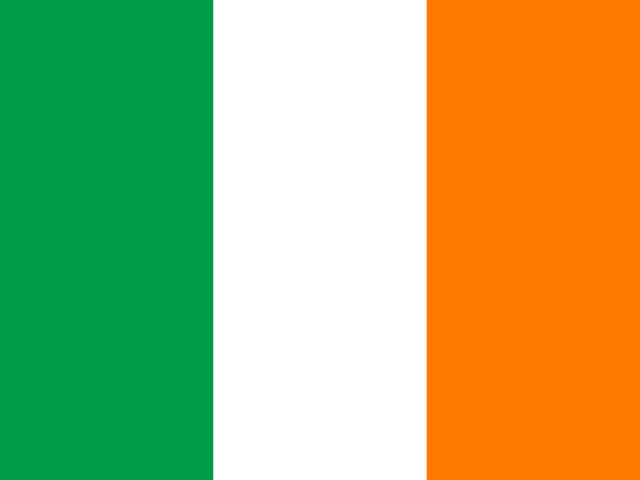 Ireland
 Latvia
 Lithuania
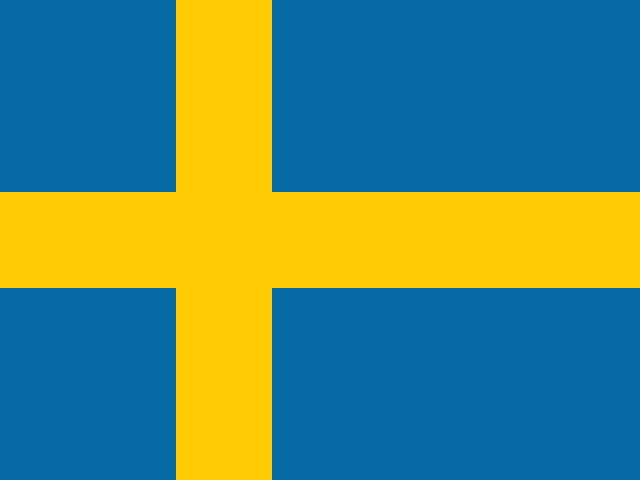 Sweden
 the United Kingdom
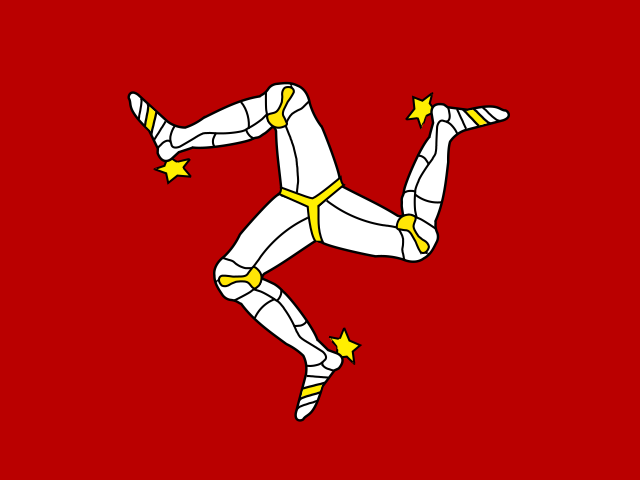 Isle of Man
Earlier Report Observations
The market for duck meat and offal in Northern Europe experienced significant shifts between 2018 and 2023. After a high of nearly 43 000 tonnes in 2018, consumption fell to 37 409 tonnes in 2019 and further to 35 121 tonnes in 2020. This decline coincided with increased public focus on sustainable diets and official recommendations to limit red meat intake to a maximum of 350 grams per week, which dampened consumer demand. The concurrent trend toward longer-lasting foods, including frozen products, provided some support to the duck meat segment during 2020 but was insufficient to reverse the overall contraction.
Market volume rebounded sharply in 2021, growing by over 26% to 44 364 tonnes. This surge was partly driven by the expanding market for organic products, including organic meat, which attracted consumer interest and stimulated overall demand. Growth continued into 2022, with volume reaching 47 739 tonnes, though at a slower pace. During this period, the market faced rising food prices due to global factors such as the pandemic and geopolitical tensions, yet demand remained resilient, possibly supported by ongoing shifts toward quality and traceable products.
By 2023, the market stabilized at 48 260 tonnes, with only a 1% increase from the previous year. Price growth for food items moderated compared to 2022, and consumers became more price-conscious, seeking value for money. Concurrently, enduring trends toward health, sustainability, and local provenance continued to shape purchasing decisions, contributing to a mature phase of market development.
Table of content
- 1. Disclaimer
- 2. Terms of use of the report
- 3. Product codes in the statistical classifications used in the report
-
4. Key Market Indicators and Trends
-
4.1. Key Market Indicators
-
4.1.1. In kind
- 4.1.1.1. Production, 2018-2023
- 4.1.1.2. Imports, 2018-2024
- 4.1.1.3. Exports, 2018-2024
- 4.1.1.4. Market size, 2018-2023
-
4.1.1. In kind
- 4.2. Market Trends and Factors
-
4.1. Key Market Indicators
-
5. Production
-
5.1. Production in Northern Europe
- 5.1.1. Annual dynamics of production in Northern Europe in kind, 2018-2023, t
-
5.2. Global production by Country, 2018-2023
- 5.2.1. Annual dynamics of production by macroregions in kind, 2018-2023, t
- 5.2.2. Dynamics of production structure by macroregions in kind, 2018-2023
- 5.2.3. Annual dynamics of production by country in kind, 2018-2023, t
- 5.2.4. Structure of production by countries in kind, 2018-2023
- 5.2.5. Dynamics of peoduction structure by countries in kind, 2018-2023
-
5.1. Production in Northern Europe
-
6. Exports
-
6.1. Exports (Direct Data*)
- 6.1.1. Exports - Total information
-
6.1.2. Exports in kind, t
- 6.1.2.1. Annual dynamics of product's exports from Denmark in kind, 2018-2024, t
- 6.1.2.2. Dynamics of product's exports in kind from Denmark by countries, 2018-2024, t
- 6.1.2.3. Structure of product's exports in kind by countries, 2018-2024
-
6.1.3. Exports in value, M $ US
- 6.1.3.1. Annual dynamics of product's exports from Denmark in value, 2018-2024, M $ US
- 6.1.3.2. Dynamics of product's exports in value from Denmark by countries, 2018-2024, M $ US
- 6.1.3.3. Structure of product's exports in value by countries, 2018-2024
-
6.1.4. Average price of product's exports, $ US/t
- 6.1.4.1. Annual dynamics of average price of product's exports from Denmark, 2018-2024, $ US/t
- 6.1.4.2. Dynamics of average price of product's exports from Denmark by countries, 2018-2024, $ US/t
-
6.2. Exports (Mirror Data)
- 6.2.1. Exports - Total information
-
6.2.2. Exports in kind, t
- 6.2.2.1. Annual dynamics of product's exports from Denmark in kind, 2018-2024, t
- 6.2.2.2. Dynamics of product's exports in kind from Denmark by countries, 2018-2024, t
- 6.2.2.3. Structure of product's exports in kind by countries, 2018-2024
-
6.2.3. Exports in value, M $ US
- 6.2.3.1. Annual dynamics of product's exports from Denmark in value, 2018-2024, M $ US
- 6.2.3.2. Dynamics of product's exports in value from Denmark by countries, 2018-2024, M $ US
- 6.2.3.3. Structure of product's exports in value by countries, 2018-2024
-
6.2.4. Average price of product's exports, $ US/t
- 6.2.4.1. Annual dynamics of average price of product's exports from Denmark, 2018-2024, $ US/t
- 6.2.4.2. Dynamics of average price of product's exports from Denmark by countries, 2018-2024, $ US/t
-
6.1. Exports (Direct Data*)
-
7. Imports
-
7.1. Imports (Direct Data*)
- 7.1.1. Imports - Total information
-
7.1.2. Imports in kind, t
- 7.1.2.1. Annual dynamics of product's imports to Denmark in kind, 2018-2024, t
- 7.1.2.2. Dynamics of product's imports in kind to Denmark by countries, 2018-2024, t
- 7.1.2.3. Structure of product's imports in kind by countries, 2018-2024
-
7.1.3. Imports in value, M $ US
- 7.1.3.1. Annual dynamics of product's imports to Denmark in value, 2018-2024, M $ US
- 7.1.3.2. Dynamics of product's imports in value to Denmark by countries, 2018-2024, M $ US
- 7.1.3.3. Structure of product's imports in value by countries, 2018-2024
-
7.1.4. Average price of product's imports, $ US/t
- 7.1.4.1. Annual dynamics of average price of product's imports to Denmark, 2018-2024, $ US/t
- 7.1.4.2. Dynamics of average price of product's imports to Denmark by countries, 2018-2024, $ US/t
-
7.2. Imports (Mirror Data)
- 7.2.1. Imports - Total information
-
7.2.2. Imports in kind, t
- 7.2.2.1. Annual dynamics of product's imports to Denmark in kind, 2018-2024, t
- 7.2.2.2. Dynamics of product's imports in kind to Denmark by countries, 2018-2024, t
- 7.2.2.3. Structure of product's imports in kind by countries, 2018-2024
-
7.2.3. Imports in value, M $ US
- 7.2.3.1. Annual dynamics of product's imports to Denmark in value, 2018-2024, M $ US
- 7.2.3.2. Dynamics of product's imports in value to Denmark by countries, 2018-2024, M $ US
- 7.2.3.3. Structure of product's imports in value by countries, 2018-2024
-
7.2.4. Average price of product's imports, $ US/t
- 7.2.4.1. Annual dynamics of average price of product's imports to Denmark, 2018-2024, $ US/t
- 7.2.4.2. Dynamics of average price of product's imports to Denmark by countries, 2018-2024, $ US/t
-
7.1. Imports (Direct Data*)
-
8. Trade balance
-
8.1. Trade balance (Direct Data)
- 8.1.1. In kind, t
- 8.1.2. In value, M $ US
-
8.2. Trade balance (Mirror Data)
- 8.2.1. In kind, t
- 8.2.2. In value, M $ US
-
8.1. Trade balance (Direct Data)
-
9. Top buying and selling countries, 2018-2024
-
9.1. Direct Data
- 9.1.1. Import in Value by Countries-buyers
- 9.1.2. Export in Value by Countries-suppliers
-
9.2. Mirror Data
- 9.2.1. Import in Value by Countries-buyers
- 9.2.2. Export in Value by Countries-suppliers
-
9.1. Direct Data
Production duck meat and offal in Northern Europe
In kind, 2017-2020, t
Top producers of duck meat and offal, 2017-2020
World map of production of duck meat and offal, 2017-2020
Duck meat and offal production in Northern Europe has declined for the second year in a row. In 2020, the region produced 24 697 tonnes, marking a significant 19.0% decrease compared to the previous year. Looking at the period from 2017 to 2020, production fell by 21.5%, which translates to an average annual decline of 7.7%. The highest production volume was recorded in 2018 at 32 348 tonnes, with the largest year-on-year increase of 2.9% also occurring that year.
Annual dynamics of production in Northern Europe in kind, 2017-2020, t
| Parameter | 2018 | 2019 | 2020 | CAGR | |
|---|---|---|---|---|---|
| 1 | Change from last year | 2.9% | (5.7%) | (19.0%) | (7.7%) |
In value, 2017-2020, M $ US
The value of duck meat and offal production in Northern Europe has dropped for the second consecutive year. In 2020, output was valued at 83.9 million US dollars, representing a controlled year-on-year loss of 6.6%. The peak value was reached in 2018 at 100.6 million US dollars, which saw the largest increase of 20.3%. The most substantial decline occurred in 2019, with a drop of 10.7%.
Annual dynamics of production in Northern Europe in value, 2017-2020, M $ US
| Parameter | 2018 | 2019 | 2020 | CAGR | |
|---|---|---|---|---|---|
| 1 | Change from last year | 20.3% | (10.7%) | (6.6%) | 0.1% |
Exports duck meat and offal from Northern Europe
Exports in kind, t
Following two years of growth, cross-border shipments of duck meat and offal from Northern Europe declined. In 2020, exports amounted to 9 040 tonnes, a steep 43.8% reduction compared to 2019. Over the 2017-2020 period, exports decreased by 6.7%, with a compound annual growth rate (CAGR) of -2.3%. The highest export volume was recorded in 2019 at 16 080 tonnes, while the largest increase of 32.4% occurred in 2018.
Annual dynamics of product's exports from Northern Europe in kind, 2017-2020, t
| Parameter | 2018 | 2019 | 2020 | CAGR | |
|---|---|---|---|---|---|
| 1 | Change from last year | 32.4% | 25.4% | (43.8%) | (2.3%) |
From 2017 to 2020, exports of duck meat and offal from Northern Europe were distributed across numerous countries. The Netherlands accounted for 15.5% of exports in kind, Germany for 14.0%, and France for 8.8%, with these three countries together representing only 38.3% of total flows.
Structure of product's exports in kind by countries, 2017-2020
World map of product's exports from Northern Europe in kind, 2017-2020
Exports in value, K $ US
After a two-year uptick, cross-border shipments of duck meat and offal from Northern Europe declined. In 2020, the region exported 30 715 thousand US dollars worth of duck meat and offal, showing a steep 35.1% drop year-over-year. Over the 2017-2020 period, exports increased by 19.3%, with a CAGR of 6.0%. The peak value was recorded in 2019 at 47 341 thousand US dollars, and the largest increase of 54.8% occurred in 2018.
Annual dynamics of product's exports from Northern Europe in value, 2017-2020, K $ US
| Parameter | 2018 | 2019 | 2020 | CAGR | |
|---|---|---|---|---|---|
| 1 | Change from last year | 54.8% | 18.7% | (35.1%) | 6.0% |
Between 2017 and 2020, the partner portfolio for exports in value terms of duck meat and offal from Northern Europe was quite broad. Germany accounted for 14.4% of exports in value terms, France for 6.8%, and the Netherlands for 6.5%, with these three countries together representing only 27.8% of total flows.
Structure of product's exports in value by countries, 2017-2020
World map of product's exports from Northern Europe in value, 2017-2020
Imports duck meat and offal to Northern Europe
Imports in kind, t
Cross-border shipments of duck meat and offal into Northern Europe declined for the second consecutive year. In 2020, the region imported 19 463 tonnes, representing a strong 15.3% fall year-over-year. Over the 2017-2020 period, imports decreased by 15%, with a CAGR of -5.3%. The highest import volume was recorded in 2018 at 23 409 tonnes, which also saw the largest increase of 2.3%.
Annual dynamics of product's imports to Northern Europe in kind, 2017-2020, t
| Parameter | 2018 | 2019 | 2020 | CAGR | |
|---|---|---|---|---|---|
| 1 | Change from last year | 2.3% | (1.8%) | (15.3%) | (5.3%) |
From 2017 to 2020, France was the principal destination for imports in kind, accounting for 19.5%, followed by Hungary at 17.4%, and the Netherlands at 14.7%. Together, these three countries accounted for 51.6% of total flows.
Structure of product's imports in kind by countries, 2017-2020
World map of product's imports to Northern Europe in kind, 2017-2020
Imports in value, K $ US
Imported duck meat and offal volumes in Northern Europe declined for the third consecutive year. In 2020, imports totaled 68 372 thousand US dollars, which is 22.0% smaller compared to 2019. Over the 2017-2020 period, imports decreased by 30.8%, with a CAGR of -11.5%.
Annual dynamics of product's imports to Northern Europe in value, 2017-2020, K $ US
| Parameter | 2018 | 2019 | 2020 | CAGR | |
|---|---|---|---|---|---|
| 1 | Change from last year | (0.3%) | (11.0%) | (22.0%) | (11.5%) |
Throughout 2017 to 2020, France formed the core of imports in value terms, accounting for 33.3%, followed by the Netherlands at 12.2%, and Hungary at 11.6%. Together, these three countries took 57.0% of total flows.
Structure of product's imports in value by countries, 2017-2020
World map of product's imports to Northern Europe in value, 2017-2020
Related Reports
Duck meat and offal market Ukraine
2026-03-27
Duck meat and offal market in Myanmar
2026-03-27
Duck meat and offal market in Argentina
2026-03-27
Duck meat and offal market in Zimbabwe
2026-03-27

Pork market in Northern Europe
2026-03-27


Why Choose Us?
Only Verified Data
No Hidden Costs or Separate Fees
Smarter Subscription Pricing
Contact Our Team
Submit your inquiry using the form below — our team will get back to you within 24 hours.