





"Eastern Europe (including Northern Asia)" region includes following countries:
 Bulgaria
 Belarus
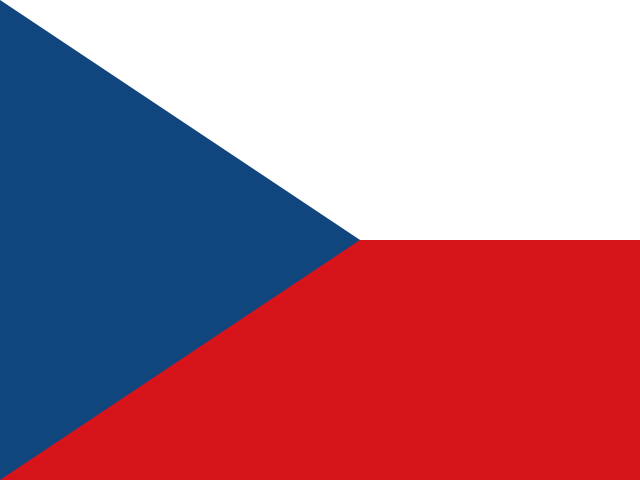 Czechia
 Hungary
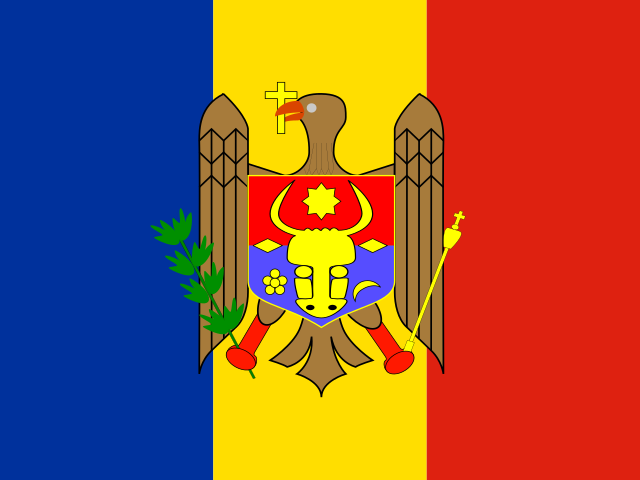 Moldova
 Poland
 Romania
 Russia
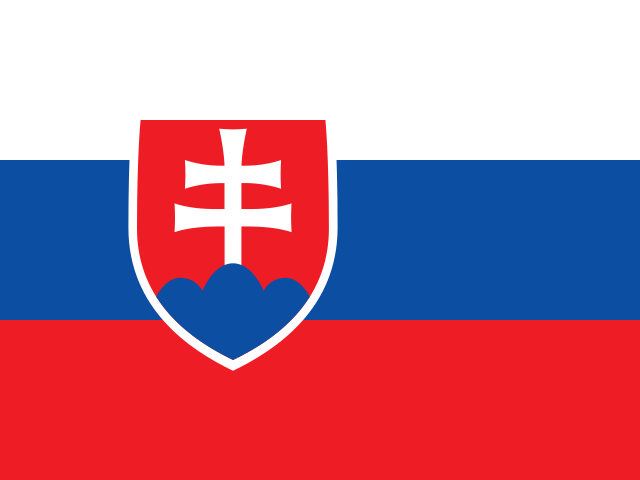 Slovakia
 Ukraine
Earlier Report Observations
The duck meat and offal market in Eastern Europe saw significant growth in 2019, with volume reaching 130.1 thousand tons. This surge was driven by the rapid development of the offal segment, which expanded by 102.8%, and the introduction of new product forms such as large-cut and small-cut items, supported by major producers like Damate and Ulybino.
Market volume then fluctuated over the next three years. The COVID-19 pandemic in 2020 contributed to a decline to 103.2 thousand tons. A recovery followed in 2021, reaching 119.6 thousand tons, as consumer preferences shifted towards chilled meat and semi-finished products. In 2022, volume fell again to 92.7 thousand tons.
By 2023, the market rebounded to 107.9 thousand tons. This growth was supported by further assortment expansion, including chilled meat and offal, enabling year-round sales, along with updated storage and handling requirements that improved product availability.
Table of content
- 1. Disclaimer
- 2. Terms of use of the report
- 3. Product codes in the statistical classifications used in the report
-
4. Key Market Indicators and Trends
-
4.1. Key Market Indicators
-
4.1.1. In kind
- 4.1.1.1. Production, 2018-2023
- 4.1.1.2. Imports, 2018-2024
- 4.1.1.3. Exports, 2018-2024
- 4.1.1.4. Market size, 2018-2023
-
4.1.1. In kind
- 4.2. Market Trends and Factors
-
4.1. Key Market Indicators
-
5. Production
-
5.1. Production in Eastern Europe (including Northern Asia)
- 5.1.1. Annual dynamics of production in Eastern Europe (including Northern Asia) in kind, 2018-2023, K t
-
5.2. Global production by Country, 2018-2023
- 5.2.1. Annual dynamics of production by macroregions in kind, 2018-2023, K t
- 5.2.2. Dynamics of production structure by macroregions in kind, 2018-2023
- 5.2.3. Annual dynamics of production by country in kind, 2018-2023, K t
- 5.2.4. Structure of production by countries in kind, 2018-2023
- 5.2.5. Dynamics of peoduction structure by countries in kind, 2018-2023
-
5.1. Production in Eastern Europe (including Northern Asia)
-
6. Imports
-
6.1. Imports (Direct Data*)
- 6.1.1. Imports - Total information
-
6.1.2. Imports in kind, t
- 6.1.2.1. Annual dynamics of product's imports to Bulgaria in kind, 2018-2024, t
- 6.1.2.2. Dynamics of product's imports in kind to Bulgaria by countries, 2018-2024, t
- 6.1.2.3. Structure of product's imports in kind by countries, 2018-2024
-
6.1.3. Imports in value, M $ US
- 6.1.3.1. Annual dynamics of product's imports to Bulgaria in value, 2018-2024, M $ US
- 6.1.3.2. Dynamics of product's imports in value to Bulgaria by countries, 2018-2024, M $ US
- 6.1.3.3. Structure of product's imports in value by countries, 2018-2024
-
6.1.4. Average price of product's imports, $ US/t
- 6.1.4.1. Annual dynamics of average price of product's imports to Bulgaria, 2018-2024, $ US/t
- 6.1.4.2. Dynamics of average price of product's imports to Bulgaria by countries, 2018-2024, $ US/t
-
6.2. Imports (Mirror Data)
- 6.2.1. Imports - Total information
-
6.2.2. Imports in kind, t
- 6.2.2.1. Annual dynamics of product's imports to Bulgaria in kind, 2018-2024, t
- 6.2.2.2. Dynamics of product's imports in kind to Bulgaria by countries, 2018-2024, t
- 6.2.2.3. Structure of product's imports in kind by countries, 2018-2024
-
6.2.3. Imports in value, M $ US
- 6.2.3.1. Annual dynamics of product's imports to Bulgaria in value, 2018-2024, M $ US
- 6.2.3.2. Dynamics of product's imports in value to Bulgaria by countries, 2018-2024, M $ US
- 6.2.3.3. Structure of product's imports in value by countries, 2018-2024
-
6.2.4. Average price of product's imports, $ US/t
- 6.2.4.1. Annual dynamics of average price of product's imports to Bulgaria, 2018-2024, $ US/t
- 6.2.4.2. Dynamics of average price of product's imports to Bulgaria by countries, 2018-2024, $ US/t
-
6.1. Imports (Direct Data*)
-
7. Exports
-
7.1. Exports (Direct Data*)
- 7.1.1. Exports - Total information
-
7.1.2. Exports in kind, t
- 7.1.2.1. Annual dynamics of product's exports from Bulgaria in kind, 2018-2024, t
- 7.1.2.2. Dynamics of product's exports in kind from Bulgaria by countries, 2018-2024, t
- 7.1.2.3. Structure of product's exports in kind by countries, 2018-2024
-
7.1.3. Exports in value, M $ US
- 7.1.3.1. Annual dynamics of product's exports from Bulgaria in value, 2018-2024, M $ US
- 7.1.3.2. Dynamics of product's exports in value from Bulgaria by countries, 2018-2024, M $ US
- 7.1.3.3. Structure of product's exports in value by countries, 2018-2024
-
7.1.4. Average price of product's exports, $ US/t
- 7.1.4.1. Annual dynamics of average price of product's exports from Bulgaria, 2018-2024, $ US/t
- 7.1.4.2. Dynamics of average price of product's exports from Bulgaria by countries, 2018-2024, $ US/t
-
7.2. Exports (Mirror Data)
- 7.2.1. Exports - Total information
-
7.2.2. Exports in kind, t
- 7.2.2.1. Annual dynamics of product's exports from Bulgaria in kind, 2018-2024, t
- 7.2.2.2. Dynamics of product's exports in kind from Bulgaria by countries, 2018-2024, t
- 7.2.2.3. Structure of product's exports in kind by countries, 2018-2024
-
7.2.3. Exports in value, M $ US
- 7.2.3.1. Annual dynamics of product's exports from Bulgaria in value, 2018-2024, M $ US
- 7.2.3.2. Dynamics of product's exports in value from Bulgaria by countries, 2018-2024, M $ US
- 7.2.3.3. Structure of product's exports in value by countries, 2018-2024
-
7.2.4. Average price of product's exports, $ US/t
- 7.2.4.1. Annual dynamics of average price of product's exports from Bulgaria, 2018-2024, $ US/t
- 7.2.4.2. Dynamics of average price of product's exports from Bulgaria by countries, 2018-2024, $ US/t
-
7.1. Exports (Direct Data*)
-
8. Trade balance
-
8.1. Trade balance (Direct Data)
- 8.1.1. In kind, t
- 8.1.2. In value, M $ US
-
8.2. Trade balance (Mirror Data)
- 8.2.1. In kind, t
- 8.2.2. In value, M $ US
-
8.1. Trade balance (Direct Data)
-
9. Top buying and selling countries, 2018-2024
-
9.1. Direct Data
- 9.1.1. Import in Value by Countries-buyers
- 9.1.2. Export in Value by Countries-suppliers
-
9.2. Mirror Data
- 9.2.1. Import in Value by Countries-buyers
- 9.2.2. Export in Value by Countries-suppliers
-
9.1. Direct Data
Production duck meat and offal in Eastern Europe (including Northern Asia)
In kind, 2017-2020, K t
Top producers of duck meat and offal, 2017-2020
World map of production of duck meat and offal, 2017-2020
Eastern Europe (including Northern Asia) saw its duck meat and offal production decline after two years of growth. In 2019, production reached its peak at 196.8 thousand tons, but then fell sharply by 23.1% year-over-year to 151.4 thousand tons in 2020. Over the entire 2017-2020 period, production actually increased by 17.8%, with an average annual growth rate of 5.6%. The most significant annual increase occurred in 2019, when production jumped by 30.1%.
Annual dynamics of production in Eastern Europe (including Northern Asia) in kind, 2017-2020, K t
| Parameter | 2018 | 2019 | 2020 | CAGR | |
|---|---|---|---|---|---|
| 1 | Change from last year | 17.7% | 30.1% | (23.1%) | 5.6% |
In value, 2017-2020, M $ US
Following two years of expansion, the value of duck meat and offal production in Eastern Europe (including Northern Asia) contracted. Production value peaked at 720.1 million US dollars in 2019, then dropped by 24.0% to 547.2 million US dollars in 2020. Looking at the full 2017-2020 timeframe, production value decreased by 8.9%, with a compound annual growth rate of -3.0%. The strongest annual growth was recorded in 2018, when the value increased by 13.5%.
Annual dynamics of production in Eastern Europe (including Northern Asia) in value, 2017-2020, M $ US
| Parameter | 2018 | 2019 | 2020 | CAGR | |
|---|---|---|---|---|---|
| 1 | Change from last year | 13.5% | 5.7% | (24.0%) | (3.0%) |
Exports duck meat and offal from Eastern Europe (including Northern Asia)
Exports in kind, t
Eastern Europe (including Northern Asia) experienced a second consecutive year of declining duck meat and offal export volumes. Exports reached their highest point in 2018 at 86 100 tons, but then fell to 60 932 tons in 2020, representing a sharp 26.1% decrease from 2019. Over the 2017-2020 period, exports decreased by 2.7%, with an average annual decline of 0.9%. The most substantial annual increase occurred in 2018, when exports grew by 37.4%.
Annual dynamics of product's exports from Eastern Europe (including Northern Asia) in kind, 2017-2020, t
| Parameter | 2018 | 2019 | 2020 | CAGR | |
|---|---|---|---|---|---|
| 1 | Change from last year | 37.4% | (4.3%) | (26.1%) | (0.9%) |
An analysis of export volumes from 2017 to 2020 reveals a widely distributed market structure. Germany accounted for 24.9% of exports, France for 15.6%, and the United Kingdom for 7.7%. Together, these three markets represented 48.2% of total export flows, while the remaining 51.8% was distributed among numerous other trading partners.
Structure of product's exports in kind by countries, 2017-2020
World map of product's exports from Eastern Europe (including Northern Asia) in kind, 2017-2020
Exports in value, M $ US
For the second year in a row, the value of duck meat and offal exports from Eastern Europe (including Northern Asia) declined. The export value peaked in 2018 at 387.9 million US dollars, then dropped to 220.3 million US dollars in 2020, marking a 27.0% decrease from the previous year. Over the 2017-2020 period, export value fell by 24.7%, with a compound annual decline of 9.0%. The strongest annual growth was recorded in 2018, when export value increased by 32.5%.
Annual dynamics of product's exports from Eastern Europe (including Northern Asia) in value, 2017-2020, M $ US
| Parameter | 2018 | 2019 | 2020 | CAGR | |
|---|---|---|---|---|---|
| 1 | Change from last year | 32.5% | (22.2%) | (27.0%) | (9.0%) |
From 2017 to 2020, France, Germany, and Belgium formed the core markets for duck meat and offal exports from Eastern Europe (including Northern Asia) in value terms. France accounted for 28.2% of export value, Germany for 15.3%, and Belgium for 11.6%. Together, these three countries represented 55.1% of total export flows during this period.
Structure of product's exports in value by countries, 2017-2020
World map of product's exports from Eastern Europe (including Northern Asia) in value, 2017-2020
Imports duck meat and offal to Eastern Europe (including Northern Asia)
Imports in kind, t
After two years of growth, duck meat and offal import volumes into Eastern Europe (including Northern Asia) declined. Imports reached their highest level in 2019 at 15 726 tons, then fell by 19.0% to 12 732 tons in 2020. The most significant annual increase occurred in 2019, when import volumes grew by 19.7%.
Annual dynamics of product's imports to Eastern Europe (including Northern Asia) in kind, 2017-2020, t
| Parameter | 2018 | 2019 | 2020 | CAGR | |
|---|---|---|---|---|---|
| 1 | Change from last year | 2.2% | 19.7% | (19.0%) | (0.3%) |
The import volume structure from 2017 to 2020 shows a highly diversified set of trading partners. Germany accounted for 13.7% of imports, France for 5.2%, and Denmark for 1.3%. Together, these three countries represented just 20.2% of total import flows, while the remaining 79.8% was spread across numerous smaller markets.
Structure of product's imports in kind by countries, 2017-2020
World map of product's imports to Eastern Europe (including Northern Asia) in kind, 2017-2020
Imports in value, M $ US
For the second consecutive year, the value of duck meat and offal imports into Eastern Europe (including Northern Asia) declined. Import value peaked in 2018 at 63.9 million US dollars, then dropped to 52.7 million US dollars in 2020, representing a 12.7% decrease from the previous year. Over the entire 2017-2020 period, import value actually increased by 5.1%, with an average annual growth rate of 1.7%. The strongest annual growth was recorded in 2018, when import value increased by 27.5%.
Annual dynamics of product's imports to Eastern Europe (including Northern Asia) in value, 2017-2020, M $ US
| Parameter | 2018 | 2019 | 2020 | CAGR | |
|---|---|---|---|---|---|
| 1 | Change from last year | 27.5% | (5.6%) | (12.7%) | 1.7% |
From 2017 to 2020, duck meat and offal imports into Eastern Europe (including Northern Asia) in value terms were characterized by broad market distribution. Germany accounted for 11.3% of import value, France for 8.9%, and Belgium for 2.5%. Together, these three markets represented just 22.7% of total import flows, with the remainder spread across numerous other partners.
Structure of product's imports in value by countries, 2017-2020
World map of product's imports to Eastern Europe (including Northern Asia) in value, 2017-2020
Related Reports

Duck meat and offal market in China
2026-03-27
Duck meat and offal market in Argentina
2026-03-27
Duck meat and offal market in South Africa
2026-03-27




Why Choose Us?
Only Verified Data
No Hidden Costs or Separate Fees
Smarter Subscription Pricing
Contact Our Team
Submit your inquiry using the form below — our team will get back to you within 24 hours.