






Earlier Report Observations
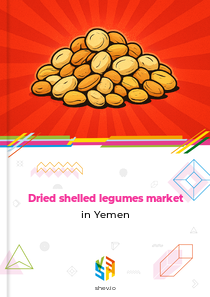
The market for dried shelled legumes in Yemen expanded from 232.5 thousand tons in 2018 to 405.0 thousand tons in 2021. This growth occurred despite persistent shortages of agricultural inputs like fertilizers and pesticides, which constrained domestic production, and the expansion of qat cultivation that reduced land for legumes. The lack of effective government marketing policies led to stockpiling and lower prices, likely stimulating consumption. By 2021, a worsening food crisis and taxes imposed by Houthi militias on distribution channels slowed market growth to 3.8%.
In 2022, new regulations controlling food import and export flows reduced imports, causing a slight market contraction to 392.5 thousand tons. The market rebounded to 429.9 thousand tons in 2023 following the introduction of new quality and packaging standards for dried legumes, coupled with the revival of state-owned processing plants that boosted local production and consumption.
In 2024, a decision to halt imports of 13 agricultural product types, including legumes, was implemented, impacting import volumes. Throughout the period, the market demonstrated resilience amid supply constraints and evolving regulatory measures.
Table of content
- 1. Disclaimer
- 2. Terms of use of the report
- 3. Product codes in the statistical classifications used in the report
-
4. Key Market Indicators and Trends
-
4.1. Key Market Indicators
-
4.1.1. In kind
- 4.1.1.1. Production, 2018-2023
- 4.1.1.2. Imports, 2018-2024
- 4.1.1.3. Exports, 2018-2024
- 4.1.1.4. Market size, 2018-2023
-
4.1.1. In kind
- 4.2. Market Trends and Factors
-
4.1. Key Market Indicators
-
5. Production
-
5.1. Production in Yemen
- 5.1.1. Annual dynamics of production in Yemen in kind, 2018-2023, K t
- 5.1.2. Annual dynamics of production in Yemen in value, 2018-2023, $ US
-
5.2. Global production by Country, 2018-2023
- 5.2.1. Annual dynamics of production by macroregions in kind, 2018-2023, K t
- 5.2.2. Dynamics of production structure by macroregions in kind, 2018-2023
- 5.2.3. Annual dynamics of production by country in kind, 2018-2023, K t
- 5.2.4. Structure of production by countries in kind, 2018-2023
- 5.2.5. Dynamics of peoduction structure by countries in kind, 2018-2023
-
5.1. Production in Yemen
-
6. Imports
-
6.1. Imports (Direct Data*)
- 6.1.1. Imports - Total information
-
6.1.2. Imports in kind, t
- 6.1.2.1. Annual dynamics of product's imports to Yemen in kind, 2018-2024, t
- 6.1.2.2. Dynamics of product's imports in kind to Yemen by countries, 2018-2024, t
- 6.1.2.3. Structure of product's imports in kind by countries, 2018-2024
-
6.1.3. Imports in value, K $ US
- 6.1.3.1. Annual dynamics of product's imports to Yemen in value, 2018-2024, K $ US
- 6.1.3.2. Dynamics of product's imports in value to Yemen by countries, 2018-2024, K $ US
- 6.1.3.3. Structure of product's imports in value by countries, 2018-2024
-
6.1.4. Average price of product's imports, $ US/t
- 6.1.4.1. Annual dynamics of average price of product's imports to Yemen, 2018-2024, $ US/t
- 6.1.4.2. Dynamics of average price of product's imports to Yemen by countries, 2018-2024, $ US/t
-
6.2. Imports (Mirror Data)
- 6.2.1. Imports - Total information
-
6.2.2. Imports in kind, t
- 6.2.2.1. Annual dynamics of product's imports to Yemen in kind, 2018-2024, t
- 6.2.2.2. Dynamics of product's imports in kind to Yemen by countries, 2018-2024, t
- 6.2.2.3. Structure of product's imports in kind by countries, 2018-2024
-
6.2.3. Imports in value, K $ US
- 6.2.3.1. Annual dynamics of product's imports to Yemen in value, 2018-2024, K $ US
- 6.2.3.2. Dynamics of product's imports in value to Yemen by countries, 2018-2024, K $ US
- 6.2.3.3. Structure of product's imports in value by countries, 2018-2024
-
6.2.4. Average price of product's imports, $ US/t
- 6.2.4.1. Annual dynamics of average price of product's imports to Yemen, 2018-2024, $ US/t
- 6.2.4.2. Dynamics of average price of product's imports to Yemen by countries, 2018-2024, $ US/t
-
6.1. Imports (Direct Data*)
-
7. Exports
-
7.1. Exports (Direct Data*)
- 7.1.1. Exports - Total information
-
7.1.2. Exports in kind, t
- 7.1.2.1. Annual dynamics of product's exports from Yemen in kind, 2018-2024, t
- 7.1.2.2. Dynamics of product's exports in kind from Yemen by countries, 2018-2024, t
- 7.1.2.3. Structure of product's exports in kind by countries, 2018-2024
-
7.1.3. Exports in value, K $ US
- 7.1.3.1. Annual dynamics of product's exports from Yemen in value, 2018-2024, K $ US
- 7.1.3.2. Dynamics of product's exports in value from Yemen by countries, 2018-2024, K $ US
- 7.1.3.3. Structure of product's exports in value by countries, 2018-2024
-
7.1.4. Average price of product's exports, $ US/t
- 7.1.4.1. Annual dynamics of average price of product's exports from Yemen, 2018-2024, $ US/t
- 7.1.4.2. Dynamics of average price of product's exports from Yemen by countries, 2018-2024, $ US/t
-
7.2. Exports (Mirror Data)
- 7.2.1. Exports - Total information
-
7.2.2. Exports in kind, t
- 7.2.2.1. Annual dynamics of product's exports from Yemen in kind, 2018-2024, t
- 7.2.2.2. Dynamics of product's exports in kind from Yemen by countries, 2018-2024, t
- 7.2.2.3. Structure of product's exports in kind by countries, 2018-2024
-
7.2.3. Exports in value, K $ US
- 7.2.3.1. Annual dynamics of product's exports from Yemen in value, 2018-2024, K $ US
- 7.2.3.2. Dynamics of product's exports in value from Yemen by countries, 2018-2024, K $ US
- 7.2.3.3. Structure of product's exports in value by countries, 2018-2024
-
7.2.4. Average price of product's exports, $ US/t
- 7.2.4.1. Annual dynamics of average price of product's exports from Yemen, 2018-2024, $ US/t
- 7.2.4.2. Dynamics of average price of product's exports from Yemen by countries, 2018-2024, $ US/t
-
7.1. Exports (Direct Data*)
-
8. Trade balance
-
8.1. Trade balance (Direct Data)
- 8.1.1. In kind, t
- 8.1.2. In value, K $ US
-
8.2. Trade balance (Mirror Data)
- 8.2.1. In kind, t
- 8.2.2. In value, K $ US
-
8.1. Trade balance (Direct Data)
-
9. Top buying and selling countries, 2018-2024
-
9.1. Direct Data
- 9.1.1. Import in Value by Countries-buyers
- 9.1.2. Export in Value by Countries-suppliers
-
9.2. Mirror Data
- 9.2.1. Import in Value by Countries-buyers
- 9.2.2. Export in Value by Countries-suppliers
-
9.1. Direct Data
Production dried shelled legumes in Yemen
In kind, 2017-2020, K t
Top producers of dried shelled legumes, 2017-2020
World map of production of dried shelled legumes, 2017-2020
Yemen's production of dried shelled legumes increased for the second consecutive year. In 2020, the country produced 295.5 thousand tons, marking an 8.1% rise from the previous year. Looking at the period from 2017 to 2020, production grew by 16.8%, which translates to an average annual increase of 5.3%. The lowest production volume was recorded in 2018 at 218.1 thousand tons, with the largest decline that year at 13.8%. In contrast, the most significant growth occurred in 2019, with a 25.4% increase.
Annual dynamics of production in Yemen in kind, 2017-2020, K t
| Parameter | 2018 | 2019 | 2020 | CAGR | |
|---|---|---|---|---|---|
| 1 | Change from last year | (13.8%) | 25.4% | 8.1% | 5.3% |
Exports dried shelled legumes from Yemen
Exports in kind, t
In 2020, Yemen exported 359 tons of dried shelled legumes, showing little change from 2019. Over the period from 2017 to 2020, exports increased by 8.7%, averaging a 2.8% annual growth rate.
Annual dynamics of product's exports from Yemen in kind, 2017-2020, t
| Parameter | 2018 | 2019 | 2020 | CAGR | |
|---|---|---|---|---|---|
| 1 | Change from last year | n/a | n/a | n/a | 2.8% |
From 2017 to 2020, Saudi Arabia was overwhelmingly the primary destination for Yemen's dried shelled legume exports, accounting for 95.4% of the total volume.
Structure of product's exports in kind by countries, 2017-2020
World map of product's exports from Yemen in kind, 2017-2020
Exports in value, K $ US
In 2020, Yemen's dried shelled legume exports totaled 209 thousand US dollars, remaining stable compared to 2019. Between 2017 and 2020, export value surged by 69.7%, with an average annual growth rate of 19.3%.
Annual dynamics of product's exports from Yemen in value, 2017-2020, K $ US
| Parameter | 2018 | 2019 | 2020 | CAGR | |
|---|---|---|---|---|---|
| 1 | Change from last year | n/a | n/a | n/a | 19.3% |
During 2017–2020, Saudi Arabia dominated Yemen's dried shelled legume exports in value terms, capturing 91.8% of the total.
Structure of product's exports in value by countries, 2017-2020
World map of product's exports from Yemen in value, 2017-2020
Imports dried shelled legumes to Yemen
Imports in kind, t
The import market for dried shelled legumes in Yemen showed volatility from 2017 to 2020. The lowest volume was recorded in 2018 at 14 417 tons, with the largest decline that year at 83.7%. In contrast, imports peaked in 2020 at 95 068 tons, representing a sharp year-over-year increase of 173.9%. The difference between the peak in 2020 and the trough in 2018 was 6.6 times.
Annual dynamics of product's imports to Yemen in kind, 2017-2020, t
| Parameter | 2018 | 2019 | 2020 | CAGR | |
|---|---|---|---|---|---|
| 1 | Change from last year | (83.7%) | 140.8% | 173.9% | 2.4% |
From 2017 to 2020, the main suppliers of dried shelled legumes to Yemen by volume were the United States (31.9%), Canada (13.2%), and Turkey (10.7%). Together, these three countries accounted for 55.8% of total imports.
Structure of product's imports in kind by countries, 2017-2020
World map of product's imports to Yemen in kind, 2017-2020
Imports in value, K $ US
Yemen's import market for dried shelled legumes in value terms was volatile between 2017 and 2020. The lowest value was in 2018 at 8 653 thousand US dollars, with the largest decline that year at 83.1%. Imports then surged to a peak in 2020, reaching 61 076 thousand US dollars, a steep 574.7% increase year-over-year. The variation between the 2020 peak and the 2018 trough was 7.1 times.
Annual dynamics of product's imports to Yemen in value, 2017-2020, K $ US
| Parameter | 2018 | 2019 | 2020 | CAGR | |
|---|---|---|---|---|---|
| 1 | Change from last year | (83.1%) | 4.6% | 574.7% | 6.0% |
Throughout 2017–2020, the United States (32.3%), Turkey (17.4%), and Ethiopia (12.3%) were the leading suppliers of dried shelled legumes to Yemen in value terms, together comprising 62.0% of total imports.
Structure of product's imports in value by countries, 2017-2020
World map of product's imports to Yemen in value, 2017-2020
Related Reports

Dried shelled legumes market in Sierra Leone
2026-03-27
Dried shelled legumes market in Guyana
2026-03-27
Dried shelled legumes market in Chile
2026-03-27
Dried shelled legumes market in ASEAN
2026-03-27

Carrots and turnips market in Yemen
2026-03-27

Capsicum and pimenta fruits market in Yemen
2026-03-27
Dried shelled chickpeas market in Yemen
2026-03-27
2026-03-27
Why Choose Us?
Only Verified Data
No Hidden Costs or Separate Fees
Smarter Subscription Pricing
Contact Our Team
Submit your inquiry using the form below — our team will get back to you within 24 hours.