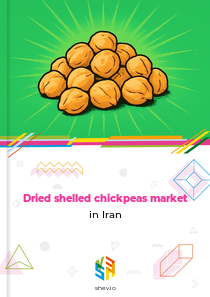







Earlier Report Observations
The Iranian dried shelled chickpeas market demonstrated steady growth at the start of the period, rising from 212 thousand tons in 2018 to 219 thousand tons in 2019. Domestic production remained stable, supported by growing attention to the crop's agronomic benefits for soil fertility and the initiation of cultivation modernization measures in arid regions like Kermanshah and Kurdistan. However, emerging challenges such as suboptimal water resource management and increased reliance on chemical inputs began to pressure the agricultural sector.
From 2020 onward, climatic factors became the primary market driver. Severe drought in the northern half of the country, later expanding to provinces including Sistan and Baluchestan, Kerman, and Yazd, led to a consistent decline in domestic chickpea output. To offset the shortfall, import volumes surged, peaking at 107 thousand tons in 2021 and propelling the total market size to a high of 274 thousand tons. The intensifying water crisis, exacerbated by aging infrastructure and rising production costs, continued to strain local producers. By 2022, despite sustained high imports, the market volume began to contract.
In 2023, the market dynamics shifted sharply as the total volume plummeted to 185 thousand tons. Although domestic production saw a modest recovery, imports collapsed to just 30 thousand tons—less than a third of the previous year's level. This drastic reduction in foreign supply was the key factor behind the market's contraction.
Table of content
- 1. Disclaimer
- 2. Terms of use of the report
- 3. Product codes in the statistical classifications used in the report
-
4. Key Market Indicators and Trends
-
4.1. Key Market Indicators
-
4.1.1. In kind
- 4.1.1.1. Production, 2018-2023
- 4.1.1.2. Imports, 2018-2024
- 4.1.1.3. Exports, 2018-2024
- 4.1.1.4. Market size, 2018-2023
-
4.1.1. In kind
- 4.2. Market Trends and Factors
-
4.1. Key Market Indicators
-
5. Production
-
5.1. Production in Iran
- 5.1.1. Annual dynamics of production in Iran in kind, 2018-2023, K t
- 5.1.2. Annual dynamics of production in Iran in value, 2018-2023, $ US
-
5.2. Global production by Country, 2018-2023
- 5.2.1. Annual dynamics of production by macroregions in kind, 2018-2023, K t
- 5.2.2. Dynamics of production structure by macroregions in kind, 2018-2023
- 5.2.3. Annual dynamics of production by country in kind, 2018-2023, K t
- 5.2.4. Structure of production by countries in kind, 2018-2023
- 5.2.5. Dynamics of peoduction structure by countries in kind, 2018-2023
-
5.1. Production in Iran
-
6. Imports
-
6.1. Imports (Direct Data*)
- 6.1.1. Imports - Total information
-
6.1.2. Imports in kind, K t
- 6.1.2.1. Annual dynamics of product's imports to Iran in kind, 2018-2024, K t
- 6.1.2.2. Dynamics of product's imports in kind to Iran by countries, 2018-2024, K t
- 6.1.2.3. Structure of product's imports in kind by countries, 2018-2024
-
6.1.3. Imports in value, M $ US
- 6.1.3.1. Annual dynamics of product's imports to Iran in value, 2018-2024, M $ US
- 6.1.3.2. Dynamics of product's imports in value to Iran by countries, 2018-2024, M $ US
- 6.1.3.3. Structure of product's imports in value by countries, 2018-2024
-
6.1.4. Average price of product's imports, $ US/t
- 6.1.4.1. Annual dynamics of average price of product's imports to Iran, 2018-2024, $ US/t
- 6.1.4.2. Dynamics of average price of product's imports to Iran by countries, 2018-2024, $ US/t
-
6.2. Imports (Mirror Data)
- 6.2.1. Imports - Total information
-
6.2.2. Imports in kind, K t
- 6.2.2.1. Annual dynamics of product's imports to Iran in kind, 2018-2024, K t
- 6.2.2.2. Dynamics of product's imports in kind to Iran by countries, 2018-2024, K t
- 6.2.2.3. Structure of product's imports in kind by countries, 2018-2024
-
6.2.3. Imports in value, M $ US
- 6.2.3.1. Annual dynamics of product's imports to Iran in value, 2018-2024, M $ US
- 6.2.3.2. Dynamics of product's imports in value to Iran by countries, 2018-2024, M $ US
- 6.2.3.3. Structure of product's imports in value by countries, 2018-2024
-
6.2.4. Average price of product's imports, $ US/t
- 6.2.4.1. Annual dynamics of average price of product's imports to Iran, 2018-2024, $ US/t
- 6.2.4.2. Dynamics of average price of product's imports to Iran by countries, 2018-2024, $ US/t
-
6.1. Imports (Direct Data*)
-
7. Exports
-
7.1. Exports (Direct Data*)
- 7.1.1. Exports - Total information
-
7.1.2. Exports in kind, K t
- 7.1.2.1. Annual dynamics of product's exports from Iran in kind, 2018-2024, K t
- 7.1.2.2. Dynamics of product's exports in kind from Iran by countries, 2018-2024, K t
- 7.1.2.3. Structure of product's exports in kind by countries, 2018-2024
-
7.1.3. Exports in value, M $ US
- 7.1.3.1. Annual dynamics of product's exports from Iran in value, 2018-2024, M $ US
- 7.1.3.2. Dynamics of product's exports in value from Iran by countries, 2018-2024, M $ US
- 7.1.3.3. Structure of product's exports in value by countries, 2018-2024
-
7.1.4. Average price of product's exports, $ US/t
- 7.1.4.1. Annual dynamics of average price of product's exports from Iran, 2018-2024, $ US/t
- 7.1.4.2. Dynamics of average price of product's exports from Iran by countries, 2018-2024, $ US/t
-
7.2. Exports (Mirror Data)
- 7.2.1. Exports - Total information
-
7.2.2. Exports in kind, K t
- 7.2.2.1. Annual dynamics of product's exports from Iran in kind, 2018-2024, K t
- 7.2.2.2. Dynamics of product's exports in kind from Iran by countries, 2018-2024, K t
- 7.2.2.3. Structure of product's exports in kind by countries, 2018-2024
-
7.2.3. Exports in value, M $ US
- 7.2.3.1. Annual dynamics of product's exports from Iran in value, 2018-2024, M $ US
- 7.2.3.2. Dynamics of product's exports in value from Iran by countries, 2018-2024, M $ US
- 7.2.3.3. Structure of product's exports in value by countries, 2018-2024
-
7.2.4. Average price of product's exports, $ US/t
- 7.2.4.1. Annual dynamics of average price of product's exports from Iran, 2018-2024, $ US/t
- 7.2.4.2. Dynamics of average price of product's exports from Iran by countries, 2018-2024, $ US/t
-
7.1. Exports (Direct Data*)
-
8. Trade balance
-
8.1. Trade balance (Direct Data)
- 8.1.1. In kind, K t
- 8.1.2. In value, M $ US
-
8.2. Trade balance (Mirror Data)
- 8.2.1. In kind, K t
- 8.2.2. In value, M $ US
-
8.1. Trade balance (Direct Data)
-
9. Top buying and selling countries, 2018-2024
-
9.1. Direct Data
- 9.1.1. Import in Value by Countries-buyers
- 9.1.2. Export in Value by Countries-suppliers
-
9.2. Mirror Data
- 9.2.1. Import in Value by Countries-buyers
- 9.2.2. Export in Value by Countries-suppliers
-
9.1. Direct Data
Production dried shelled chickpeas in Iran
In kind, 2017-2020, K t
Between 2017 and 2020, Iran ranked as the 11th largest producer of dried shelled chickpeas globally, placing it among the world's leading producers during this period.
Top producers of dried shelled chickpeas, 2017-2020
World map of production of dried shelled chickpeas, 2017-2020
In 2020, Iran produced 190.2 K t of dried shelled chickpeas, marking a 2.2% decrease from 2019. Over the 2017-2020 period, production fell by 17.1%, which translates to an annualized decline of 6.1%. The most significant drop occurred in 2018, with a 17.0% decrease, while 2019 saw the largest increase at 2.1%.
Annual dynamics of production in Iran in kind, 2017-2020, K t
| Parameter | 2018 | 2019 | 2020 | CAGR | |
|---|---|---|---|---|---|
| 1 | Change from last year | (17.0%) | 2.1% | (2.2%) | (6.1%) |
Exports dried shelled chickpeas from Iran
Exports in kind, K t
Export volumes of dried shelled chickpeas from Iran showed notable fluctuations from 2017 to 2020. The lowest point was in 2017, while exports peaked in 2018 at 48.7 K t, representing a 6.4-fold difference between these years. In 2020, exports reached 18.6 K t, a 39.7% increase year-over-year. The largest decline was recorded in 2019 at 72.7%, and the most substantial increase occurred in 2018, surging by 543.4%.
Annual dynamics of product's exports from Iran in kind, 2017-2020, K t
| Parameter | 2018 | 2019 | 2020 | CAGR | |
|---|---|---|---|---|---|
| 1 | Change from last year | 543.4% | (72.7%) | 39.7% | 34.9% |
From 2017 to 2020, Pakistan and Iraq were the primary buyers of dried shelled chickpeas from Iran, together accounting for 80.8% of total exports in volume. The remaining share was distributed among other countries.
Structure of product's exports in kind by countries, 2017-2020
World map of product's exports from Iran in kind, 2017-2020
Exports in value, M $ US
The value of dried shelled chickpeas exports from Iran displayed an unstable trend between 2017 and 2020. The minimum was recorded in 2019 at 8.5 M $ US, while the maximum occurred in 2018 at 77.9 M $ US, resulting in a 9.2-fold variation. In 2020, exports totaled 11.7 M $ US, a 38.1% increase from the previous year. The largest decline was in 2019 at 89.1%, and the most significant increase was in 2018, rising by 618.5%.
Annual dynamics of product's exports from Iran in value, 2017-2020, M $ US
| Parameter | 2018 | 2019 | 2020 | CAGR | |
|---|---|---|---|---|---|
| 1 | Change from last year | 618.5% | (89.1%) | 38.1% | 2.7% |
During the 2017-2020 period, Pakistan and Iraq dominated as the top destinations for Iran's dried shelled chickpeas exports in value terms, jointly representing 85.8% of total flows. Smaller markets accounted for the remainder.
Structure of product's exports in value by countries, 2017-2020
World map of product's exports from Iran in value, 2017-2020
Imports dried shelled chickpeas to Iran
Imports in kind, K t
After a two-year decline, imports of dried shelled chickpeas into Iran rebounded in 2020, reaching 64.3 K t, a sharp 67.7% increase from 2019. Over the 2017-2020 span, imports decreased by 46.9%, with an annualized rate of decline of 19.0%. The lowest volume was in 2019 at 38.3 K t, which also saw the largest drop of 45.5%.
Annual dynamics of product's imports to Iran in kind, 2017-2020, K t
| Parameter | 2018 | 2019 | 2020 | CAGR | |
|---|---|---|---|---|---|
| 1 | Change from last year | (42.0%) | (45.5%) | 67.7% | (19.0%) |
From 2017 to 2020, the United Arab Emirates (30.8% of imports in volume), Ethiopia (18.6%), and Russia (12.5%) were the main sources for Iran's dried shelled chickpeas imports, collectively making up 61.8% of total flows.
Structure of product's imports in kind by countries, 2017-2020
World map of product's imports to Iran in kind, 2017-2020
Imports in value, M $ US
Following a two-year contraction, imports of dried shelled chickpeas into Iran increased in 2020, totaling 50.8 M $ US, a 63.2% rise from the previous year. Between 2017 and 2020, imports fell by 60.8%, equating to an annualized decrease of 26.8%. The minimum value was in 2019 at 31.1 M $ US, which also experienced the largest decline of 59.3%.
Annual dynamics of product's imports to Iran in value, 2017-2020, M $ US
| Parameter | 2018 | 2019 | 2020 | CAGR | |
|---|---|---|---|---|---|
| 1 | Change from last year | (40.9%) | (59.3%) | 63.2% | (26.8%) |
Throughout 2017-2020, the United Arab Emirates (33.2% of imports in value), Ethiopia (20.0%), and Australia (11.3%) remained the key markets for Iran's dried shelled chickpeas imports in monetary terms, together accounting for 64.6% of total flows.
Structure of product's imports in value by countries, 2017-2020
World map of product's imports to Iran in value, 2017-2020
Related Reports
Dried shelled chickpeas market in Bolivia
2026-03-27
Dried shelled chickpeas market in Togo
2026-03-27

Leguminous vegetables market in Iran
2026-03-27


Lettuce and chicory market in Iran
2026-03-27

2026-03-27
In-depth market research on this product
Global Chickpea Market 2021–2031: Size, Share, Trends and Forecast
Global market report: size, trends and forecast to 2031 · 192 pages
Why Choose Us?
Only Verified Data
No Hidden Costs or Separate Fees
Smarter Subscription Pricing
Contact Our Team
Submit your inquiry using the form below — our team will get back to you within 24 hours.