






"Latin America and the Caribbean" region includes following countries:
 Argentina
 Bolivia
 Brazil
 Chile
Chile Colombia
 Ecuador
 Falkland Islands (Malvinas)
 French Guiana
 Guyana
 Paraguay
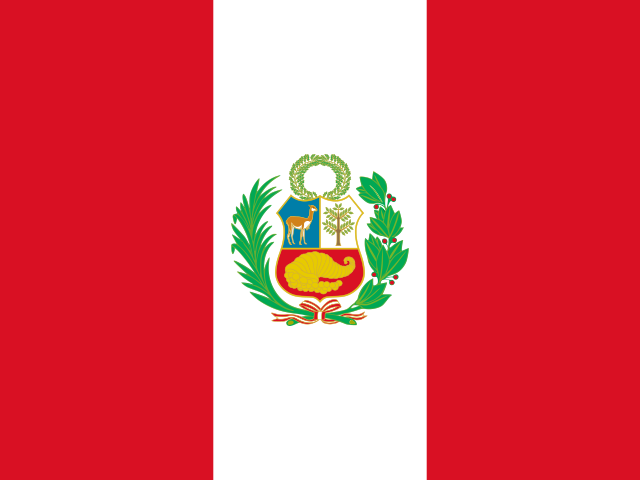 Peru
Peru Suriname
 Uruguay
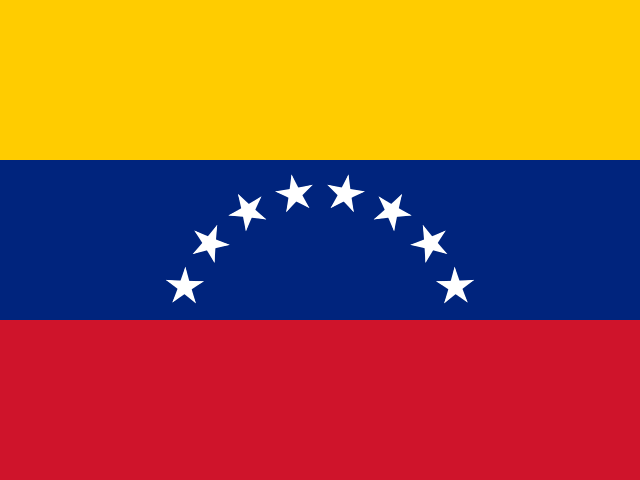 Venezuela
 Belize
 Costa Rica
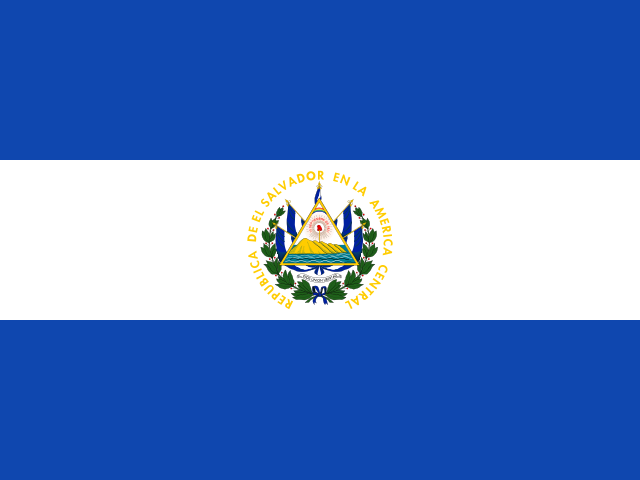 El Salvador
 Guatemala
 Honduras
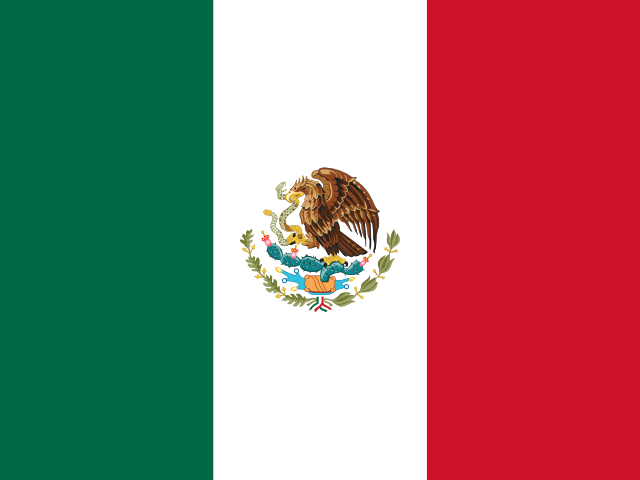 Mexico
 Nicaragua
 Panama
 Antigua and Barbuda
 the Bahamas
 Barbados
 British Virgin Islands
 Cayman Islands
 Cuba
Cuba Dominica
 Dominican Republic
 Grenada
 Guadeloupe
 Haiti
Haiti Jamaica
 Martinique
 Montserrat
 Curacao
 Aruba
Aruba Saint Maarten (Dutch part)
 Bonaire
 Puerto Rico
 Saint Kitts and Nevis
 Anguilla
 Saint Lucia
 Saint-Martin (French Part)
 Saint Vincent and the Grenadines
 Trinidad and Tobago
 Turks and Caicos Islands
 United States Virgin Islands
Earlier Report Observations
The market volume for concentrated sweetened milk and cream in Latin America and the Caribbean expanded from 173.7 thousand tons in 2018 to 189.8 thousand tons in 2020. This growth was supported by the increasing specialization of livestock farming in milk production across the region, particularly in Colombia, where urban centers saw rising output of condensed milk and cream. Continued focus on production and sales of these products, along with regional research efforts to enhance quality, further bolstered the market.
The market's pace slowed somewhat, reaching 191.4 thousand tons in 2021 and 193.2 thousand tons in 2022. During this period, consumption patterns shifted toward dairy products with longer shelf life, such as UHT milk, which helped sustain demand for condensed milk despite economic headwinds. Substantial investments in milk production infrastructure, notably through Brazil's Plan Safra which provided subsidized credits for modernizing milking parlors and refrigeration, contributed to stable supply and modest market growth.
A more pronounced increase occurred in 2023, with market volume jumping to 203.7 thousand tons. This acceleration was partly due to greater market concentration among leading dairy companies in Colombia, which reported stronger sales of condensed milk and cream. While consumer preferences continued to evolve toward healthier options, the overall dairy sector benefited from a slight recovery in liquid milk purchases, reflecting broader changes in consumer behavior.
Table of content
- 1. Disclaimer
- 2. Terms of use of the report
- 3. Product codes in the statistical classifications used in the report
-
4. Key Market Indicators and Trends
-
4.1. Key Market Indicators
-
4.1.1. In kind
- 4.1.1.1. Production, 2018-2023
- 4.1.1.2. Imports, 2018-2024
- 4.1.1.3. Exports, 2018-2024
- 4.1.1.4. Market size, 2018-2023
-
4.1.1. In kind
- 4.2. Market Trends and Factors
-
4.1. Key Market Indicators
-
5. Production
-
5.1. Production in Latin America and the Caribbean
- 5.1.1. Annual dynamics of production in Latin America and the Caribbean in kind, 2018-2023, K t
-
5.2. Global production by Country, 2018-2023
- 5.2.1. Annual dynamics of production by macroregions in kind, 2018-2023, K t
- 5.2.2. Dynamics of production structure by macroregions in kind, 2018-2023
- 5.2.3. Annual dynamics of production by country in kind, 2018-2023, K t
- 5.2.4. Structure of production by countries in kind, 2018-2023
- 5.2.5. Dynamics of peoduction structure by countries in kind, 2018-2023
-
5.1. Production in Latin America and the Caribbean
-
6. Exports
-
6.1. Exports (Direct Data*)
- 6.1.1. Exports - Total information
-
6.1.2. Exports in kind, t
- 6.1.2.1. Annual dynamics of product's exports from Argentina in kind, 2018-2024, t
- 6.1.2.2. Dynamics of product's exports in kind from Argentina by countries, 2018-2024, t
- 6.1.2.3. Structure of product's exports in kind by countries, 2018-2024
-
6.1.3. Exports in value, M $ US
- 6.1.3.1. Annual dynamics of product's exports from Argentina in value, 2018-2024, M $ US
- 6.1.3.2. Dynamics of product's exports in value from Argentina by countries, 2018-2024, M $ US
- 6.1.3.3. Structure of product's exports in value by countries, 2018-2024
-
6.1.4. Average price of product's exports, $ US/t
- 6.1.4.1. Annual dynamics of average price of product's exports from Argentina, 2018-2024, $ US/t
- 6.1.4.2. Dynamics of average price of product's exports from Argentina by countries, 2018-2024, $ US/t
-
6.2. Exports (Mirror Data)
- 6.2.1. Exports - Total information
-
6.2.2. Exports in kind, t
- 6.2.2.1. Annual dynamics of product's exports from Argentina in kind, 2018-2024, t
- 6.2.2.2. Dynamics of product's exports in kind from Argentina by countries, 2018-2024, t
- 6.2.2.3. Structure of product's exports in kind by countries, 2018-2024
-
6.2.3. Exports in value, M $ US
- 6.2.3.1. Annual dynamics of product's exports from Argentina in value, 2018-2024, M $ US
- 6.2.3.2. Dynamics of product's exports in value from Argentina by countries, 2018-2024, M $ US
- 6.2.3.3. Structure of product's exports in value by countries, 2018-2024
-
6.2.4. Average price of product's exports, $ US/t
- 6.2.4.1. Annual dynamics of average price of product's exports from Argentina, 2018-2024, $ US/t
- 6.2.4.2. Dynamics of average price of product's exports from Argentina by countries, 2018-2024, $ US/t
-
6.1. Exports (Direct Data*)
-
7. Imports
-
7.1. Imports (Direct Data*)
- 7.1.1. Imports - Total information
-
7.1.2. Imports in kind, t
- 7.1.2.1. Annual dynamics of product's imports to Argentina in kind, 2018-2024, t
- 7.1.2.2. Dynamics of product's imports in kind to Argentina by countries, 2018-2024, t
- 7.1.2.3. Structure of product's imports in kind by countries, 2018-2024
-
7.1.3. Imports in value, M $ US
- 7.1.3.1. Annual dynamics of product's imports to Argentina in value, 2018-2024, M $ US
- 7.1.3.2. Dynamics of product's imports in value to Argentina by countries, 2018-2024, M $ US
- 7.1.3.3. Structure of product's imports in value by countries, 2018-2024
-
7.1.4. Average price of product's imports, $ US/t
- 7.1.4.1. Annual dynamics of average price of product's imports to Argentina, 2018-2024, $ US/t
- 7.1.4.2. Dynamics of average price of product's imports to Argentina by countries, 2018-2024, $ US/t
-
7.2. Imports (Mirror Data)
- 7.2.1. Imports - Total information
-
7.2.2. Imports in kind, t
- 7.2.2.1. Annual dynamics of product's imports to Argentina in kind, 2018-2024, t
- 7.2.2.2. Dynamics of product's imports in kind to Argentina by countries, 2018-2024, t
- 7.2.2.3. Structure of product's imports in kind by countries, 2018-2024
-
7.2.3. Imports in value, M $ US
- 7.2.3.1. Annual dynamics of product's imports to Argentina in value, 2018-2024, M $ US
- 7.2.3.2. Dynamics of product's imports in value to Argentina by countries, 2018-2024, M $ US
- 7.2.3.3. Structure of product's imports in value by countries, 2018-2024
-
7.2.4. Average price of product's imports, $ US/t
- 7.2.4.1. Annual dynamics of average price of product's imports to Argentina, 2018-2024, $ US/t
- 7.2.4.2. Dynamics of average price of product's imports to Argentina by countries, 2018-2024, $ US/t
-
7.1. Imports (Direct Data*)
-
8. Trade balance
-
8.1. Trade balance (Direct Data)
- 8.1.1. In kind, t
- 8.1.2. In value, M $ US
-
8.2. Trade balance (Mirror Data)
- 8.2.1. In kind, t
- 8.2.2. In value, M $ US
-
8.1. Trade balance (Direct Data)
-
9. Top buying and selling countries, 2018-2024
-
9.1. Direct Data
- 9.1.1. Import in Value by Countries-buyers
- 9.1.2. Export in Value by Countries-suppliers
-
9.2. Mirror Data
- 9.2.1. Import in Value by Countries-buyers
- 9.2.2. Export in Value by Countries-suppliers
-
9.1. Direct Data
Production concentrated sweetened milk and cream in Latin America and the Caribbean
In kind, 2017-2020, K t
Top producers of concentrated sweetened milk and cream, 2017-2020
World map of production of concentrated sweetened milk and cream, 2017-2020
Production of concentrated sweetened milk and cream in Latin America and the Caribbean has grown for the third year in a row. In 2020, the region produced 188.5 thousand tons, marking a modest increase of 5.0% compared to 2019. Looking at the period from 2017 to 2020, overall production rose by 6%, with an average annual growth rate of 1.9%.
Annual dynamics of production in Latin America and the Caribbean in kind, 2017-2020, K t
| Parameter | 2018 | 2019 | 2020 | CAGR | |
|---|---|---|---|---|---|
| 1 | Change from last year | 0.6% | 0.3% | 5.0% | 1.9% |
In value, 2017-2020, M $ US
Production of concentrated sweetened milk and cream in Latin America and the Caribbean has increased for the third consecutive year. In 2020, the output was valued at 584.0 million US dollars, reflecting a significant advance of 11.8% over the previous year. From 2017 to 2020, production grew by 37.2%, with an average annual growth rate of 11.1%.
Annual dynamics of production in Latin America and the Caribbean in value, 2017-2020, M $ US
| Parameter | 2018 | 2019 | 2020 | CAGR | |
|---|---|---|---|---|---|
| 1 | Change from last year | 15.3% | 6.4% | 11.8% | 11.1% |
Exports concentrated sweetened milk and cream from Latin America and the Caribbean
Exports in kind, t
After two years of decline, Latin America and the Caribbean's export volume of concentrated sweetened milk and cream rebounded. In 2020, exports reached 33 361 tons, showing a strong rise of 13.5% compared to 2019. However, between 2017 and 2020, exports decreased by 26.3%, equating to an annualized decline of 9.7%. The lowest volume was recorded in 2019 at 29 383 tons, with the largest drop of 20.7% occurring that same year.
Annual dynamics of product's exports from Latin America and the Caribbean in kind, 2017-2020, t
| Parameter | 2018 | 2019 | 2020 | CAGR | |
|---|---|---|---|---|---|
| 1 | Change from last year | (18.1%) | (20.7%) | 13.5% | (9.7%) |
The structure of exports in volume terms from 2017 to 2020 reveals a diversified set of trading partners. The United States accounted for 41.5% of exports, Angola for 2.6%, and Saudi Arabia for 1.9%, together making up only 46.0% of total flows. The remaining 54.0% was distributed among numerous smaller markets.
Structure of product's exports in kind by countries, 2017-2020
World map of product's exports from Latin America and the Caribbean in kind, 2017-2020
Exports in value, M $ US
Following a two-year decline, Latin America and the Caribbean's export value of concentrated sweetened milk and cream increased. In 2020, the region exported 103.3 million US dollars worth of these products, amounting to a robust increase of 20.9% over the previous year. Over the period from 2017 to 2020, exports decreased by 4.6%, with an average annual decline of 1.6%. The lowest value was recorded in 2019 at 85.4 million US dollars, with the largest drop of 15.9% occurring that year.
Annual dynamics of product's exports from Latin America and the Caribbean in value, 2017-2020, M $ US
| Parameter | 2018 | 2019 | 2020 | CAGR | |
|---|---|---|---|---|---|
| 1 | Change from last year | (6.2%) | (15.9%) | 20.9% | (1.6%) |
From 2017 to 2020, the partner landscape for exports in value terms was broad. The United States represented 42.0% of exports, Angola 2.8%, and Saudi Arabia 2.4%, together forming only 47.1% of total flows. A substantial 52.9% was supplied to many other countries.
Structure of product's exports in value by countries, 2017-2020
World map of product's exports from Latin America and the Caribbean in value, 2017-2020
Imports concentrated sweetened milk and cream to Latin America and the Caribbean
Imports in kind, t
After two years of contraction, import volumes of concentrated sweetened milk and cream in Latin America and the Caribbean increased. In 2020, the region imported approximately 34 630 tons, up by 13.5% compared to 2019. Between 2017 and 2020, imports decreased by 8%, equating to an annualized decline of 2.7%. The lowest volume was recorded in 2019 at 30 514 tons, with the largest decline of 15.5% occurring in 2018.
Annual dynamics of product's imports to Latin America and the Caribbean in kind, 2017-2020, t
| Parameter | 2018 | 2019 | 2020 | CAGR | |
|---|---|---|---|---|---|
| 1 | Change from last year | (15.5%) | (4.1%) | 13.5% | (2.7%) |
Throughout 2017 to 2020, imports in volume terms of concentrated sweetened milk and cream to Latin America and the Caribbean were not concentrated on a few key markets. Malaysia accounted for 11.7% of imports, the Netherlands for 9.3%, and the United States for 5.6%, jointly representing only 26.6% of total flows.
Structure of product's imports in kind by countries, 2017-2020
World map of product's imports to Latin America and the Caribbean in kind, 2017-2020
Imports in value, M $ US
In 2020, Latin America and the Caribbean's imports of concentrated sweetened milk and cream were recorded at 83.2 million US dollars, marking a substantial gain of 18.9% versus the previous year. Between 2017 and 2020, imports increased by 10.8%, equating to an annualized growth rate of 3.5%. The lowest value was recorded in 2019 at 69.9 million US dollars, with the largest decline of 9.1% occurring that year.
Annual dynamics of product's imports to Latin America and the Caribbean in value, 2017-2020, M $ US
| Parameter | 2018 | 2019 | 2020 | CAGR | |
|---|---|---|---|---|---|
| 1 | Change from last year | 2.5% | (9.1%) | 18.9% | 3.5% |
From 2017 to 2020, the partner structure for imports in value terms was balanced rather than concentrated. The Netherlands accounted for 10.2% of imports, the United States for 8.4%, and Malaysia for 7.4%, jointly representing 25.9% of total flows. Many other countries accounted for the remaining 74.1%.
Structure of product's imports in value by countries, 2017-2020
World map of product's imports to Latin America and the Caribbean in value, 2017-2020
Related Reports





Why Choose Us?
Only Verified Data
No Hidden Costs or Separate Fees
Smarter Subscription Pricing
Contact Our Team
Submit your inquiry using the form below — our team will get back to you within 24 hours.