






"Latin America and the Caribbean" region includes following countries:
 Argentina
 Bolivia
 Brazil
 Chile
Chile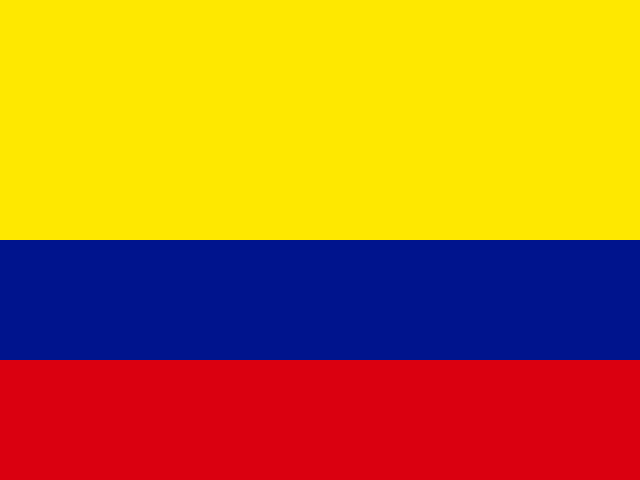 Colombia
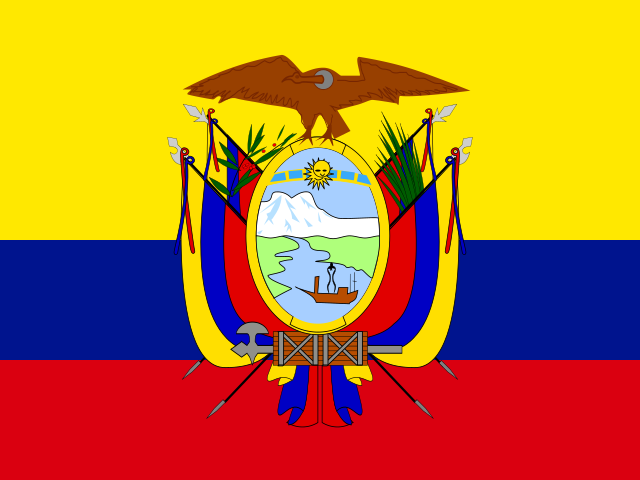 Ecuador
 Falkland Islands (Malvinas)
 French Guiana
 Guyana
 Paraguay
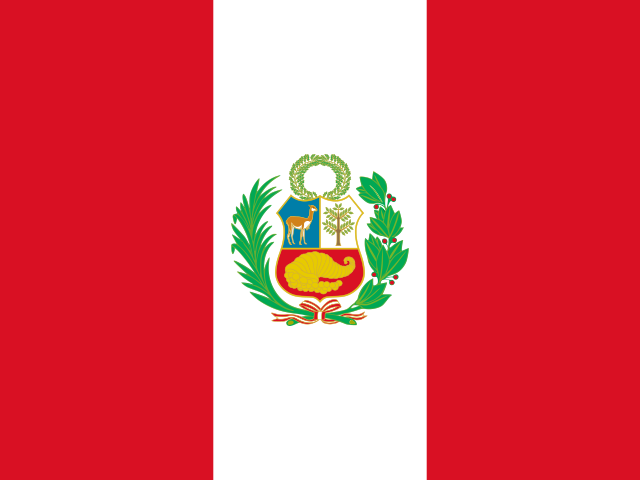 Peru
Peru Suriname
 Uruguay
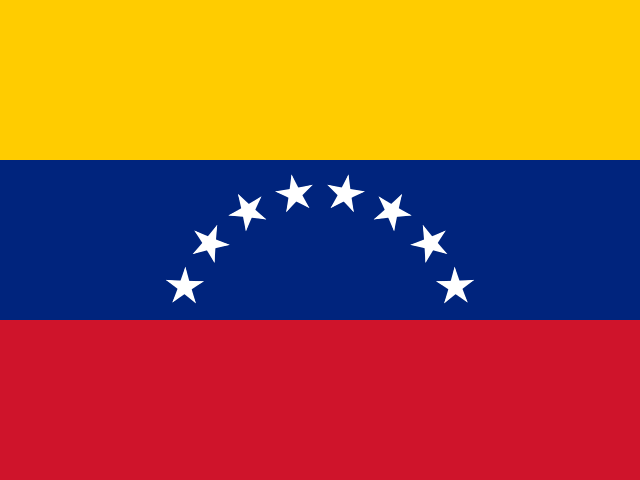 Venezuela
 Belize
 Costa Rica
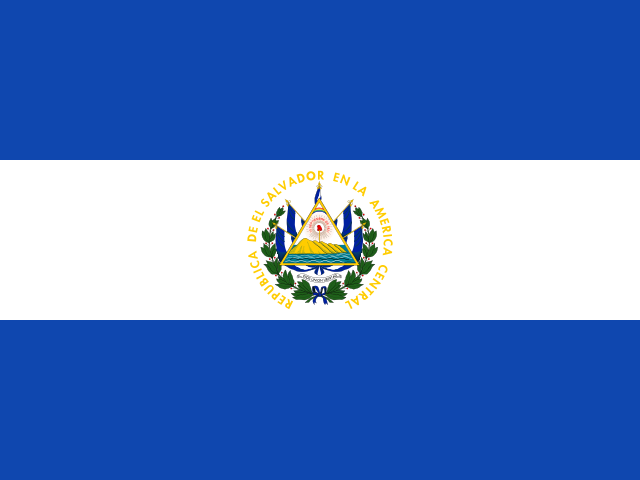 El Salvador
 Guatemala
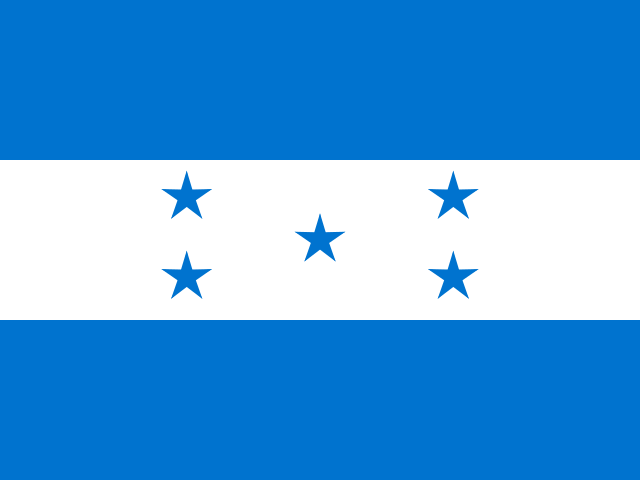 Honduras
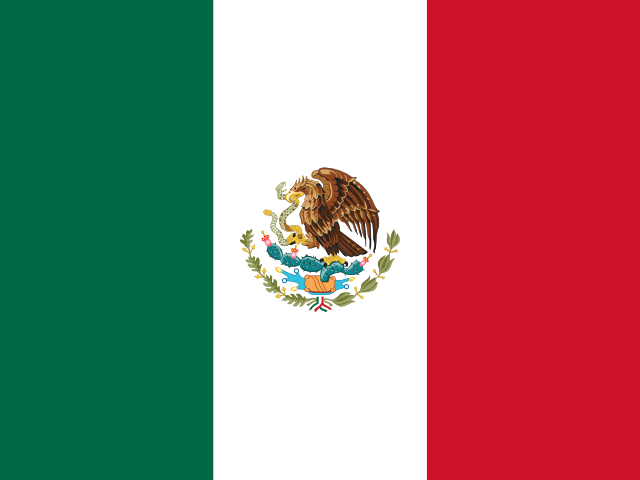 Mexico
 Nicaragua
 Panama
 Antigua and Barbuda
 the Bahamas
 Barbados
 British Virgin Islands
 Cayman Islands
 Cuba
Cuba Dominica
 Dominican Republic
 Grenada
 Guadeloupe
 Haiti
Haiti Jamaica
 Martinique
 Montserrat
 Curacao
 Aruba
Aruba Saint Maarten (Dutch part)
 Bonaire
 Puerto Rico
 Saint Kitts and Nevis
 Anguilla
 Saint Lucia
 Saint-Martin (French Part)
 Saint Vincent and the Grenadines
 Trinidad and Tobago
 Turks and Caicos Islands
 United States Virgin Islands
Earlier Report Observations
From 2018 to 2021, the market volume for milk powder with ≤1.5% fat in Latin America and the Caribbean contracted from 554 thousand tons to 397 thousand tons. This decline was driven by reduced national milk output due to pasture shortages, which constrained raw material availability for powder production. The COVID-19 pandemic in 2020 further suppressed consumption as household purchasing power fell and foodservice demand plummeted. Simultaneously, a 17% surge in international dairy prices, fueled by strong Asian demand for skimmed milk powder, made imports more costly and dampened domestic consumption.
Market volume rebounded to 495 thousand tons in 2022, a 25% increase from the previous year. This recovery aligned with the acquisition of Fonterra's Chilean assets by Gloria Foods, which reshaped the major importer landscape and facilitated higher import flows. Despite elevated global prices, import volumes rose significantly. However, the market contracted again to 378 thousand tons in 2023 as internal demand weakened and national powder production fell by 15%, with manufacturers reorienting output toward fluid milk and cheese.
Entering 2024, regulatory changes including adjustments to Resolution 017 on raw milk pricing and stricter labeling rules for added sweeteners introduced new cost and compliance factors for producers. These developments follow a period where supply chain disruptions, shifts in major market players, and volatile international prices consistently influenced market dynamics.
Table of content
- 1. Disclaimer
- 2. Terms of use of the report
- 3. Product codes in the statistical classifications used in the report
-
4. Key Market Indicators and Trends
-
4.1. Key Market Indicators
-
4.1.1. In kind
- 4.1.1.1. Production, 2018-2023
- 4.1.1.2. Imports, 2018-2024
- 4.1.1.3. Exports, 2018-2024
- 4.1.1.4. Market size, 2018-2023
-
4.1.1. In kind
- 4.2. Market Trends and Factors
-
4.1. Key Market Indicators
-
5. Production
-
5.1. Production in Latin America and the Caribbean
- 5.1.1. Annual dynamics of production in Latin America and the Caribbean in kind, 2018-2023, K t
-
5.2. Global production by Country, 2018-2023
- 5.2.1. Annual dynamics of production by macroregions in kind, 2018-2023, K t
- 5.2.2. Dynamics of production structure by macroregions in kind, 2018-2023
- 5.2.3. Annual dynamics of production by country in kind, 2018-2023, K t
- 5.2.4. Structure of production by countries in kind, 2018-2023
- 5.2.5. Dynamics of peoduction structure by countries in kind, 2018-2023
-
5.1. Production in Latin America and the Caribbean
-
6. Exports
-
6.1. Exports (Direct Data*)
- 6.1.1. Exports - Total information
-
6.1.2. Exports in kind, K t
- 6.1.2.1. Annual dynamics of product's exports from Argentina in kind, 2018-2024, K t
- 6.1.2.2. Dynamics of product's exports in kind from Argentina by countries, 2018-2024, K t
- 6.1.2.3. Structure of product's exports in kind by countries, 2018-2024
-
6.1.3. Exports in value, M $ US
- 6.1.3.1. Annual dynamics of product's exports from Argentina in value, 2018-2024, M $ US
- 6.1.3.2. Dynamics of product's exports in value from Argentina by countries, 2018-2024, M $ US
- 6.1.3.3. Structure of product's exports in value by countries, 2018-2024
-
6.1.4. Average price of product's exports, $ US/t
- 6.1.4.1. Annual dynamics of average price of product's exports from Argentina, 2018-2024, $ US/t
- 6.1.4.2. Dynamics of average price of product's exports from Argentina by countries, 2018-2024, $ US/t
-
6.2. Exports (Mirror Data)
- 6.2.1. Exports - Total information
-
6.2.2. Exports in kind, K t
- 6.2.2.1. Annual dynamics of product's exports from Argentina in kind, 2018-2024, K t
- 6.2.2.2. Dynamics of product's exports in kind from Argentina by countries, 2018-2024, K t
- 6.2.2.3. Structure of product's exports in kind by countries, 2018-2024
-
6.2.3. Exports in value, M $ US
- 6.2.3.1. Annual dynamics of product's exports from Argentina in value, 2018-2024, M $ US
- 6.2.3.2. Dynamics of product's exports in value from Argentina by countries, 2018-2024, M $ US
- 6.2.3.3. Structure of product's exports in value by countries, 2018-2024
-
6.2.4. Average price of product's exports, $ US/t
- 6.2.4.1. Annual dynamics of average price of product's exports from Argentina, 2018-2024, $ US/t
- 6.2.4.2. Dynamics of average price of product's exports from Argentina by countries, 2018-2024, $ US/t
-
6.1. Exports (Direct Data*)
-
7. Imports
-
7.1. Imports (Direct Data*)
- 7.1.1. Imports - Total information
-
7.1.2. Imports in kind, K t
- 7.1.2.1. Annual dynamics of product's imports to Argentina in kind, 2018-2024, K t
- 7.1.2.2. Dynamics of product's imports in kind to Argentina by countries, 2018-2024, K t
- 7.1.2.3. Structure of product's imports in kind by countries, 2018-2024
-
7.1.3. Imports in value, M $ US
- 7.1.3.1. Annual dynamics of product's imports to Argentina in value, 2018-2024, M $ US
- 7.1.3.2. Dynamics of product's imports in value to Argentina by countries, 2018-2024, M $ US
- 7.1.3.3. Structure of product's imports in value by countries, 2018-2024
-
7.1.4. Average price of product's imports, $ US/t
- 7.1.4.1. Annual dynamics of average price of product's imports to Argentina, 2018-2024, $ US/t
- 7.1.4.2. Dynamics of average price of product's imports to Argentina by countries, 2018-2024, $ US/t
-
7.2. Imports (Mirror Data)
- 7.2.1. Imports - Total information
-
7.2.2. Imports in kind, K t
- 7.2.2.1. Annual dynamics of product's imports to Argentina in kind, 2018-2024, K t
- 7.2.2.2. Dynamics of product's imports in kind to Argentina by countries, 2018-2024, K t
- 7.2.2.3. Structure of product's imports in kind by countries, 2018-2024
-
7.2.3. Imports in value, M $ US
- 7.2.3.1. Annual dynamics of product's imports to Argentina in value, 2018-2024, M $ US
- 7.2.3.2. Dynamics of product's imports in value to Argentina by countries, 2018-2024, M $ US
- 7.2.3.3. Structure of product's imports in value by countries, 2018-2024
-
7.2.4. Average price of product's imports, $ US/t
- 7.2.4.1. Annual dynamics of average price of product's imports to Argentina, 2018-2024, $ US/t
- 7.2.4.2. Dynamics of average price of product's imports to Argentina by countries, 2018-2024, $ US/t
-
7.1. Imports (Direct Data*)
-
8. Trade balance
-
8.1. Trade balance (Direct Data)
- 8.1.1. In kind, K t
- 8.1.2. In value, M $ US
-
8.2. Trade balance (Mirror Data)
- 8.2.1. In kind, K t
- 8.2.2. In value, M $ US
-
8.1. Trade balance (Direct Data)
-
9. Top buying and selling countries, 2018-2024
-
9.1. Direct Data
- 9.1.1. Import in Value by Countries-buyers
- 9.1.2. Export in Value by Countries-suppliers
-
9.2. Mirror Data
- 9.2.1. Import in Value by Countries-buyers
- 9.2.2. Export in Value by Countries-suppliers
-
9.1. Direct Data
Production milk powder with fat content of ≤1.5% in Latin America and the Caribbean
In kind, 2017-2020, K t
Top producers of milk powder with fat content of ≤1.5%, 2017-2020
World map of production of milk powder with fat content of ≤1.5%, 2017-2020
Latin America and the Caribbean saw milk powder production with a fat content of ≤1.5% rise for the second year in a row. In 2020, the region produced 101.0 K t, marking a moderate 6.0% increase from 2019. Over the 2017-2020 period, production fell by 4.1%, with a compound annual growth rate of 1.4%. The lowest output was in 2018 at 88.9 K t, which also saw the largest decline of 15.6%. In contrast, 2019 recorded the biggest increase at 7.3%.
Annual dynamics of production in Latin America and the Caribbean in kind, 2017-2020, K t
| Parameter | 2018 | 2019 | 2020 | CAGR | |
|---|---|---|---|---|---|
| 1 | Change from last year | (15.6%) | 7.3% | 6.0% | (1.4%) |
Exports milk powder with fat content of ≤1.5% from Latin America and the Caribbean
Exports in kind, K t
In 2020, Latin America and the Caribbean's exports of milk powder with a fat content of ≤1.5% stood at 33.4 K t, showing a sharp 27.6% drop from the previous year. From 2017 to 2020, exports decreased by 22.4%, with a compound annual growth rate of 8.1%. The peak was in 2019 at 46.1 K t, which also saw the largest increase of 9.1%.
Annual dynamics of product's exports from Latin America and the Caribbean in kind, 2017-2020, K t
| Parameter | 2018 | 2019 | 2020 | CAGR | |
|---|---|---|---|---|---|
| 1 | Change from last year | (1.7%) | 9.1% | (27.6%) | (8.1%) |
From 2017 to 2020, the top destinations for Latin America and the Caribbean's milk powder exports with a fat content of ≤1.5% were Algeria, Russia, and China, accounting for 8.0%, 4.2%, and 3.8% of total exports, respectively. Together, these three markets made up 16.0% of all export flows.
Structure of product's exports in kind by countries, 2017-2020
World map of product's exports from Latin America and the Caribbean in kind, 2017-2020
Exports in value, M $ US
In 2020, the export value of milk powder with a fat content of ≤1.5% from Latin America and the Caribbean reached 116 M $ US, up 3.1% from 2019. Over the 2017-2020 period, exports fell by 28.3%, with a compound annual growth rate of 10.5%. The lowest value was in 2019 at 112 M $ US, which saw the largest decline of 47.3%. The highest was in 2018 at 213 M $ US, recording the biggest increase of 31.8%.
Annual dynamics of product's exports from Latin America and the Caribbean in value, 2017-2020, M $ US
| Parameter | 2018 | 2019 | 2020 | CAGR | |
|---|---|---|---|---|---|
| 1 | Change from last year | 31.8% | (47.3%) | 3.1% | (10.5%) |
Between 2017 and 2020, Algeria, Russia, and China were the leading markets for Latin America and the Caribbean's milk powder exports in value terms, collectively representing 16.4% of total flows.
Structure of product's exports in value by countries, 2017-2020
World map of product's exports from Latin America and the Caribbean in value, 2017-2020
Imports milk powder with fat content of ≤1.5% to Latin America and the Caribbean
Imports in kind, K t
Latin America and the Caribbean's imports of milk powder with a fat content of ≤1.5% declined for the second consecutive year. In 2020, the region imported 440.4 K t, a substantial 10.6% decrease from 2019. The highest import volume was in 2018 at 507.5 K t, which also saw the largest increase of 17.0%.
Annual dynamics of product's imports to Latin America and the Caribbean in kind, 2017-2020, K t
| Parameter | 2018 | 2019 | 2020 | CAGR | |
|---|---|---|---|---|---|
| 1 | Change from last year | 17.0% | (2.9%) | (10.6%) | 0.5% |
From 2017 to 2020, the United States was the primary supplier of milk powder with a fat content of ≤1.5% to Latin America and the Caribbean, holding 76.9% of total imports in kind, while a diverse group of other countries accounted for the rest.
Structure of product's imports in kind by countries, 2017-2020
World map of product's imports to Latin America and the Caribbean in kind, 2017-2020
Imports in value, M $ US
In 2020, Latin America and the Caribbean's import value for milk powder with a fat content of ≤1.5% was 1 207 M $ US, showing a modest 5.1% rise from 2019. Over the 2017-2020 period, imports grew by 19.4%, with a compound annual growth rate of 6.1%. The largest decline occurred in 2019 at 0.7%, while the biggest increase was in 2018 at 14.4%.
Annual dynamics of product's imports to Latin America and the Caribbean in value, 2017-2020, M $ US
| Parameter | 2018 | 2019 | 2020 | CAGR | |
|---|---|---|---|---|---|
| 1 | Change from last year | 14.4% | (0.7%) | 5.1% | 6.1% |
Between 2017 and 2020, the United States dominated Latin America and the Caribbean's imports in value terms, with a 75.7% share of total flows, while the remainder was spread across various other markets.
Structure of product's imports in value by countries, 2017-2020
World map of product's imports to Latin America and the Caribbean in value, 2017-2020
Related Reports





Why Choose Us?
Only Verified Data
No Hidden Costs or Separate Fees
Smarter Subscription Pricing
Contact Our Team
Submit your inquiry using the form below — our team will get back to you within 24 hours.