






"Africa" region includes following countries:
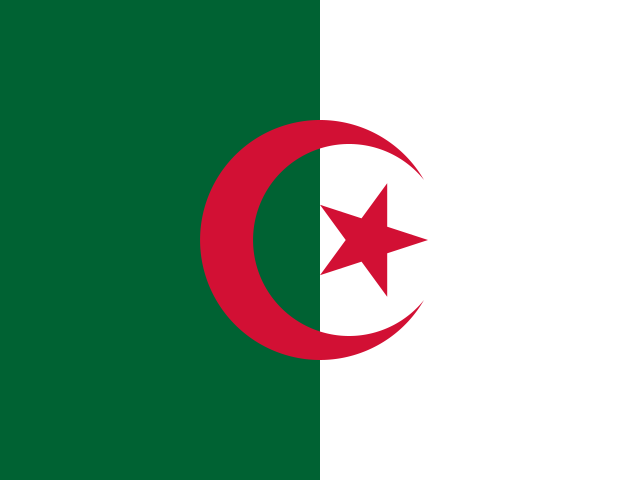 Algeria
 Libya
Libya Morocco
 Sudan
Sudan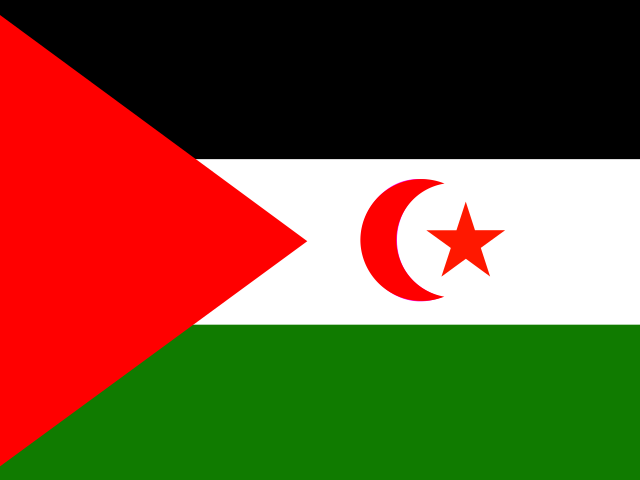 Western Sahara
 Tunisia
 Egypt
Egypt Cabo Verde
 Benin
Benin Gambia
 Ghana
Ghana Guinea
 Côte d'Ivoire
 Liberia
 Mali
Mali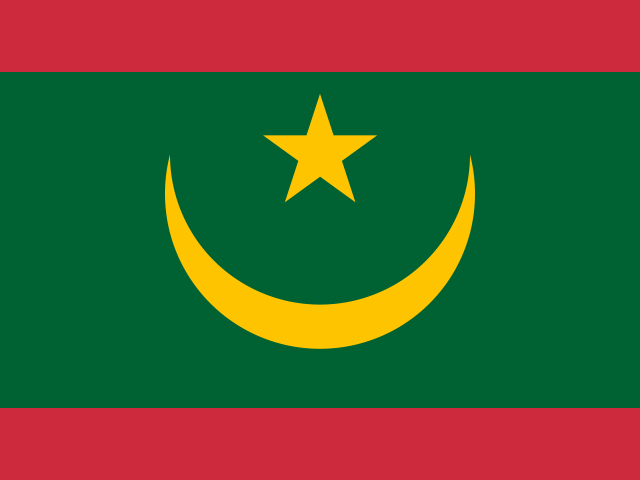 Mauritania
 Niger
Niger Nigeria
 Guinea-Bissau
 Saint Helena, Ascension and Tristan da Cunha
 Senegal
 Sierra Leone
 Togo
Togo Burkina Faso
 British Indian Ocean Territory
 Burundi
 Comoros
 Mayotte
 Ethiopia
 Eritrea
 French Southern Territories
 Djibouti
 Kenya
Kenya Madagascar
 Malawi
 Mauritius
 Mozambique
 Reunion
 Rwanda
 Seychelles
 Somalia
 Zimbabwe
 South Sudan
 Uganda
 Tanzania
 Zambia
 Angola
 Cameroon
 Central African Republic
 Chad
Chad Congo
Congo Democratic Republic of the Congo
 Equatorial Guinea
 Gabon
Gabon Sao Tome and Principe
 Botswana
 Lesotho
 Namibia
 South Africa
 Eswatini
Earlier Report Observations
The African coconut oilcake market saw a steady contraction in volume from about 58 653 т in 2018 to 47 686 т in 2023, as both production and overall market size declined throughout the period.
In 2021, the market volume stabilized near 51 048 т with a drop of less than 2%. This coincided with Ghana’s 249% jump in desiccated coconut exports, which signaled a reorientation of coconut processing toward higher‑value products rather than oilcake, limiting further decline that year.
By 2024, new dynamics appeared across the region. Ghana rolled out a large‑scale coconut agricultural transformation program, distributing millions of elite seedlings to expand cultivation. In Kenya, government policies actively promoted local edible oil production to cut imports, while new entrepreneurs entered with cold‑press extraction for coconut oil and feed. Consumer preferences also shifted toward organic and virgin coconut oil products.
Table of content
- 1. Disclaimer
- 2. Terms of use of the report
- 3. Product codes in the statistical classifications used in the report
-
4. Key Market Indicators and Trends
-
4.1. Key Market Indicators
-
4.1.1. In kind
- 4.1.1.1. Production, 2018-2023
- 4.1.1.2. Imports, 2018-2024
- 4.1.1.3. Exports, 2018-2024
- 4.1.1.4. Market size, 2018-2023
-
4.1.1. In kind
- 4.2. Market Trends and Factors
-
4.1. Key Market Indicators
-
5. Production
-
5.1. Production in Africa
- 5.1.1. Annual dynamics of production in Africa in kind, 2018-2023, t
-
5.2. Global production by Country, 2018-2023
- 5.2.1. Annual dynamics of production by macroregions in kind, 2018-2023, t
- 5.2.2. Dynamics of production structure by macroregions in kind, 2018-2023
- 5.2.3. Annual dynamics of production by country in kind, 2018-2023, t
- 5.2.4. Structure of production by countries in kind, 2018-2023
- 5.2.5. Dynamics of peoduction structure by countries in kind, 2018-2023
-
5.1. Production in Africa
-
6. Imports
-
6.1. Imports (Direct Data*)
- 6.1.1. Imports - Total information
-
6.1.2. Imports in kind, t
- 6.1.2.1. Annual dynamics of product's imports to Algeria in kind, 2018-2024, t
- 6.1.2.2. Dynamics of product's imports in kind to Algeria by countries, 2018-2024, t
- 6.1.2.3. Structure of product's imports in kind by countries, 2018-2024
-
6.1.3. Imports in value, K $ US
- 6.1.3.1. Annual dynamics of product's imports to Algeria in value, 2018-2024, K $ US
- 6.1.3.2. Dynamics of product's imports in value to Algeria by countries, 2018-2024, K $ US
- 6.1.3.3. Structure of product's imports in value by countries, 2018-2024
-
6.1.4. Average price of product's imports, $ US/t
- 6.1.4.1. Annual dynamics of average price of product's imports to Algeria, 2018-2024, $ US/t
- 6.1.4.2. Dynamics of average price of product's imports to Algeria by countries, 2018-2024, $ US/t
-
6.2. Imports (Mirror Data)
- 6.2.1. Imports - Total information
-
6.2.2. Imports in kind, t
- 6.2.2.1. Annual dynamics of product's imports to Algeria in kind, 2018-2024, t
- 6.2.2.2. Dynamics of product's imports in kind to Algeria by countries, 2018-2024, t
- 6.2.2.3. Structure of product's imports in kind by countries, 2018-2024
-
6.2.3. Imports in value, K $ US
- 6.2.3.1. Annual dynamics of product's imports to Algeria in value, 2018-2024, K $ US
- 6.2.3.2. Dynamics of product's imports in value to Algeria by countries, 2018-2024, K $ US
- 6.2.3.3. Structure of product's imports in value by countries, 2018-2024
-
6.2.4. Average price of product's imports, $ US/t
- 6.2.4.1. Annual dynamics of average price of product's imports to Algeria, 2018-2024, $ US/t
- 6.2.4.2. Dynamics of average price of product's imports to Algeria by countries, 2018-2024, $ US/t
-
6.1. Imports (Direct Data*)
-
7. Exports
-
7.1. Exports (Direct Data*)
- 7.1.1. Exports - Total information
-
7.1.2. Exports in kind, t
- 7.1.2.1. Annual dynamics of product's exports from Algeria in kind, 2018-2024, t
- 7.1.2.2. Dynamics of product's exports in kind from Algeria by countries, 2018-2024, t
- 7.1.2.3. Structure of product's exports in kind by countries, 2018-2024
-
7.1.3. Exports in value, K $ US
- 7.1.3.1. Annual dynamics of product's exports from Algeria in value, 2018-2024, K $ US
- 7.1.3.2. Dynamics of product's exports in value from Algeria by countries, 2018-2024, K $ US
- 7.1.3.3. Structure of product's exports in value by countries, 2018-2024
-
7.1.4. Average price of product's exports, $ US/t
- 7.1.4.1. Annual dynamics of average price of product's exports from Algeria, 2018-2024, $ US/t
- 7.1.4.2. Dynamics of average price of product's exports from Algeria by countries, 2018-2024, $ US/t
-
7.2. Exports (Mirror Data)
- 7.2.1. Exports - Total information
-
7.2.2. Exports in kind, t
- 7.2.2.1. Annual dynamics of product's exports from Algeria in kind, 2018-2024, t
- 7.2.2.2. Dynamics of product's exports in kind from Algeria by countries, 2018-2024, t
- 7.2.2.3. Structure of product's exports in kind by countries, 2018-2024
-
7.2.3. Exports in value, K $ US
- 7.2.3.1. Annual dynamics of product's exports from Algeria in value, 2018-2024, K $ US
- 7.2.3.2. Dynamics of product's exports in value from Algeria by countries, 2018-2024, K $ US
- 7.2.3.3. Structure of product's exports in value by countries, 2018-2024
-
7.2.4. Average price of product's exports, $ US/t
- 7.2.4.1. Annual dynamics of average price of product's exports from Algeria, 2018-2024, $ US/t
- 7.2.4.2. Dynamics of average price of product's exports from Algeria by countries, 2018-2024, $ US/t
-
7.1. Exports (Direct Data*)
-
8. Trade balance
-
8.1. Trade balance (Direct Data)
- 8.1.1. In kind, t
- 8.1.2. In value, K $ US
-
8.2. Trade balance (Mirror Data)
- 8.2.1. In kind, t
- 8.2.2. In value, K $ US
-
8.1. Trade balance (Direct Data)
-
9. Top buying and selling countries, 2018-2024
-
9.1. Direct Data
- 9.1.1. Import in Value by Countries-buyers
- 9.1.2. Export in Value by Countries-suppliers
-
9.2. Mirror Data
- 9.2.1. Import in Value by Countries-buyers
- 9.2.2. Export in Value by Countries-suppliers
-
9.1. Direct Data
Production coconut oilcake in Africa
In kind, 2017-2020, t
Top producers of coconut oilcake, 2017-2020
World map of production of coconut oilcake, 2017-2020
Africa's coconut oilcake production has declined for the second year in a row. In 2020, the continent produced 51 858 tonnes, representing a year-on-year decrease of 9.6%. Looking at the period from 2017 to 2020, production fell by 8.2%, which translates to an average annual decline of 2.8%. The highest production level was recorded in 2018 at 58 601 tonnes, when output increased by 3.7%.
Annual dynamics of production in Africa in kind, 2017-2020, t
| Parameter | 2018 | 2019 | 2020 | CAGR | |
|---|---|---|---|---|---|
| 1 | Change from last year | 3.7% | (2.1%) | (9.6%) | (2.8%) |
Exports coconut oilcake from Africa
Exports in kind, t
The data shows irregular fluctuations, pointing to a volatile market environment. Export volumes varied significantly, with a 4.8-fold difference between the low in 2017 and the peak in 2019. In 2020, Africa's coconut oilcake exports stood at 389 tonnes, marking a substantial decline of 21.0% compared to the previous year. The highest export volume was recorded in 2019 at 493 tonnes, which saw an increase of 138.6%.
Annual dynamics of product's exports from Africa in kind, 2017-2020, t
| Parameter | 2018 | 2019 | 2020 | CAGR | |
|---|---|---|---|---|---|
| 1 | Change from last year | 99.5% | 138.6% | (21.0%) | 55.5% |
Between 2017 and 2020, China, Turkey, and Australia were the largest buyers of coconut oilcake from Africa, accounting for 3.3%, 3.0%, and 1.2% of exports in kind, respectively. Together, these three markets made up 7.5% of total exports in kind.
Structure of product's exports in kind by countries, 2017-2020
World map of product's exports from Africa in kind, 2017-2020
Exports in value, K $ US
Coconut oilcake export values from Africa have increased for the third consecutive year. In 2020, exports amounted to 412.1 thousand US dollars, which is 27.8% higher than in 2019. Over the period from 2017 to 2020, export values rose by 220.6%, with a compound annual growth rate of 47.5%.
Annual dynamics of product's exports from Africa in value, 2017-2020, K $ US
| Parameter | 2018 | 2019 | 2020 | CAGR | |
|---|---|---|---|---|---|
| 1 | Change from last year | 81.3% | 38.3% | 27.8% | 47.5% |
From 2017 to 2020, the three main markets—China, Turkey, and Australia—collectively accounted for 9.3% of the total export value of coconut oilcake from Africa.
Structure of product's exports in value by countries, 2017-2020
World map of product's exports from Africa in value, 2017-2020
Imports coconut oilcake to Africa
Imports in kind, t
Imported coconut oilcake volumes in Africa have risen for the second year in a row. In 2020, imports reached 575 tonnes, showing a sharp increase of 42.2% compared to the previous year. Over the period from 2017 to 2020, imports grew by 59%, with a compound annual growth rate of 16.7%. The lowest import volume was recorded in 2018 at 259 tonnes, which saw a decline of 28.2%. The largest increase occurred in 2019, with a jump of 55.8%.
Annual dynamics of product's imports to Africa in kind, 2017-2020, t
| Parameter | 2018 | 2019 | 2020 | CAGR | |
|---|---|---|---|---|---|
| 1 | Change from last year | (28.2%) | 55.8% | 42.2% | 16.7% |
Between 2017 and 2020, Sri Lanka, Papua New Guinea, and Indonesia were the principal suppliers of coconut oilcake to Africa, accounting for 3.3%, 2.4%, and 1.6% of imports in kind, respectively. Together, these three countries represented 7.2% of total imports in kind.
Structure of product's imports in kind by countries, 2017-2020
World map of product's imports to Africa in kind, 2017-2020
Imports in value, K $ US
The market displayed an unstable trend throughout the period. Import values reached their lowest point in 2018 at 330.0 thousand US dollars, which saw a decline of 3.2%, and peaked in 2020 at 893.5 thousand US dollars, marking an increase of 58.3% compared to 2019. The difference between the peak and trough was 2.7 times. The largest increase was recorded in 2019, with a rise of 71.1%.
Annual dynamics of product's imports to Africa in value, 2017-2020, K $ US
| Parameter | 2018 | 2019 | 2020 | CAGR | |
|---|---|---|---|---|---|
| 1 | Change from last year | (3.2%) | 71.1% | 58.3% | 37.9% |
From 2017 to 2020, Sri Lanka, Indonesia, and Papua New Guinea consistently held leading positions in the import structure by value, accounting for 30.4%, 16.6%, and 6.6% of imports in value terms, respectively. Together, these three suppliers made up 53.7% of total import flows.
Structure of product's imports in value by countries, 2017-2020
World map of product's imports to Africa in value, 2017-2020
Related Reports

Coconut oilcake market in ECOWAS
2026-03-29
Coconut oilcake market in Caribbean
2026-03-29
Coconut oilcake market in Americas
2026-03-29
Coconut oilcake market in Saint Lucia
2026-03-29

Rapeseed oilcake market in Africa
2026-03-29

Starch-manufacture residues market in Africa
2026-03-29

Soybean oilcake market in Africa
2026-03-29

Sunflower-seed oilcake market in Africa
2026-03-29
Why Choose Us?
Only Verified Data
No Hidden Costs or Separate Fees
Smarter Subscription Pricing
Contact Our Team
Submit your inquiry using the form below — our team will get back to you within 24 hours.