






"South America" region includes following countries:
 Argentina
 Bolivia
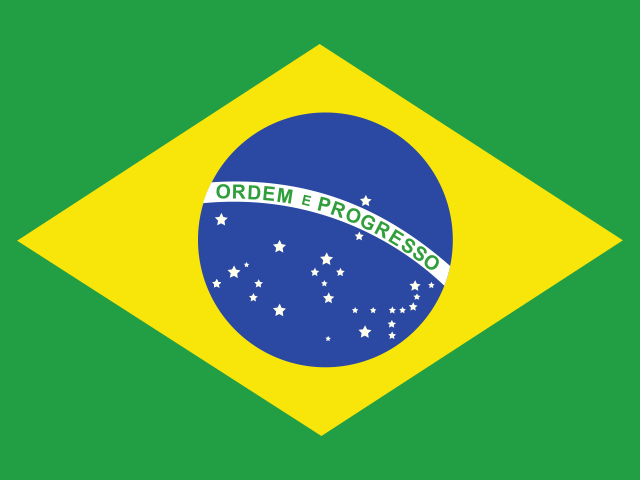 Brazil
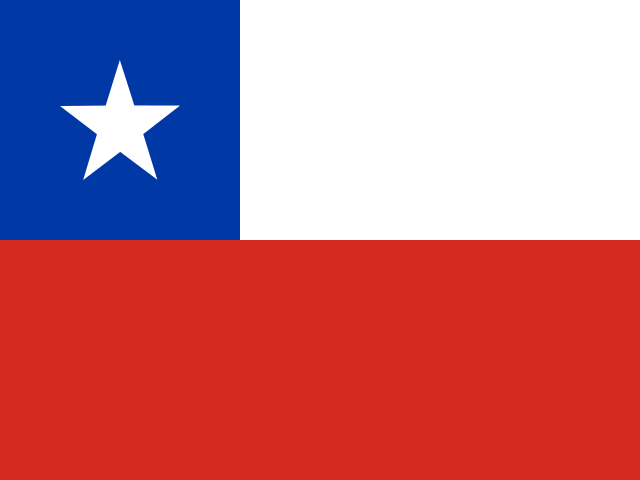 Chile
Chile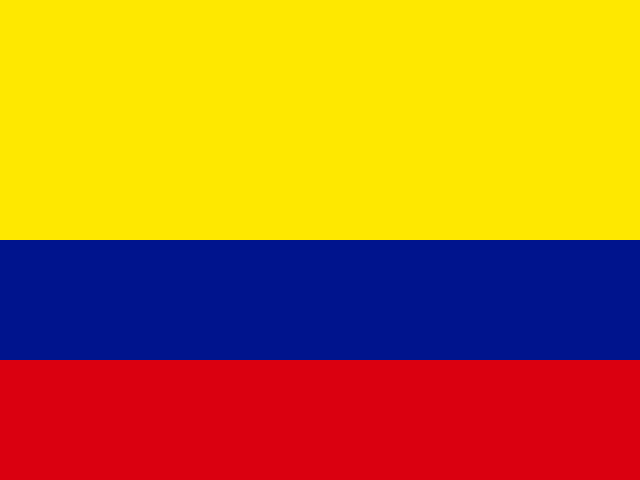 Colombia
 Ecuador
 Falkland Islands (Malvinas)
 French Guiana
 Guyana
 Paraguay
 Peru
Peru Suriname
 Uruguay
 Venezuela
Earlier Report Observations
The market volume for cocoa-free sugar confectionery in South America fluctuated between 153 thousand tons and 218 thousand tons from 2018 to 2023. A significant expansion occurred in 2022, when consumption jumped to 217.7 thousand tons. This growth coincided with a strong regional consumer shift toward healthier options, including sugar-free, vegan, and gluten-free products, particularly in Peru and Brazil, which stimulated demand and encouraged broader product availability.
Following the peak, the physical market volume contracted to 161 thousand tons in 2023. However, the market's value continued its ascent, reaching $831.7 million, indicating a move toward higher-value products. This premiumization was supported by ongoing innovation, such as government initiatives in Peru providing financial and technical support for developing fortified and organic sugar-free confectionery, aligning with persistent health and wellness trends across the continent.
Industry dynamics in 2024 continued to be influenced by these trends, with a focus on functional and sustainable products boosting exports from countries like Colombia and Peru. Regulatory developments, such as Brazil's moves to limit vegetable fats in chocolate, highlighted a broader regional emphasis on ingredient quality, which shapes the competitive landscape for sugar confectionery.
Table of content
- 1. Disclaimer
- 2. Terms of use of the report
- 3. Product codes in the statistical classifications used in the report
-
4. Key Market Indicators and Trends
-
4.1. Key Market Indicators
-
4.1.1. In kind
- 4.1.1.1. Production, 2018-2023
- 4.1.1.2. Imports, 2018-2024
- 4.1.1.3. Exports, 2018-2024
- 4.1.1.4. Market size, 2018-2023
-
4.1.2. In value
- 4.1.2.1. Production, 2018-2023
- 4.1.2.2. Imports, 2018-2024
- 4.1.2.3. Exports, 2018-2024
- 4.1.2.4. Market size, 2018-2023
-
4.1.1. In kind
- 4.2. Market Trends and Factors
-
4.1. Key Market Indicators
-
5. Production
-
5.1. Production in South America
- 5.1.1. Annual dynamics of production in South America in kind, 2018-2023, K t
-
5.2. Global production by Country, 2018-2023
- 5.2.1. Annual dynamics of production by macroregions in kind, 2018-2023, K t
- 5.2.2. Dynamics of production structure by macroregions in kind, 2018-2023
- 5.2.3. Annual dynamics of production by country in kind, 2018-2023, K t
- 5.2.4. Structure of production by countries in kind, 2018-2023
- 5.2.5. Dynamics of peoduction structure by countries in kind, 2018-2023
-
5.1. Production in South America
-
6. Exports
-
6.1. Exports (Direct Data*)
- 6.1.1. Exports - Total information
-
6.1.2. Exports in kind, K t
- 6.1.2.1. Annual dynamics of product's exports from Argentina in kind, 2018-2024, K t
- 6.1.2.2. Dynamics of product's exports in kind from Argentina by countries, 2018-2024, K t
- 6.1.2.3. Structure of product's exports in kind by countries, 2018-2024
-
6.1.3. Exports in value, M $ US
- 6.1.3.1. Annual dynamics of product's exports from Argentina in value, 2018-2024, M $ US
- 6.1.3.2. Dynamics of product's exports in value from Argentina by countries, 2018-2024, M $ US
- 6.1.3.3. Structure of product's exports in value by countries, 2018-2024
-
6.1.4. Average price of product's exports, $ US/t
- 6.1.4.1. Annual dynamics of average price of product's exports from Argentina, 2018-2024, $ US/t
- 6.1.4.2. Dynamics of average price of product's exports from Argentina by countries, 2018-2024, $ US/t
-
6.2. Exports (Mirror Data)
- 6.2.1. Exports - Total information
-
6.2.2. Exports in kind, K t
- 6.2.2.1. Annual dynamics of product's exports from Argentina in kind, 2018-2024, K t
- 6.2.2.2. Dynamics of product's exports in kind from Argentina by countries, 2018-2024, K t
- 6.2.2.3. Structure of product's exports in kind by countries, 2018-2024
-
6.2.3. Exports in value, M $ US
- 6.2.3.1. Annual dynamics of product's exports from Argentina in value, 2018-2024, M $ US
- 6.2.3.2. Dynamics of product's exports in value from Argentina by countries, 2018-2024, M $ US
- 6.2.3.3. Structure of product's exports in value by countries, 2018-2024
-
6.2.4. Average price of product's exports, $ US/t
- 6.2.4.1. Annual dynamics of average price of product's exports from Argentina, 2018-2024, $ US/t
- 6.2.4.2. Dynamics of average price of product's exports from Argentina by countries, 2018-2024, $ US/t
-
6.1. Exports (Direct Data*)
-
7. Imports
-
7.1. Imports (Direct Data*)
- 7.1.1. Imports - Total information
-
7.1.2. Imports in kind, K t
- 7.1.2.1. Annual dynamics of product's imports to Argentina in kind, 2018-2024, K t
- 7.1.2.2. Dynamics of product's imports in kind to Argentina by countries, 2018-2024, K t
- 7.1.2.3. Structure of product's imports in kind by countries, 2018-2024
-
7.1.3. Imports in value, M $ US
- 7.1.3.1. Annual dynamics of product's imports to Argentina in value, 2018-2024, M $ US
- 7.1.3.2. Dynamics of product's imports in value to Argentina by countries, 2018-2024, M $ US
- 7.1.3.3. Structure of product's imports in value by countries, 2018-2024
-
7.1.4. Average price of product's imports, $ US/t
- 7.1.4.1. Annual dynamics of average price of product's imports to Argentina, 2018-2024, $ US/t
- 7.1.4.2. Dynamics of average price of product's imports to Argentina by countries, 2018-2024, $ US/t
-
7.2. Imports (Mirror Data)
- 7.2.1. Imports - Total information
-
7.2.2. Imports in kind, K t
- 7.2.2.1. Annual dynamics of product's imports to Argentina in kind, 2018-2024, K t
- 7.2.2.2. Dynamics of product's imports in kind to Argentina by countries, 2018-2024, K t
- 7.2.2.3. Structure of product's imports in kind by countries, 2018-2024
-
7.2.3. Imports in value, M $ US
- 7.2.3.1. Annual dynamics of product's imports to Argentina in value, 2018-2024, M $ US
- 7.2.3.2. Dynamics of product's imports in value to Argentina by countries, 2018-2024, M $ US
- 7.2.3.3. Structure of product's imports in value by countries, 2018-2024
-
7.2.4. Average price of product's imports, $ US/t
- 7.2.4.1. Annual dynamics of average price of product's imports to Argentina, 2018-2024, $ US/t
- 7.2.4.2. Dynamics of average price of product's imports to Argentina by countries, 2018-2024, $ US/t
-
7.1. Imports (Direct Data*)
-
8. Trade balance
-
8.1. Trade balance (Direct Data)
- 8.1.1. In kind, K t
- 8.1.2. In value, M $ US
-
8.2. Trade balance (Mirror Data)
- 8.2.1. In kind, K t
- 8.2.2. In value, M $ US
-
8.1. Trade balance (Direct Data)
-
9. Top buying and selling countries, 2018-2024
-
9.1. Direct Data
- 9.1.1. Import in Value by Countries-buyers
- 9.1.2. Export in Value by Countries-suppliers
-
9.2. Mirror Data
- 9.2.1. Import in Value by Countries-buyers
- 9.2.2. Export in Value by Countries-suppliers
-
9.1. Direct Data
Production cocoa-free sugar confectionery in South America
In kind, 2017-2020, K t
Top producers of cocoa-free sugar confectionery, 2017-2020
World map of production of cocoa-free sugar confectionery, 2017-2020
In 2020, South America produced 222.4 thousand tons of cocoa-free sugar confectionery, showing no significant change from the previous year. Over the 2017-2020 period, production grew by 5.9%, with an average annual growth rate of 1.9%. The lowest production level was recorded in 2018 at 199.1 thousand tons, which represented a 5.2% decline from the previous year. Production then rebounded strongly in 2019, reaching a peak of 223.1 thousand tons with a 12.0% increase.
Annual dynamics of production in South America in kind, 2017-2020, K t
| Parameter | 2018 | 2019 | 2020 | CAGR | |
|---|---|---|---|---|---|
| 1 | Change from last year | (5.2%) | 12.0% | (0.3%) | 1.9% |
In value, 2017-2020, M $ US
After two years of growth, cocoa-free sugar confectionery production in South America declined in value terms. In 2020, output was valued at 597.6 million US dollars, representing a 7.6% decrease year-over-year. The highest value was recorded in 2019 at 646.9 million US dollars, following a 5.2% increase in 2018.
Annual dynamics of production in South America in value, 2017-2020, M $ US
| Parameter | 2018 | 2019 | 2020 | CAGR | |
|---|---|---|---|---|---|
| 1 | Change from last year | 5.2% | 3.9% | (7.6%) | 0.3% |
Exports cocoa-free sugar confectionery from South America
Exports in kind, K t
In 2020, cocoa-free sugar confectionery exports from South America amounted to 118.6 thousand tons, down 9.1% from the previous year. Over the 2017-2020 period, exports decreased by 19.2%, with an average annual decline of 6.9%. The sharpest drop occurred in 2018 with a 16.3% decrease, while 2019 saw a modest recovery with a 6.2% increase.
Annual dynamics of product's exports from South America in kind, 2017-2020, K t
| Parameter | 2018 | 2019 | 2020 | CAGR | |
|---|---|---|---|---|---|
| 1 | Change from last year | (16.3%) | 6.2% | (9.1%) | (6.9%) |
Between 2017 and 2020, South America's cocoa-free sugar confectionery exports were distributed across a wide range of partner countries. The United States accounted for 18.1% of exports in volume terms, followed by Haiti at 3.1% and the Dominican Republic at 2.7%. Together, these three markets represented just 24.0% of total export flows, indicating a highly diversified export structure.
Structure of product's exports in kind by countries, 2017-2020
World map of product's exports from South America in kind, 2017-2020
Exports in value, M $ US
South America's cocoa-free sugar confectionery exports declined in value for the third consecutive year. In 2020, exports amounted to 318.6 million US dollars, representing a substantial 15.8% decrease from the previous year. Between 2017 and 2020, exports fell by 23%, equating to an average annual decline of 8.3%.
Annual dynamics of product's exports from South America in value, 2017-2020, M $ US
| Parameter | 2018 | 2019 | 2020 | CAGR | |
|---|---|---|---|---|---|
| 1 | Change from last year | (7.1%) | (1.5%) | (15.8%) | (8.3%) |
From 2017 to 2020, the United States was the largest buyer of South American cocoa-free sugar confectionery in value terms, accounting for 17.8% of exports. The Dominican Republic and Canada each represented 2.4% of export value. However, these three markets combined accounted for only 22.5% of total export value, reflecting a highly diversified country structure with many smaller trading partners.
Structure of product's exports in value by countries, 2017-2020
World map of product's exports from South America in value, 2017-2020
Imports cocoa-free sugar confectionery to South America
Imports in kind, K t
After two years of growth, cocoa-free sugar confectionery imports into South America declined. In 2020, imports amounted to 58.3 thousand tons, representing a 26.2% decrease from the previous year. Between 2017 and 2020, imports decreased by 3.1%, with an average annual decline of 1.0%. The highest import volume was recorded in 2019 at 79.0 thousand tons, following a 27.7% increase in 2018.
Annual dynamics of product's imports to South America in kind, 2017-2020, K t
| Parameter | 2018 | 2019 | 2020 | CAGR | |
|---|---|---|---|---|---|
| 1 | Change from last year | 27.7% | 2.9% | (26.2%) | (1.0%) |
During the 2017-2020 period, cocoa-free sugar confectionery imports into South America came from many different markets. Even the three largest suppliers—Mexico, China, and the United States—together accounted for only 29.8% of total import volume, demonstrating a highly diversified import structure.
Structure of product's imports in kind by countries, 2017-2020
World map of product's imports to South America in kind, 2017-2020
Imports in value, M $ US
South America's cocoa-free sugar confectionery imports declined in value for the third consecutive year. In 2020, imports totaled 222.9 million US dollars, down 26.5% from the previous year. Between 2017 and 2020, imports decreased by 34.7%, equating to an average annual decline of 13.2%.
Annual dynamics of product's imports to South America in value, 2017-2020, M $ US
| Parameter | 2018 | 2019 | 2020 | CAGR | |
|---|---|---|---|---|---|
| 1 | Change from last year | (1.5%) | (9.8%) | (26.5%) | (13.2%) |
From 2017 to 2020, Mexico was the most important supplier of cocoa-free sugar confectionery to South America in value terms, accounting for 15.4% of imports. China followed with 8.5%, and the United States with 5.3%. Together, these three countries represented just 29.2% of total import value, with the remaining 70.8% distributed among numerous other trading partners.
Structure of product's imports in value by countries, 2017-2020
World map of product's imports to South America in value, 2017-2020
Related Reports

Molasses market in South America
2026-03-29

Why Choose Us?
Only Verified Data
No Hidden Costs or Separate Fees
Smarter Subscription Pricing
Contact Our Team
Submit your inquiry using the form below — our team will get back to you within 24 hours.