






"Middle Africa" region includes following countries:
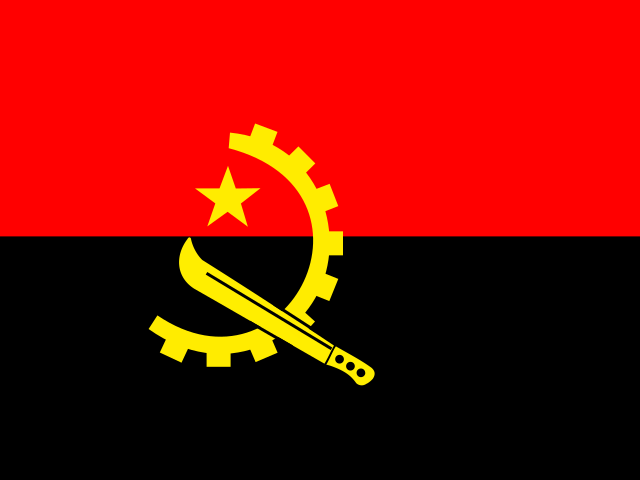 Angola
 Cameroon
 Central African Republic
 Chad
Chad Congo
Congo Democratic Republic of the Congo
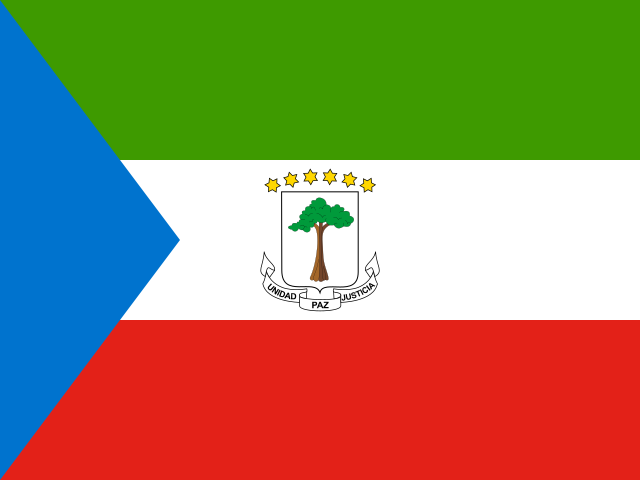 Equatorial Guinea
 Gabon
Gabon Sao Tome and Principe
Earlier Report Observations
Citrus fruit production in Middle Africa increased from 1 318 thousand tons in 2018 to 1 459 thousand tons in 2023, with market volume growing from 1 342 thousand tons to 1 477 thousand tons over the same period. The expansion was steady, interrupted only by a minor stabilization in 2019.
In value terms, production value declined from $1 645 million in 2018 to $1 154 million in 2021 before recovering to $1 293 million in 2023. The market size followed a similar trajectory, reaching $1 299 million in 2023.
During this time, global citrus markets saw rising interest from Asian buyers and increased competition from other fruits like apples and bananas, factors that influenced international trade flows and pricing conditions.
Table of content
- 1. Disclaimer
- 2. Terms of use of the report
- 3. Product codes in the statistical classifications used in the report
-
4. Key Market Indicators and Trends
-
4.1. Key Market Indicators
-
4.1.1. In kind
- 4.1.1.1. Production, 2018-2023
- 4.1.1.2. Imports, 2018-2024
- 4.1.1.3. Exports, 2018-2024
- 4.1.1.4. Market size, 2018-2023
-
4.1.2. In value
- 4.1.2.1. Production, 2018-2023
- 4.1.2.2. Imports, 2018-2024
- 4.1.2.3. Exports, 2018-2024
- 4.1.2.4. Market size, 2018-2023
-
4.1.1. In kind
- 4.2. Market Trends and Factors
-
4.1. Key Market Indicators
-
5. Production
-
5.1. Production in Middle Africa
- 5.1.1. Annual dynamics of production in Middle Africa in kind, 2018-2023, K t
-
5.2. Global production by Country, 2018-2023
- 5.2.1. Annual dynamics of production by macroregions in kind, 2018-2023, K t
- 5.2.2. Dynamics of production structure by macroregions in kind, 2018-2023
- 5.2.3. Annual dynamics of production by country in kind, 2018-2023, K t
- 5.2.4. Structure of production by countries in kind, 2018-2023
- 5.2.5. Dynamics of peoduction structure by countries in kind, 2018-2023
-
5.1. Production in Middle Africa
-
6. Imports
-
6.1. Imports (Direct Data*)
- 6.1.1. Imports - Total information
-
6.1.2. Imports in kind, t
- 6.1.2.1. Annual dynamics of product's imports to Angola in kind, 2018-2024, t
- 6.1.2.2. Dynamics of product's imports in kind to Angola by countries, 2018-2024, t
- 6.1.2.3. Structure of product's imports in kind by countries, 2018-2024
-
6.1.3. Imports in value, K $ US
- 6.1.3.1. Annual dynamics of product's imports to Angola in value, 2018-2024, K $ US
- 6.1.3.2. Dynamics of product's imports in value to Angola by countries, 2018-2024, K $ US
- 6.1.3.3. Structure of product's imports in value by countries, 2018-2024
-
6.1.4. Average price of product's imports, $ US/t
- 6.1.4.1. Annual dynamics of average price of product's imports to Angola, 2018-2024, $ US/t
- 6.1.4.2. Dynamics of average price of product's imports to Angola by countries, 2018-2024, $ US/t
-
6.2. Imports (Mirror Data)
- 6.2.1. Imports - Total information
-
6.2.2. Imports in kind, t
- 6.2.2.1. Annual dynamics of product's imports to Angola in kind, 2018-2024, t
- 6.2.2.2. Dynamics of product's imports in kind to Angola by countries, 2018-2024, t
- 6.2.2.3. Structure of product's imports in kind by countries, 2018-2024
-
6.2.3. Imports in value, K $ US
- 6.2.3.1. Annual dynamics of product's imports to Angola in value, 2018-2024, K $ US
- 6.2.3.2. Dynamics of product's imports in value to Angola by countries, 2018-2024, K $ US
- 6.2.3.3. Structure of product's imports in value by countries, 2018-2024
-
6.2.4. Average price of product's imports, $ US/t
- 6.2.4.1. Annual dynamics of average price of product's imports to Angola, 2018-2024, $ US/t
- 6.2.4.2. Dynamics of average price of product's imports to Angola by countries, 2018-2024, $ US/t
-
6.1. Imports (Direct Data*)
-
7. Exports
-
7.1. Exports (Direct Data*)
- 7.1.1. Exports - Total information
-
7.1.2. Exports in kind, t
- 7.1.2.1. Annual dynamics of product's exports from Angola in kind, 2018-2024, t
- 7.1.2.2. Dynamics of product's exports in kind from Angola by countries, 2018-2024, t
- 7.1.2.3. Structure of product's exports in kind by countries, 2018-2024
-
7.1.3. Exports in value, K $ US
- 7.1.3.1. Annual dynamics of product's exports from Angola in value, 2018-2024, K $ US
- 7.1.3.2. Dynamics of product's exports in value from Angola by countries, 2018-2024, K $ US
- 7.1.3.3. Structure of product's exports in value by countries, 2018-2024
-
7.1.4. Average price of product's exports, $ US/t
- 7.1.4.1. Annual dynamics of average price of product's exports from Angola, 2018-2024, $ US/t
- 7.1.4.2. Dynamics of average price of product's exports from Angola by countries, 2018-2024, $ US/t
-
7.2. Exports (Mirror Data)
- 7.2.1. Exports - Total information
-
7.2.2. Exports in kind, t
- 7.2.2.1. Annual dynamics of product's exports from Angola in kind, 2018-2024, t
- 7.2.2.2. Dynamics of product's exports in kind from Angola by countries, 2018-2024, t
- 7.2.2.3. Structure of product's exports in kind by countries, 2018-2024
-
7.2.3. Exports in value, K $ US
- 7.2.3.1. Annual dynamics of product's exports from Angola in value, 2018-2024, K $ US
- 7.2.3.2. Dynamics of product's exports in value from Angola by countries, 2018-2024, K $ US
- 7.2.3.3. Structure of product's exports in value by countries, 2018-2024
-
7.2.4. Average price of product's exports, $ US/t
- 7.2.4.1. Annual dynamics of average price of product's exports from Angola, 2018-2024, $ US/t
- 7.2.4.2. Dynamics of average price of product's exports from Angola by countries, 2018-2024, $ US/t
-
7.1. Exports (Direct Data*)
-
8. Trade balance
-
8.1. Trade balance (Direct Data)
- 8.1.1. In kind, t
- 8.1.2. In value, K $ US
-
8.2. Trade balance (Mirror Data)
- 8.2.1. In kind, t
- 8.2.2. In value, K $ US
-
8.1. Trade balance (Direct Data)
-
9. Top buying and selling countries, 2018-2024
-
9.1. Direct Data
- 9.1.1. Import in Value by Countries-buyers
- 9.1.2. Export in Value by Countries-suppliers
-
9.2. Mirror Data
- 9.2.1. Import in Value by Countries-buyers
- 9.2.2. Export in Value by Countries-suppliers
-
9.1. Direct Data
Production citrus fruit in Middle Africa
In kind, 2017-2020, K t
Top producers of citrus fruit, 2017-2020
World map of production of citrus fruit, 2017-2020
Middle Africa's citrus fruit production rebounded after two years of decline. In 2019, production reached its lowest point at 1,310 thousand tonnes, but then increased by 3.1% to 1,351 thousand tonnes in 2020. Over the 2017-2020 period, production grew by 2.3%, with an average annual growth rate of 0.8%.
Annual dynamics of production in Middle Africa in kind, 2017-2020, K t
| Parameter | 2018 | 2019 | 2020 | CAGR | |
|---|---|---|---|---|---|
| 1 | Change from last year | (0.1%) | (0.6%) | 3.1% | 0.8% |
Exports citrus fruit from Middle Africa
Exports in kind, t
Citrus fruit exports from Middle Africa have grown for the third year in a row. In 2020, the region exported 51 tonnes, marking a sharp increase of 33.7% compared to 2019. Between 2017 and 2020, exports surged by 898.8%, translating to an annualized growth rate of 115.4%.
Annual dynamics of product's exports from Middle Africa in kind, 2017-2020, t
| Parameter | 2018 | 2019 | 2020 | CAGR | |
|---|---|---|---|---|---|
| 1 | Change from last year | 286.7% | 93.2% | 33.7% | 115.4% |
From 2017 to 2020, Spain, Portugal, and Namibia were among the largest buyers of citrus fruit from Middle Africa, accounting for 5.1%, 2.0%, and 1.4% of exports in kind, respectively. However, together they represented just 8.5% of total exports, indicating a highly diversified partner base.
Structure of product's exports in kind by countries, 2017-2020
World map of product's exports from Middle Africa in kind, 2017-2020
Exports in value, K $ US
The value of citrus fruit exports from Middle Africa has risen for the third consecutive year. In 2020, exports totaled 56 thousand US dollars, showing an abrupt advance of 35.5% versus 2019. Over the 2017-2020 period, export value increased by 299.4%, with an average annual growth rate of 58.7%.
Annual dynamics of product's exports from Middle Africa in value, 2017-2020, K $ US
| Parameter | 2018 | 2019 | 2020 | CAGR | |
|---|---|---|---|---|---|
| 1 | Change from last year | 73.7% | 69.7% | 35.5% | 58.7% |
The structure of exports in value terms from 2017 to 2020 was diversified, with Spain, Namibia, and Portugal accounting for 22.5%, 4.8%, and 3.8% of exports, respectively. Together, they made up just 31.1% of total flows, and no single country held a clearly dominant position.
Structure of product's exports in value by countries, 2017-2020
World map of product's exports from Middle Africa in value, 2017-2020
Imports citrus fruit to Middle Africa
Imports in kind, t
After two years of decrease, citrus fruit imports into Middle Africa increased. In 2019, imports hit their lowest point at 10,642 tonnes, but then rose by 20.5% year-over-year to reach a total in 2020. Over the 2017-2020 period, imports declined by 62.8%, with an average annual decrease of 28.1%.
Annual dynamics of product's imports to Middle Africa in kind, 2017-2020, t
| Parameter | 2018 | 2019 | 2020 | CAGR | |
|---|---|---|---|---|---|
| 1 | Change from last year | (30.5%) | (55.6%) | 20.5% | (28.1%) |
From 2017 to 2020, South Africa, Nigeria, and Egypt formed the core group of markets for citrus fruit imports in kind, representing 35.9%, 35.5%, and 11.9% of imports, respectively. Together, they accounted for 83.3% of total import flows.
Structure of product's imports in kind by countries, 2017-2020
World map of product's imports to Middle Africa in kind, 2017-2020
Imports in value, K $ US
The value of citrus fruit imports into Middle Africa declined for the third consecutive year. In 2020, import volume came to 6,053 thousand US dollars, down by 28.9% from 2019. Over the 2017-2020 period, import value decreased by 58.5%, with an average annual decline of 25.4%.
Annual dynamics of product's imports to Middle Africa in value, 2017-2020, K $ US
| Parameter | 2018 | 2019 | 2020 | CAGR | |
|---|---|---|---|---|---|
| 1 | Change from last year | (28.8%) | (18.1%) | (28.9%) | (25.4%) |
Throughout 2017-2020, South Africa, Portugal, and Egypt remained the key partners for imports in value terms, accounting for 47.3%, 11.6%, and 10.7% of imports, respectively. Together, they represented 69.6% of total import flows.
Structure of product's imports in value by countries, 2017-2020
World map of product's imports to Middle Africa in value, 2017-2020
Related Reports

2026-03-28
2026-03-28
2026-03-28

2026-03-28

In-shell hazelnuts market in Middle Africa
2026-03-28

Treenuts market in Middle Africa
2026-03-30

Cashew nuts market in Middle Africa
2026-03-28
Why Choose Us?
Only Verified Data
No Hidden Costs or Separate Fees
Smarter Subscription Pricing
Contact Our Team
Submit your inquiry using the form below — our team will get back to you within 24 hours.