






"Latin America and the Caribbean" region includes following countries:
 Argentina
 Bolivia
 Brazil
 Chile
Chile Colombia
 Ecuador
 Falkland Islands (Malvinas)
 French Guiana
 Guyana
 Paraguay
 Peru
Peru Suriname
 Uruguay
 Venezuela
 Belize
 Costa Rica
 El Salvador
 Guatemala
 Honduras
 Mexico
 Nicaragua
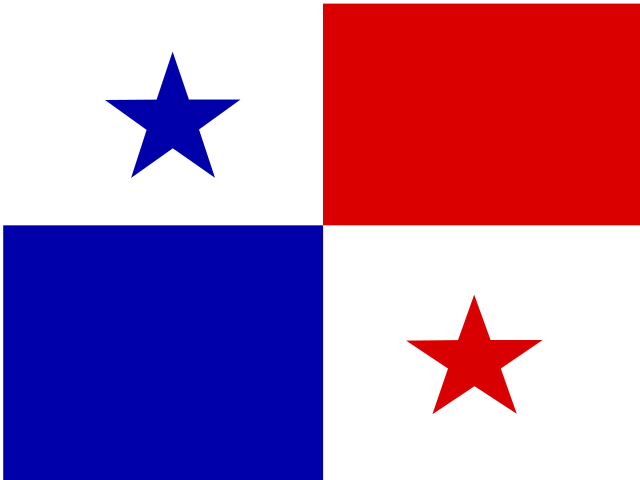 Panama
 Antigua and Barbuda
 the Bahamas
 Barbados
 British Virgin Islands
 Cayman Islands
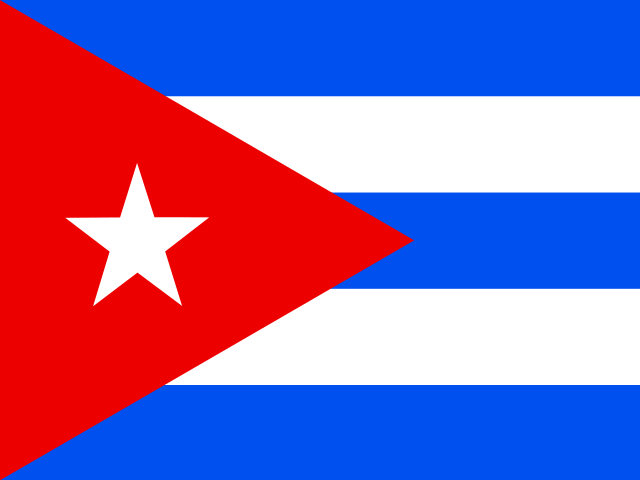 Cuba
Cuba Dominica
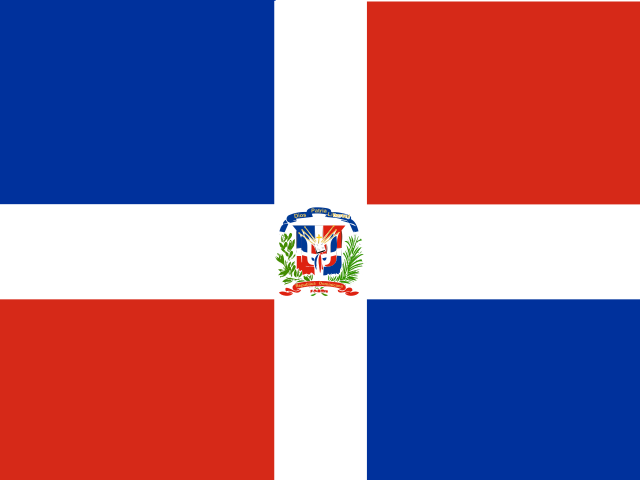 Dominican Republic
 Grenada
 Guadeloupe
 Haiti
Haiti Jamaica
 Martinique
 Montserrat
 Curacao
 Aruba
Aruba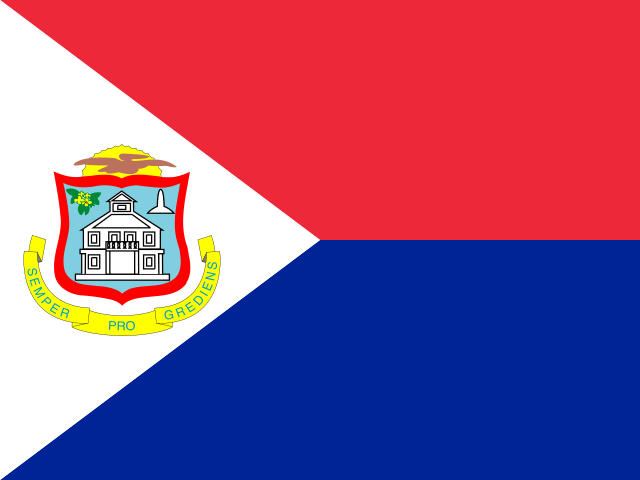 Saint Maarten (Dutch part)
 Bonaire
 Puerto Rico
 Saint Kitts and Nevis
 Anguilla
 Saint Lucia
 Saint-Martin (French Part)
 Saint Vincent and the Grenadines
 Trinidad and Tobago
 Turks and Caicos Islands
 United States Virgin Islands
Earlier Report Observations
The cinnamon market in Latin America and the Caribbean saw substantial volatility between 2018 and 2024. Market volume fell sharply from 32 050 tons in 2018 to a low of 14 361 tons in 2022, before partially recovering to 20 680 tons in 2023. This contraction of more than half was followed by a clear upturn, with import volumes rising to 22 785 tons in 2024, pointing to renewed market expansion.
The recovery from 2022 onward was supported by a rebound in regional trade activity and shifting demand patterns. Increased consumer interest in natural, traceable food products strengthened preference for high-quality cinnamon. In Mexico, a major regional buyer, higher imports driven by states like Mexico City, Querétaro, and Jalisco reflected changes in distribution and local demand. These factors helped offset the earlier downturn linked to global supply-chain disruptions and pandemic-induced spikes in raw material prices.
Domestic production remained minimal and stable throughout the period, underscoring that market volume movements were almost entirely import-led. The global market, dominated by Asian producers, experienced growing demand for premium segments such as Ceylon and organic cinnamon, which also influenced regional consumption trends.
Table of content
- 1. Disclaimer
- 2. Terms of use of the report
- 3. Product codes in the statistical classifications used in the report
-
4. Key Market Indicators and Trends
-
4.1. Key Market Indicators
-
4.1.1. In kind
- 4.1.1.1. Production, 2018-2023
- 4.1.1.2. Imports, 2018-2024
- 4.1.1.3. Exports, 2018-2024
- 4.1.1.4. Market size, 2018-2023
-
4.1.1. In kind
- 4.2. Market Trends and Factors
-
4.1. Key Market Indicators
-
5. Production
-
5.1. Production in Latin America and the Caribbean
- 5.1.1. Annual dynamics of production in Latin America and the Caribbean in kind, 2018-2023, t
-
5.2. Global production by Country, 2018-2023
- 5.2.1. Annual dynamics of production by macroregions in kind, 2018-2023, t
- 5.2.2. Dynamics of production structure by macroregions in kind, 2018-2023
- 5.2.3. Annual dynamics of production by country in kind, 2018-2023, t
- 5.2.4. Structure of production by countries in kind, 2018-2023
- 5.2.5. Dynamics of peoduction structure by countries in kind, 2018-2023
-
5.1. Production in Latin America and the Caribbean
-
6. Exports
-
6.1. Exports (Direct Data*)
- 6.1.1. Exports - Total information
-
6.1.2. Exports in kind, t
- 6.1.2.1. Annual dynamics of product's exports from Argentina in kind, 2018-2024, t
- 6.1.2.2. Dynamics of product's exports in kind from Argentina by countries, 2018-2024, t
- 6.1.2.3. Structure of product's exports in kind by countries, 2018-2024
-
6.1.3. Exports in value, M $ US
- 6.1.3.1. Annual dynamics of product's exports from Argentina in value, 2018-2024, M $ US
- 6.1.3.2. Dynamics of product's exports in value from Argentina by countries, 2018-2024, M $ US
- 6.1.3.3. Structure of product's exports in value by countries, 2018-2024
-
6.1.4. Average price of product's exports, $ US/kg
- 6.1.4.1. Annual dynamics of average price of product's exports from Argentina, 2018-2024, $ US/kg
- 6.1.4.2. Dynamics of average price of product's exports from Argentina by countries, 2018-2024, $ US/kg
-
6.2. Exports (Mirror Data)
- 6.2.1. Exports - Total information
-
6.2.2. Exports in kind, t
- 6.2.2.1. Annual dynamics of product's exports from Argentina in kind, 2018-2024, t
- 6.2.2.2. Dynamics of product's exports in kind from Argentina by countries, 2018-2024, t
- 6.2.2.3. Structure of product's exports in kind by countries, 2018-2024
-
6.2.3. Exports in value, M $ US
- 6.2.3.1. Annual dynamics of product's exports from Argentina in value, 2018-2024, M $ US
- 6.2.3.2. Dynamics of product's exports in value from Argentina by countries, 2018-2024, M $ US
- 6.2.3.3. Structure of product's exports in value by countries, 2018-2024
-
6.2.4. Average price of product's exports, $ US/kg
- 6.2.4.1. Annual dynamics of average price of product's exports from Argentina, 2018-2024, $ US/kg
- 6.2.4.2. Dynamics of average price of product's exports from Argentina by countries, 2018-2024, $ US/kg
-
6.1. Exports (Direct Data*)
-
7. Imports
-
7.1. Imports (Direct Data*)
- 7.1.1. Imports - Total information
-
7.1.2. Imports in kind, t
- 7.1.2.1. Annual dynamics of product's imports to Argentina in kind, 2018-2024, t
- 7.1.2.2. Dynamics of product's imports in kind to Argentina by countries, 2018-2024, t
- 7.1.2.3. Structure of product's imports in kind by countries, 2018-2024
-
7.1.3. Imports in value, M $ US
- 7.1.3.1. Annual dynamics of product's imports to Argentina in value, 2018-2024, M $ US
- 7.1.3.2. Dynamics of product's imports in value to Argentina by countries, 2018-2024, M $ US
- 7.1.3.3. Structure of product's imports in value by countries, 2018-2024
-
7.1.4. Average price of product's imports, $ US/kg
- 7.1.4.1. Annual dynamics of average price of product's imports to Argentina, 2018-2024, $ US/kg
- 7.1.4.2. Dynamics of average price of product's imports to Argentina by countries, 2018-2024, $ US/kg
-
7.2. Imports (Mirror Data)
- 7.2.1. Imports - Total information
-
7.2.2. Imports in kind, t
- 7.2.2.1. Annual dynamics of product's imports to Argentina in kind, 2018-2024, t
- 7.2.2.2. Dynamics of product's imports in kind to Argentina by countries, 2018-2024, t
- 7.2.2.3. Structure of product's imports in kind by countries, 2018-2024
-
7.2.3. Imports in value, M $ US
- 7.2.3.1. Annual dynamics of product's imports to Argentina in value, 2018-2024, M $ US
- 7.2.3.2. Dynamics of product's imports in value to Argentina by countries, 2018-2024, M $ US
- 7.2.3.3. Structure of product's imports in value by countries, 2018-2024
-
7.2.4. Average price of product's imports, $ US/kg
- 7.2.4.1. Annual dynamics of average price of product's imports to Argentina, 2018-2024, $ US/kg
- 7.2.4.2. Dynamics of average price of product's imports to Argentina by countries, 2018-2024, $ US/kg
-
7.1. Imports (Direct Data*)
-
8. Trade balance
-
8.1. Trade balance (Direct Data)
- 8.1.1. In kind, t
- 8.1.2. In value, M $ US
-
8.2. Trade balance (Mirror Data)
- 8.2.1. In kind, t
- 8.2.2. In value, M $ US
-
8.1. Trade balance (Direct Data)
-
9. Top buying and selling countries, 2018-2024
-
9.1. Direct Data
- 9.1.1. Import in Value by Countries-buyers
- 9.1.2. Export in Value by Countries-suppliers
-
9.2. Mirror Data
- 9.2.1. Import in Value by Countries-buyers
- 9.2.2. Export in Value by Countries-suppliers
-
9.1. Direct Data
Production cinnamon in Latin America and the Caribbean
In kind, 2017-2020, t
Top producers of cinnamon, 2017-2020
World map of production of cinnamon, 2017-2020
After two consecutive years of decline, cinnamon production in Latin America and the Caribbean saw an increase. In 2020, the region produced 113.0 t of cinnamon, marking a 1.0% rise compared to 2019. Over the 2017-2020 period, production decreased by 2.8%, with a compound annual growth rate of 1.0%. The lowest production level was recorded in 2019 at 112.0 t, while the largest decline occurred in 2018, with a drop of 2.6%.
Annual dynamics of production in Latin America and the Caribbean in kind, 2017-2020, t
| Parameter | 2018 | 2019 | 2020 | CAGR | |
|---|---|---|---|---|---|
| 1 | Change from last year | (2.6%) | (1.2%) | 1.0% | (1.0%) |
Exports cinnamon from Latin America and the Caribbean
Exports in kind, t
The market showed an unstable trend throughout the period. Exports reached their lowest point in 2019 and peaked in 2017, with a 7.2-fold difference between these years. In 2020, Latin America and the Caribbean exported 301 t of cinnamon, representing a significant increase of 215.5% compared to the previous year. The minimum export volume was recorded in 2019 at 95 t, which also saw the largest decline of 75.6%.
Annual dynamics of product's exports from Latin America and the Caribbean in kind, 2017-2020, t
| Parameter | 2018 | 2019 | 2020 | CAGR | |
|---|---|---|---|---|---|
| 1 | Change from last year | (43.4%) | (75.6%) | 215.5% | (24.2%) |
From 2017 to 2020, cinnamon exports from Latin America and the Caribbean were relatively evenly distributed. The United States accounted for 21.3% of exports in kind, Sri Lanka for 5.4%, and Spain for 2.6%. Together, these three countries represented only 29.3% of total export flows.
Structure of product's exports in kind by countries, 2017-2020
World map of product's exports from Latin America and the Caribbean in kind, 2017-2020
Exports in value, M $ US
Following a two-year decline, cinnamon export volumes from Latin America and the Caribbean increased. In 2020, exports totaled 2.1 million US dollars, showing a sharp year-on-year rise of 28.2%. Between 2017 and 2020, exports decreased by 36.2%, which translates to an annualized rate of 13.9%. The lowest value was recorded in 2019 at 1.7 million US dollars, which also experienced the largest decline of 44.3%.
Annual dynamics of product's exports from Latin America and the Caribbean in value, 2017-2020, M $ US
| Parameter | 2018 | 2019 | 2020 | CAGR | |
|---|---|---|---|---|---|
| 1 | Change from last year | (10.7%) | (44.3%) | 28.2% | (13.9%) |
The country composition of exports in value terms from 2017 to 2020 was dispersed. The United States accounted for 17.3% of exports in value terms, Sri Lanka for 10.9%, and Spain for 6.1%. Combined, these three countries formed just 34.3% of total flows, with the remaining 65.7% distributed among a wide range of other destinations.
Structure of product's exports in value by countries, 2017-2020
World map of product's exports from Latin America and the Caribbean in value, 2017-2020
Imports cinnamon to Latin America and the Caribbean
Imports in kind, t
Market performance exhibited noticeable fluctuations during the period. Import volumes varied 2.4 times, with the lowest point in 2017 and the highest in 2018. In 2020, cross-border shipments of cinnamon to Latin America and the Caribbean amounted to 27 600 t, up by 4.0% compared to the previous year. The maximum import volume was recorded in 2018 at 32 328 t. The largest decline occurred in 2019 with a drop of 17.9%, while the largest increase was in 2018 with a rise of 141.3%.
Annual dynamics of product's imports to Latin America and the Caribbean in kind, 2017-2020, t
| Parameter | 2018 | 2019 | 2020 | CAGR | |
|---|---|---|---|---|---|
| 1 | Change from last year | 141.3% | (17.9%) | 4.0% | 27.2% |
Throughout 2017 to 2020, Sri Lanka and Indonesia were the core markets for cinnamon imports in kind, jointly accounting for 81.7% of total flows. Other destinations held comparatively modest shares.
Structure of product's imports in kind by countries, 2017-2020
World map of product's imports to Latin America and the Caribbean in kind, 2017-2020
Imports in value, M $ US
Latin America and the Caribbean imported approximately 172.1 million US dollars worth of cinnamon in 2020, representing a strong 13.0% increase compared to 2019. Over the 2017-2020 period, imports grew by 3.9%, with a compound annual growth rate of 1.3%. The minimum value was recorded in 2019 at 152.3 million US dollars, while the maximum was in 2018 at 184.3 million US dollars. The largest decline occurred in 2019 with a drop of 17.3%.
Annual dynamics of product's imports to Latin America and the Caribbean in value, 2017-2020, M $ US
| Parameter | 2018 | 2019 | 2020 | CAGR | |
|---|---|---|---|---|---|
| 1 | Change from last year | 11.3% | (17.3%) | 13.0% | 1.3% |
From 2017 to 2020, Sri Lanka remained the primary source for cinnamon imports to Latin America and the Caribbean, accounting for 80.5% of total imports in value terms. The remaining volume was distributed among other countries.
Structure of product's imports in value by countries, 2017-2020
World map of product's imports to Latin America and the Caribbean in value, 2017-2020
Related Reports





In-depth market research on this product
Global Cinnamon Market 2021–2031: Size, Share, Trends and Forecast
Global market report: size, trends and forecast to 2031 · 190 pages
Global Cinnamon Bark Oil Market 2021–2031: Size, Share, Trends and Forecast
Global market report: size, trends and forecast to 2031 · 186 pages
Why Choose Us?
Only Verified Data
No Hidden Costs or Separate Fees
Smarter Subscription Pricing
Contact Our Team
Submit your inquiry using the form below — our team will get back to you within 24 hours.