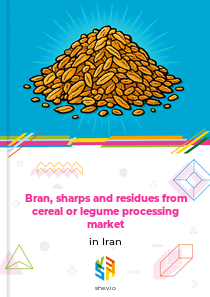







Earlier Report Observations
Between 2018 and 2020, Iran's bran and residues market volume remained stable with a slight dip to 1 421 thousand tons in 2019 before rising to 1 482 thousand tons in 2020. State-owned companies were active in the flour and bran sector, and trade interactions such as imports from the United States indicated ongoing market activity. The increase in 2020 aligned with a broader trend of rising domestic consumption.
Market growth accelerated in 2021 and 2022, reaching a peak of 1 592 thousand tons. This expansion was primarily driven by increased consumer demand for corn bran and a shift toward higher value-added products. Changes in import-export policies, labeling and packaging regulations, and market access requirements further stimulated the market. Major companies contributed by developing new products and entering new market segments.
In 2023, the market volume stabilized at 1 573 thousand tons, maintaining a level well above the start of the period. Iran consolidated its position as the second-largest consumer of corn bran in the Middle East, highlighting the market's regional significance.
Table of content
- 1. Disclaimer
- 2. Terms of use of the report
- 3. Product codes in the statistical classifications used in the report
-
4. Key Market Indicators and Trends
-
4.1. Key Market Indicators
-
4.1.1. In kind
- 4.1.1.1. Production, 2018-2023
- 4.1.1.2. Imports, 2018-2024
- 4.1.1.3. Exports, 2018-2024
- 4.1.1.4. Market size, 2018-2023
-
4.1.1. In kind
- 4.2. Market Trends and Factors
-
4.1. Key Market Indicators
-
5. Production
-
5.1. Production in Iran
- 5.1.1. Annual dynamics of production in Iran in kind, 2018-2023, K t
- 5.1.2. Annual dynamics of production in Iran in value, 2018-2023, $ US
-
5.2. Global production by Country, 2018-2023
- 5.2.1. Annual dynamics of production by macroregions in kind, 2018-2023, K t
- 5.2.2. Dynamics of production structure by macroregions in kind, 2018-2023
- 5.2.3. Annual dynamics of production by country in kind, 2018-2023, K t
- 5.2.4. Structure of production by countries in kind, 2018-2023
- 5.2.5. Dynamics of peoduction structure by countries in kind, 2018-2023
-
5.1. Production in Iran
-
6. Imports
-
6.1. Imports (Direct Data*)
- 6.1.1. Imports - Total information
-
6.1.2. Imports in kind, t
- 6.1.2.1. Annual dynamics of product's imports to Iran in kind, 2018-2024, t
- 6.1.2.2. Dynamics of product's imports in kind to Iran by countries, 2018-2024, t
- 6.1.2.3. Structure of product's imports in kind by countries, 2018-2024
-
6.1.3. Imports in value, K $ US
- 6.1.3.1. Annual dynamics of product's imports to Iran in value, 2018-2024, K $ US
- 6.1.3.2. Dynamics of product's imports in value to Iran by countries, 2018-2024, K $ US
- 6.1.3.3. Structure of product's imports in value by countries, 2018-2024
-
6.1.4. Average price of product's imports, $ US/t
- 6.1.4.1. Annual dynamics of average price of product's imports to Iran, 2018-2024, $ US/t
- 6.1.4.2. Dynamics of average price of product's imports to Iran by countries, 2018-2024, $ US/t
-
6.2. Imports (Mirror Data)
- 6.2.1. Imports - Total information
-
6.2.2. Imports in kind, t
- 6.2.2.1. Annual dynamics of product's imports to Iran in kind, 2018-2024, t
- 6.2.2.2. Dynamics of product's imports in kind to Iran by countries, 2018-2024, t
- 6.2.2.3. Structure of product's imports in kind by countries, 2018-2024
-
6.2.3. Imports in value, K $ US
- 6.2.3.1. Annual dynamics of product's imports to Iran in value, 2018-2024, K $ US
- 6.2.3.2. Dynamics of product's imports in value to Iran by countries, 2018-2024, K $ US
- 6.2.3.3. Structure of product's imports in value by countries, 2018-2024
-
6.2.4. Average price of product's imports, $ US/t
- 6.2.4.1. Annual dynamics of average price of product's imports to Iran, 2018-2024, $ US/t
- 6.2.4.2. Dynamics of average price of product's imports to Iran by countries, 2018-2024, $ US/t
-
6.1. Imports (Direct Data*)
-
7. Exports
-
7.1. Exports (Direct Data*)
- 7.1.1. Exports - Total information
-
7.1.2. Exports in kind, t
- 7.1.2.1. Annual dynamics of product's exports from Iran in kind, 2018-2024, t
- 7.1.2.2. Dynamics of product's exports in kind from Iran by countries, 2018-2024, t
- 7.1.2.3. Structure of product's exports in kind by countries, 2018-2024
-
7.1.3. Exports in value, K $ US
- 7.1.3.1. Annual dynamics of product's exports from Iran in value, 2018-2024, K $ US
- 7.1.3.2. Dynamics of product's exports in value from Iran by countries, 2018-2024, K $ US
- 7.1.3.3. Structure of product's exports in value by countries, 2018-2024
-
7.1.4. Average price of product's exports, $ US/t
- 7.1.4.1. Annual dynamics of average price of product's exports from Iran, 2018-2024, $ US/t
- 7.1.4.2. Dynamics of average price of product's exports from Iran by countries, 2018-2024, $ US/t
-
7.2. Exports (Mirror Data)
- 7.2.1. Exports - Total information
-
7.2.2. Exports in kind, t
- 7.2.2.1. Annual dynamics of product's exports from Iran in kind, 2018-2024, t
- 7.2.2.2. Dynamics of product's exports in kind from Iran by countries, 2018-2024, t
- 7.2.2.3. Structure of product's exports in kind by countries, 2018-2024
-
7.2.3. Exports in value, K $ US
- 7.2.3.1. Annual dynamics of product's exports from Iran in value, 2018-2024, K $ US
- 7.2.3.2. Dynamics of product's exports in value from Iran by countries, 2018-2024, K $ US
- 7.2.3.3. Structure of product's exports in value by countries, 2018-2024
-
7.2.4. Average price of product's exports, $ US/t
- 7.2.4.1. Annual dynamics of average price of product's exports from Iran, 2018-2024, $ US/t
- 7.2.4.2. Dynamics of average price of product's exports from Iran by countries, 2018-2024, $ US/t
-
7.1. Exports (Direct Data*)
-
8. Trade balance
-
8.1. Trade balance (Direct Data)
- 8.1.1. In kind, t
- 8.1.2. In value, K $ US
-
8.2. Trade balance (Mirror Data)
- 8.2.1. In kind, t
- 8.2.2. In value, K $ US
-
8.1. Trade balance (Direct Data)
-
9. Top buying and selling countries, 2018-2024
-
9.1. Direct Data
- 9.1.1. Import in Value by Countries-buyers
- 9.1.2. Export in Value by Countries-suppliers
-
9.2. Mirror Data
- 9.2.1. Import in Value by Countries-buyers
- 9.2.2. Export in Value by Countries-suppliers
-
9.1. Direct Data
Production bran, sharps and residues from cereal or legume processing in Iran
In kind, 2017-2020, K t
Between 2017 and 2020, Iran ranked 23rd globally in the production of bran, sharps, and residues from cereal or legume processing.
Top producers of bran, sharps and residues from cereal or legume processing, 2017-2020
World map of production of bran, sharps and residues from cereal or legume processing, 2017-2020
After a two-year decline, Iran's production of bran, sharps, and residues from cereal or legume processing rebounded in 2020. That year, output reached 1 484 K t, marking a 4.1% increase from 2019. Over the full 2017–2020 period, production grew by 3.3%, averaging an annualized rate of 1.1%. The lowest production level was in 2019 at 1 426 K t, while the largest drop occurred in 2018 with a 0.6% decrease.
Annual dynamics of production in Iran in kind, 2017-2020, K t
| Parameter | 2018 | 2019 | 2020 | CAGR | |
|---|---|---|---|---|---|
| 1 | Change from last year | (0.6%) | (0.2%) | 4.1% | 1.1% |
In value, 2017-2020, M $ US
In 2020, the value of Iran's production of bran, sharps, and residues from cereal or legume processing fell to 368.3 M $ US, down 3.4% from 2019. From 2017 to 2020, production value declined by 17.7%, with an average annual decrease of 6.3%. The lowest value was recorded in 2018 at 335.4 M $ US, which also saw the steepest drop of 25.0%. In contrast, 2019 experienced the largest increase at 13.6%.
Annual dynamics of production in Iran in value, 2017-2020, M $ US
| Parameter | 2018 | 2019 | 2020 | CAGR | |
|---|---|---|---|---|---|
| 1 | Change from last year | (25.0%) | 13.6% | (3.4%) | (6.3%) |
Exports bran, sharps and residues from cereal or legume processing from Iran
Exports in kind, t
The export market for bran, sharps, and residues from cereal or legume processing from Iran showed significant volatility during the observed period. In 2020, exports dropped to 1 630 t, a sharp 70.1% decrease from the previous year. The highest export volume was in 2018 at 15 975 t, which also saw the largest increase of 5 883.5%. The fluctuation between 2017 and 2018 was particularly dramatic, with a 60-fold difference between the peak and trough.
Annual dynamics of product's exports from Iran in kind, 2017-2020, t
| Parameter | 2018 | 2019 | 2020 | CAGR | |
|---|---|---|---|---|---|
| 1 | Change from last year | 5 883.5% | (65.8%) | (70.1%) | 82.8% |
From 2017 to 2020, nearly all of Iran's exports in kind of bran, sharps, and residues from cereal or legume processing went to Iraq, accounting for 97.7% of total flows.
Structure of product's exports in kind by countries, 2017-2020
World map of product's exports from Iran in kind, 2017-2020
Exports in value, K $ US
The export market in value terms exhibited high volatility from 2017 to 2020. In 2020, exports fell to 405 K $ US, a 72.3% decline from the previous year. The peak was in 2018 at 3 751 K $ US, which also recorded the largest increase of 4 413.0%. The variation between the 2017 trough and the 2018 peak was substantial, showing a 45-fold difference.
Annual dynamics of product's exports from Iran in value, 2017-2020, K $ US
| Parameter | 2018 | 2019 | 2020 | CAGR | |
|---|---|---|---|---|---|
| 1 | Change from last year | 4 413.0% | (61.1%) | (72.3%) | 69.5% |
Throughout 2017–2020, Iraq dominated Iran's export structure in value terms, holding a 97.1% share of total flows.
Structure of product's exports in value by countries, 2017-2020
World map of product's exports from Iran in value, 2017-2020
Imports bran, sharps and residues from cereal or legume processing to Iran
Imports in kind, t
Iran's imports of bran, sharps, and residues from cereal or legume processing declined for the third consecutive year in 2020, dropping to 23 t. This represented a sharp 98.4% decrease from 2019. Over the 2017–2020 period, imports fell by 99.9%, with an annualized rate of decline averaging 91.1%.
Annual dynamics of product's imports to Iran in kind, 2017-2020, t
| Parameter | 2018 | 2019 | 2020 | CAGR | |
|---|---|---|---|---|---|
| 1 | Change from last year | (61.8%) | (88.2%) | (98.4%) | (91.1%) |
From 2017 to 2020, the main sources for Iran's imports in kind of bran, sharps, and residues from cereal or legume processing were the United Arab Emirates (35.6% of imports), Kazakhstan (26.9%), and Azerbaijan (10.4%). Together, these three countries accounted for 72.9% of total import flows.
Structure of product's imports in kind by countries, 2017-2020
World map of product's imports to Iran in kind, 2017-2020
Imports in value, K $ US
Iran's imports of bran, sharps, and residues from cereal or legume processing in value terms declined for the third year in a row in 2020. Imports totaled 1 000 K $ US, a sharp 90.6% drop from the previous year. Between 2017 and 2020, imports decreased by 99.7%, with a compound annual growth rate (CAGR) of -85.5%.
Annual dynamics of product's imports to Iran in value, 2017-2020, K $ US
| Parameter | 2018 | 2019 | 2020 | CAGR | |
|---|---|---|---|---|---|
| 1 | Change from last year | (63.0%) | (91.2%) | (90.6%) | (85.5%) |
Throughout 2017–2020, the leading sources for Iran's imports in value terms of bran, sharps, and residues from cereal or legume processing were the United Arab Emirates (34.8% of imports), China (21.1%), and Kazakhstan (18.0%). Collectively, these three countries made up 73.9% of total import flows.
Structure of product's imports in value by countries, 2017-2020
World map of product's imports to Iran in value, 2017-2020
Related Reports

Rapeseed oilcake market in Iran
2026-03-29

Soybean oilcake market in Iran
2026-03-29


Cottonseed oil-cake market in Iran
2026-03-29
Why Choose Us?
Only Verified Data
No Hidden Costs or Separate Fees
Smarter Subscription Pricing
Contact Our Team
Submit your inquiry using the form below — our team will get back to you within 24 hours.