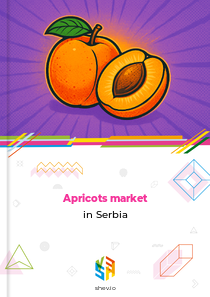







Earlier Report Observations
The volume of the apricot market in Serbia showed considerable volatility between 2018 and 2023. It expanded from 24 285 t in 2018 to 32 899 t in 2019, then contracted to 28 636 t in 2020. A modest recovery followed in 2021 to 29 202 t, before a sharp rise to 37 370 t in 2022. The market then dropped markedly to 21 211 t in 2023.
These movements were primarily driven by changes in domestic production and export levels. High production in 2019 and 2022 boosted market volume, but increased exports in those years offset some growth. In 2023, lower production coupled with sustained high exports led to a significant reduction in the domestic market size.
Factors highlighted for 2024 include legislative shifts promoting sustainable production, evolving consumer preferences towards eco-certified products, and global supply chain dynamics affecting agricultural commodities, which shape the operating environment for the apricot sector.
Table of content
- 1. Disclaimer
- 2. Terms of use of the report
- 3. Product codes in the statistical classifications used in the report
-
4. Key Market Indicators and Trends
-
4.1. Key Market Indicators
-
4.1.1. In kind
- 4.1.1.1. Production, 2018-2023
- 4.1.1.2. Imports, 2018-2024
- 4.1.1.3. Exports, 2018-2024
- 4.1.1.4. Market size, 2018-2023
-
4.1.1. In kind
- 4.2. Market Trends and Factors
-
4.1. Key Market Indicators
-
5. Production
-
5.1. Production in Serbia
- 5.1.1. Annual dynamics of production in Serbia in kind, 2018-2023, t
- 5.1.2. Annual dynamics of production in Serbia in value, 2018-2023, $ US
-
5.2. Global production by Country, 2018-2023
- 5.2.1. Annual dynamics of production by macroregions in kind, 2018-2023, t
- 5.2.2. Dynamics of production structure by macroregions in kind, 2018-2023
- 5.2.3. Annual dynamics of production by country in kind, 2018-2023, t
- 5.2.4. Structure of production by countries in kind, 2018-2023
- 5.2.5. Dynamics of peoduction structure by countries in kind, 2018-2023
-
5.1. Production in Serbia
-
6. Exports
-
6.1. Exports (Direct Data)
- 6.1.1. Exports - Total information
-
6.1.2. Exports in kind, t
- 6.1.2.1. Annual dynamics of product's exports from Serbia in kind, 2018-2024, t
- 6.1.2.2. Dynamics of product's exports in kind from Serbia by countries, 2018-2024, t
- 6.1.2.3. Structure of product's exports in kind by countries, 2018-2024
-
6.1.3. Exports in value, K $ US
- 6.1.3.1. Annual dynamics of product's exports from Serbia in value, 2018-2024, K $ US
- 6.1.3.2. Dynamics of product's exports in value from Serbia by countries, 2018-2024, K $ US
- 6.1.3.3. Structure of product's exports in value by countries, 2018-2024
-
6.1.4. Average price of product's exports, $ US/t
- 6.1.4.1. Annual dynamics of average price of product's exports from Serbia, 2018-2024, $ US/t
- 6.1.4.2. Dynamics of average price of product's exports from Serbia by countries, 2018-2024, $ US/t
-
6.2. Exports (Mirror Data)
- 6.2.1. Exports - Total information
-
6.2.2. Exports in kind, t
- 6.2.2.1. Annual dynamics of product's exports from Serbia in kind, 2018-2024, t
- 6.2.2.2. Dynamics of product's exports in kind from Serbia by countries, 2018-2024, t
- 6.2.2.3. Structure of product's exports in kind by countries, 2018-2024
-
6.2.3. Exports in value, K $ US
- 6.2.3.1. Annual dynamics of product's exports from Serbia in value, 2018-2024, K $ US
- 6.2.3.2. Dynamics of product's exports in value from Serbia by countries, 2018-2024, K $ US
- 6.2.3.3. Structure of product's exports in value by countries, 2018-2024
-
6.2.4. Average price of product's exports, $ US/t
- 6.2.4.1. Annual dynamics of average price of product's exports from Serbia, 2018-2024, $ US/t
- 6.2.4.2. Dynamics of average price of product's exports from Serbia by countries, 2018-2024, $ US/t
-
6.1. Exports (Direct Data)
-
7. Imports
-
7.1. Imports (Direct Data)
- 7.1.1. Imports - Total information
-
7.1.2. Imports in kind, t
- 7.1.2.1. Annual dynamics of product's imports to Serbia in kind, 2018-2024, t
- 7.1.2.2. Dynamics of product's imports in kind to Serbia by countries, 2018-2024, t
- 7.1.2.3. Structure of product's imports in kind by countries, 2018-2024
-
7.1.3. Imports in value, K $ US
- 7.1.3.1. Annual dynamics of product's imports to Serbia in value, 2018-2024, K $ US
- 7.1.3.2. Dynamics of product's imports in value to Serbia by countries, 2018-2024, K $ US
- 7.1.3.3. Structure of product's imports in value by countries, 2018-2024
-
7.1.4. Average price of product's imports, $ US/t
- 7.1.4.1. Annual dynamics of average price of product's imports to Serbia, 2018-2024, $ US/t
- 7.1.4.2. Dynamics of average price of product's imports to Serbia by countries, 2018-2024, $ US/t
-
7.2. Imports (Mirror Data)
- 7.2.1. Imports - Total information
-
7.2.2. Imports in kind, t
- 7.2.2.1. Annual dynamics of product's imports to Serbia in kind, 2018-2024, t
- 7.2.2.2. Dynamics of product's imports in kind to Serbia by countries, 2018-2024, t
- 7.2.2.3. Structure of product's imports in kind by countries, 2018-2024
-
7.2.3. Imports in value, K $ US
- 7.2.3.1. Annual dynamics of product's imports to Serbia in value, 2018-2024, K $ US
- 7.2.3.2. Dynamics of product's imports in value to Serbia by countries, 2018-2024, K $ US
- 7.2.3.3. Structure of product's imports in value by countries, 2018-2024
-
7.2.4. Average price of product's imports, $ US/t
- 7.2.4.1. Annual dynamics of average price of product's imports to Serbia, 2018-2024, $ US/t
- 7.2.4.2. Dynamics of average price of product's imports to Serbia by countries, 2018-2024, $ US/t
-
7.1. Imports (Direct Data)
-
8. Trade balance
-
8.1. Trade balance (Direct Data)
- 8.1.1. In kind, t
- 8.1.2. In value, K $ US
-
8.2. Trade balance (Mirror Data)
- 8.2.1. In kind, t
- 8.2.2. In value, K $ US
-
8.1. Trade balance (Direct Data)
-
9. Top buying and selling countries, 2018-2024
-
9.1. Direct Data
- 9.1.1. Import in Value by Countries-buyers
- 9.1.2. Export in Value by Countries-suppliers
-
9.2. Mirror Data
- 9.2.1. Import in Value by Countries-buyers
- 9.2.2. Export in Value by Countries-suppliers
-
9.1. Direct Data
Production apricots in Serbia
In kind, 2017-2020, t
Between 2017 and 2020, Serbia ranked 23rd globally in apricot production.
Top producers of apricots, 2017-2020
World map of production of apricots, 2017-2020
In 2020, Serbia produced 30 494 tons of apricots, a sharp decrease of 25.5% compared to 2019. Over the period from 2017 to 2020, production fell by 26.2%, averaging an annual decline of 9.6%. The lowest production level was recorded in 2018 at 25 414 tons. That year also saw the largest decline of 38.5%, while the biggest increase occurred in 2019 with a 61.1% rise.
Annual dynamics of production in Serbia in kind, 2017-2020, t
| Parameter | 2018 | 2019 | 2020 | CAGR | |
|---|---|---|---|---|---|
| 1 | Change from last year | (38.5%) | 61.1% | (25.5%) | (9.6%) |
Exports apricots from Serbia
Exports in kind, t
The export market for apricots from Serbia showed an unstable trend from 2017 to 2020. Volumes reached their lowest point in 2018 at 1 661 tons, with the largest decline that year of 81.5%. In 2019, exports surged by 414.8%, but by 2020, they dropped to 2 446 tons, down 71.4% from the previous year. The peak was in 2017, resulting in a 5.4-fold difference between the highest and lowest years.
Annual dynamics of product's exports from Serbia in kind, 2017-2020, t
| Parameter | 2018 | 2019 | 2020 | CAGR | |
|---|---|---|---|---|---|
| 1 | Change from last year | (81.5%) | 414.8% | (71.4%) | (35.2%) |
From 2017 to 2020, the largest buyers of Serbian apricots by volume were Russia, accounting for 24.0% of exports, Romania with 22.4%, and Bosnia and Herzegovina at 16.7%. Together, these three countries made up 63.1% of total exports.
Structure of product's exports in kind by countries, 2017-2020
World map of product's exports from Serbia in kind, 2017-2020
Exports in value, K $ US
Serbia's apricot export values were volatile between 2017 and 2020. The lowest point was in 2018 at 1 587 thousand US dollars, marking the largest decline of 74.5% that year. In 2019, values increased by 235.6%, but by 2020, they fell to 2 671 thousand US dollars, a steep drop of 49.9% from 2019. The peak was in 2017, creating a 3.9-fold gap between the highest and lowest years.
Annual dynamics of product's exports from Serbia in value, 2017-2020, K $ US
| Parameter | 2018 | 2019 | 2020 | CAGR | |
|---|---|---|---|---|---|
| 1 | Change from last year | (74.5%) | 235.6% | (49.9%) | (24.6%) |
In terms of value from 2017 to 2020, Russia was the top destination for Serbian apricot exports with 33.1%, followed by Romania at 23.1%, and Bosnia and Herzegovina with 8.6%. These three countries combined represented 64.7% of total export value.
Structure of product's exports in value by countries, 2017-2020
World map of product's exports from Serbia in value, 2017-2020
Imports apricots to Serbia
Imports in kind, t
Serbia's apricot imports declined for two years before increasing. The lowest volume was in 2019 at 518 tons, with the largest drop of 43.8% occurring in 2018. In 2020, imports rose to 589 tons, a substantial gain of 13.7% compared to 2019. Overall, from 2017 to 2020, imports decreased by 37.8%, averaging an annual decline of 14.6%.
Annual dynamics of product's imports to Serbia in kind, 2017-2020, t
| Parameter | 2018 | 2019 | 2020 | CAGR | |
|---|---|---|---|---|---|
| 1 | Change from last year | (43.8%) | (2.6%) | 13.7% | (14.6%) |
Between 2017 and 2020, Greece dominated Serbia's apricot imports by volume, absorbing 71.6% of total flows, while numerous smaller partners accounted for the remainder.
Structure of product's imports in kind by countries, 2017-2020
World map of product's imports to Serbia in kind, 2017-2020
Imports in value, K $ US
Serbia's apricot import values increased for the second consecutive year. The lowest point was in 2018 at 505 thousand US dollars, with a decline of 19.7% that year. By 2020, imports reached 992 thousand US dollars, a sharp increase of 69.4% from 2019. Over the 2017-2020 period, imports grew by 57.7%, averaging an annual rise of 16.4%.
Annual dynamics of product's imports to Serbia in value, 2017-2020, K $ US
| Parameter | 2018 | 2019 | 2020 | CAGR | |
|---|---|---|---|---|---|
| 1 | Change from last year | (19.7%) | 15.9% | 69.4% | 16.4% |
From 2017 to 2020, Greece and Spain were the primary sources of apricot imports to Serbia by value, with other markets playing a less significant role.
Structure of product's imports in value by countries, 2017-2020
World map of product's imports to Serbia in value, 2017-2020
Related Reports

2026-03-28
2026-03-28
2026-03-28
2026-03-28

In-shell hazelnuts market in Serbia
2026-03-28

Watermelons and melons market in Serbia
2026-03-28

2026-03-28
2026-03-28
Why Choose Us?
Only Verified Data
No Hidden Costs or Separate Fees
Smarter Subscription Pricing
Contact Our Team
Submit your inquiry using the form below — our team will get back to you within 24 hours.