Vietnam’s wood exports reach $11.69 billion as industry seeks higher-value growth
Vietnam exported an estimated $11.69 billion of wood and wood products in the first eight months of 2026, up 5% year on year. Industry leaders are calling for deeper processing, certified raw-material areas and broader markets as the United States retains a 49.9% share.
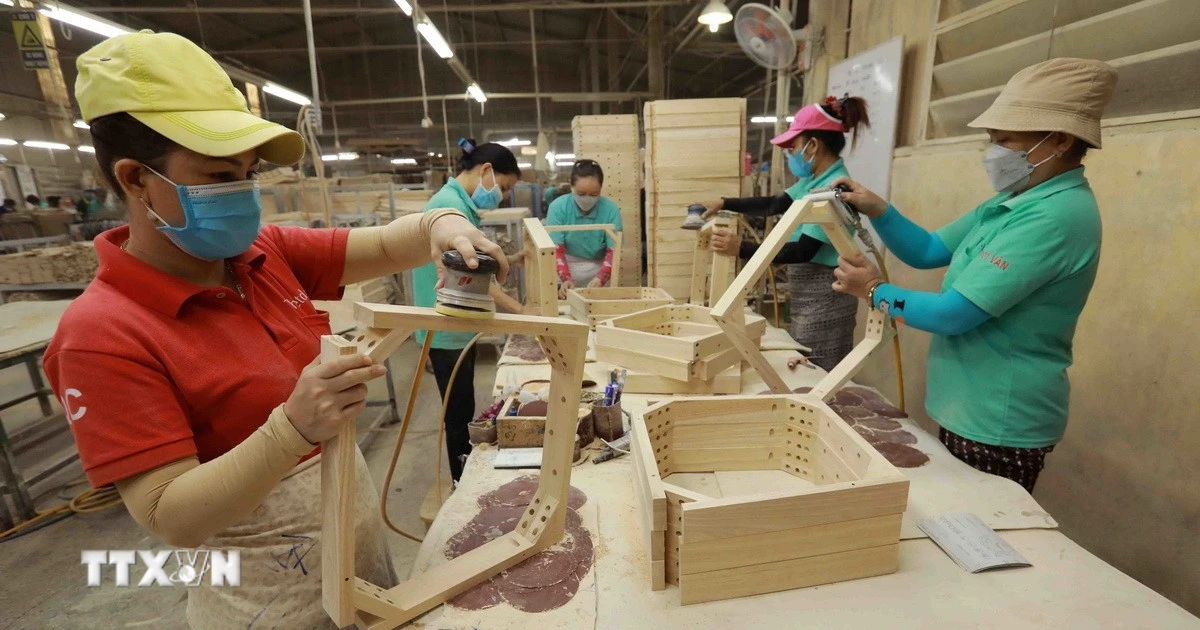
Exports rise despite weaker US sales
Vietnam’s exports of wood and wood products reached an estimated $11.69 billion in the first eight months of 2026, an increase of 5% from the same period of 2025, VietnamPlus reported, citing the Ministry of Agriculture and Environment. August shipments alone were valued at approximately $1.48 billion.
The wider forestry sector exported $12.57 billion during the eight-month period, up 5.4%, while Vietnam’s total agricultural, forestry and fishery exports approached $49.31 billion, a year-on-year gain of 7%. The ministry is targeting $74 billion from these sectors for the full year.
US concentration remains a commercial risk
The United States accounted for 49.9% of Vietnam’s wood and wood-product export market in August, followed by China at 15% and Japan at 12.4%. However, export value to the United States fell 5.8% year on year during the first seven months of 2026. Shipments to China increased 46.4%, while those to Japan rose 5.8%.
Among Vietnam’s 15 largest markets, Mexico recorded the strongest growth, with export value rising 2.1 times, while India posted the steepest decline at 30.3%. The figures show some diversification beyond the United States, but the concentration of almost half of sales in one market continues to expose Vietnamese processors and furniture manufacturers to changes in US demand and trade conditions.
Raw materials and processing shape the next stage
Bnews reported that Vietnam’s wood industry generates about $17 billion in annual exports but needs to raise value through deeper processing, stronger domestic demand and sustainable forestry. Vietnam has approximately 4.9 million hectares of planted forest, including about 4.1 million hectares of production forest. By May 2026, around 880,000 hectares had obtained FSC or PEFC sustainable-forest certification.
Demand for raw material from furniture, engineered-board, pellet and wood-chip industries totals about 59 million cubic metres annually. Harvested timber output reached 16.6629 million cubic metres in the first eight months of 2026, up 7.4% year on year. Yet industry representatives said limited large-diameter plantations, weak links between growers and processors, and poor coordination between processing capacity and planting areas continue to constrain supply.
Longer planting cycles could lift returns
Forests supplying wood chips and pellets can be harvested after about five years, while large-diameter timber requires seven to 10 years or longer. Industry estimates cited by Bnews indicate that extending the cycle to around 10-12 years could make growers’ profits approximately 2.5 times higher than harvesting young timber, provided stable purchasing arrangements are available.
Companies are also shifting craft production from higher-risk imported natural timber toward domestic plantation wood, laminated wood and boards. The change has reduced use of previously common high-risk imported natural timber by about 90%, according to the report. For exporters, investment in traceability, certified supply and higher-value furniture could improve access to markets with stricter environmental requirements. For growers, longer rotations will depend on predictable buyers, financing and processing plants capable of paying for higher-grade logs.