Vietnam rice prices rise modestly as Philippine import demand heads toward 5.7 million tonnes
Vietnamese raw-rice and fragrant broken-rice prices increased slightly in the Mekong Delta, while export quotations remained stable. The USDA expects Philippine rice imports to reach 5.7 million tonnes in 2027 as El Niño threatens domestic production.
Raw-rice prices gain in the Mekong Delta
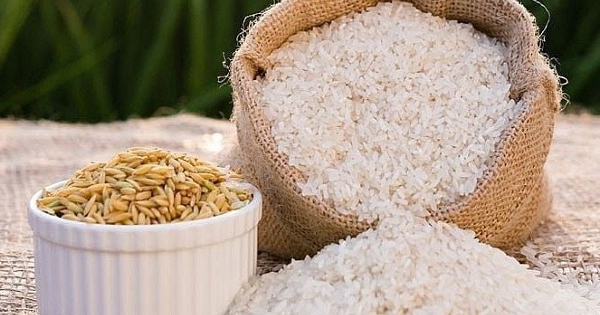
Vietnamese raw-rice prices rose modestly on September 28 in the Mekong Delta, according to Vietnambiz. IR 504 raw rice gained 50 dong per kilogram to 8,700–8,800 dong, while CL 555 increased by the same amount to 8,750–8,850 dong per kilogram.
Among milling byproducts, fragrant broken rice rose by 100 dong per kilogram to 8,900–9,000 dong. Rice bran was unchanged at 7,500–7,700 dong per kilogram, indicating that the increase was concentrated in selected raw-rice and broken-rice categories rather than across the entire processing market.
Fresh paddy prices were broadly steady, based on data from the An Giang Department of Agriculture and Environment. OM 18 and OM 5451 were quoted at 6,000–6,100 dong per kilogram, IR 50404 at 5,900–6,000 dong, OM 34 at 5,700–5,900 dong and Dai Thom 8 at 6,100–6,200 dong per kilogram.
Vietnamese export quotations remain stable
The Vietnam Food Association reported that Vietnamese Jasmine rice held at $514–518 per tonne. White rice with 5% broken content was offered at $420–424 per tonne, while fragrant rice with 5% broken content stood at $526–530 per tonne.
Competing Asian origins also showed stable quotations. Thai 5% broken white rice was priced at $466–470 per tonne and Pakistani supplies at $422–426. Indian 5% broken white rice was lower at $382–386 per tonne, while Indian 5% broken parboiled rice was quoted at $378–382.
The comparison leaves Vietnam’s standard 5% broken white rice close to Pakistani levels but above Indian offers and below Thai quotations. Vietnam’s Jasmine and fragrant grades continue to occupy higher-priced segments, making the composition of future Philippine purchases important for exporters and millers.
Philippine imports forecast at 5.7 million tonnes
Philstar reported that the Philippines could import as much as 5.7 million tonnes of rice in 2027 to maintain adequate reserves as El Niño threatens production. The US Department of Agriculture raised its forecast from 5.6 million tonnes and said the country could need up to 5 million tonnes to build stocks against typhoons, seasonal rains and the developing El Niño.
Data from the Philippines’ Bureau of Plant Industry showed imports had already reached 3.9 million tonnes by September 17, exceeding the 3.4 million tonnes imported during all of 2025. The Philippine Department of Agriculture has said it will not impose a temporary import suspension, citing the need to build reserves and stabilize rice prices while El Niño is expected to persist into 2027.
El Niño weighs on the production outlook
The USDA cut its forecast for Philippine milled-rice production in 2027 to 12.25 million tonnes from 12.4 million tonnes. Drier weather expected around May and June, together with higher fertilizer costs, could restrict output growth. Reservoir levels at major irrigation dams recovered strongly from August through September 2026, improving irrigation prospects for dry-season planting in November and December, but the recovery came too late for planting between May and July and affected the wet-season harvest.
The Philippine weather agency PAGASA expects a very strong El Niño to begin in October and potentially intensify during the first half of the following year. The phenomenon could reduce Philippine paddy production by about 700,000 tonnes this year. The USDA said irrigation conditions will require closer monitoring if El Niño develops into a super El Niño late in 2026, a scenario that would reinforce import demand and increase the importance of reliable regional supplies.