Turkey steps up talks with Ukraine and Russia on new Black Sea grain corridor
Turkey is holding intensive talks with Ukraine and Russia on a maritime security mechanism that could restart food shipments through the Black Sea. Nearly 100 million tonnes of food are reportedly unable to reach markets, while the disruption threatens Turkey’s $13 billion processing-export business.
Ankara seeks a maritime security mechanism
Turkey has intensified negotiations with Ukraine and Russia over a new security mechanism for commercial shipping in the Black Sea, according to Ekonomim. Ankara wants to restore reliable food exports and prevent further increases in global food prices, but no timetable for an agreement has been announced.
Attacks on merchant vessels have effectively halted civilian shipping in the Black Sea, the report said. Turkey’s Ministry of Transport and Infrastructure and Ministry of Foreign Affairs are maintaining continuous contacts with Kyiv and Moscow. Deputy Transport Minister Durmuş Ünüvar told a meeting of the Chamber of Shipping that diplomatic channels were working around the clock, although the parties had not established a clear deadline.
A negotiated mechanism would be intended to protect merchant ships and reduce pressure on food markets. Its practical value would depend on whether shipowners, crews and insurers regard the security arrangements as credible enough to resume voyages. Until that happens, uncertainty around vessel safety will continue to constrain the movement of agricultural cargoes from the region.
Stocks build as prices rise
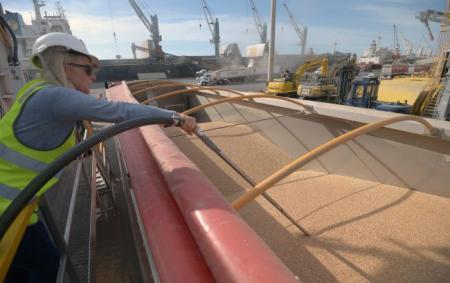
Nearly 100 million tonnes of food are unable to reach the market, creating a large storage problem in Ukraine and Russia and increasing the risk that some products will deteriorate, according to the report. Grain prices have already risen by 4-4.5%.
Kazım Taycı, president of the Istanbul Cereals, Pulses, Oil Seeds and Products Exporters’ Association, said the Black Sea grain corridor process had been completely interrupted and that Turkey was receiving no products from either Ukraine or Russia. He warned that price growth could exceed 10% if the problem remained unresolved for two months.
The report also said global wheat prices had reached a three-year high after jumping 18% amid the port blockade and renewed shipping risks. These figures describe different measures of market pressure: the reported 4-4.5% increase concerns grain prices more broadly, while the 18% rise refers specifically to the global wheat price.
Ukraine is also facing shortages of silo capacity and working capital for farmers. The country could reduce planting for the next harvest by 5-7 million hectares, nearly one-third of its total planted area, if those constraints persist. That would extend the effect of the shipping disruption beyond current inventories and into future production.
Turkey’s processing exports are exposed
Turkey’s domestic food market is fully supplied, but its processing-export sector is at risk. Turkish companies buy raw materials from Ukraine and Russia, process them domestically and export finished products. This business generated $13 billion for Turkey last year, according to the report.
A prolonged interruption would therefore affect more than Black Sea grain sellers. It would restrict feedstock for Turkish processors, weaken throughput for ports and logistics providers, and increase uncertainty for buyers of finished food products. For Ukrainian and Russian producers, continued disruption would add storage costs and reduce their ability to convert stocks into cash.
A credible shipping arrangement could release accumulated cargo, improve raw-material availability for Turkish plants and ease some of the price pressure. The absence of an agreement, however, leaves traders and processors dependent on a corridor whose timing, operating rules and security guarantees remain unresolved.