Thailand risks losing cassava export lead as mosaic disease cuts output
Thailand’s cassava industry faces a critical competitive challenge after repeated cassava mosaic disease outbreaks depressed production for 7-8 years. The Thailand Development Research Institute warns that Vietnam’s rapid progress could cost Thailand its position as the world’s leading cassava and tapioca exporter.
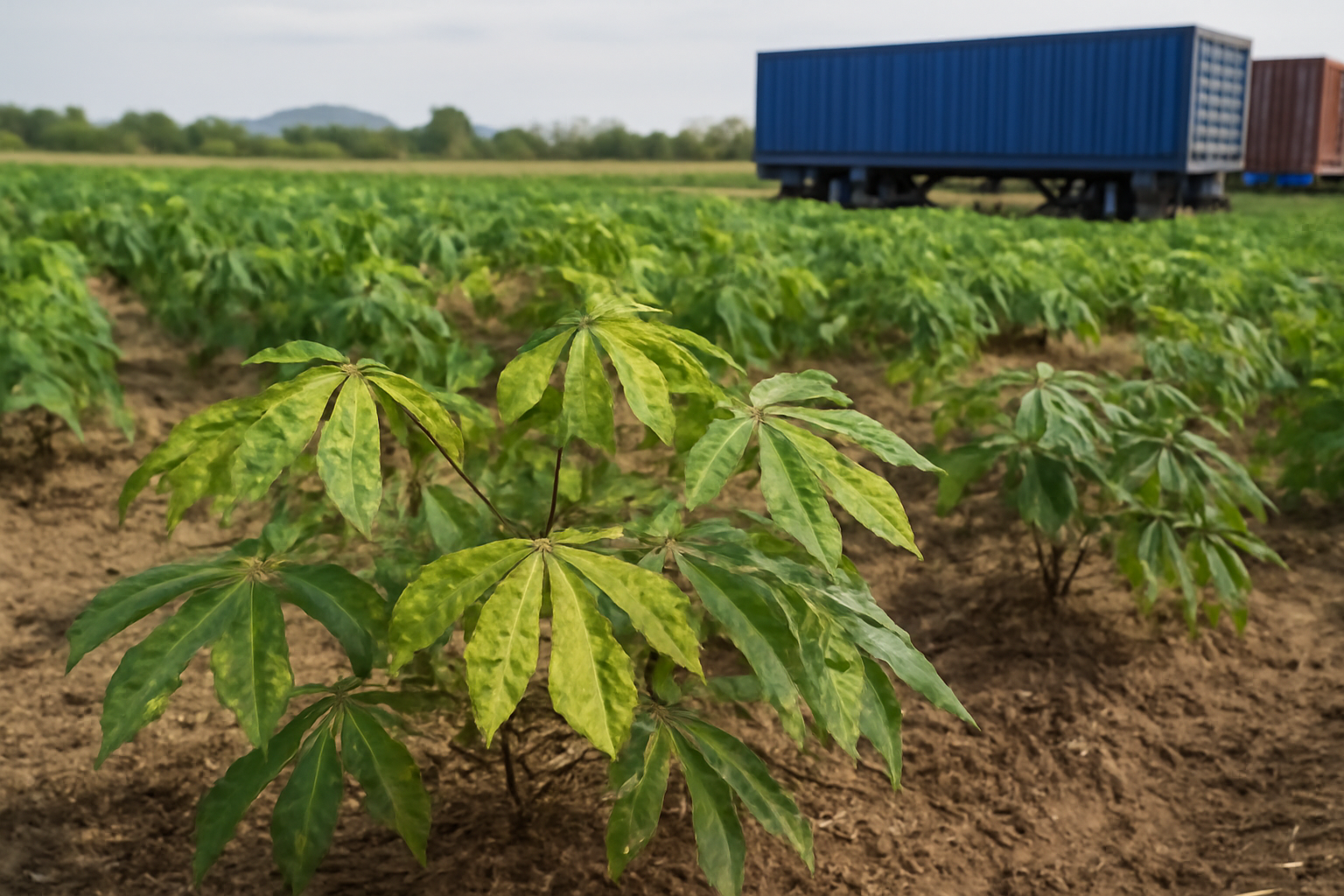
Disease pressure persists for 7-8 years
Thailand risks losing its position as the world’s leading exporter of cassava and tapioca as persistent cassava mosaic disease weakens domestic production. The Thailand Development Research Institute, or TDRI, described the industry as being at an important turning point after recurring outbreaks over the past 7-8 years.
The disease problem has reduced output and placed pressure on the supply base supporting Thailand’s export industry. The available report does not provide production volumes, export tonnage or financial estimates, but the duration of the outbreaks indicates that the challenge is no longer confined to a single crop cycle. Producers and processors must contend with a prolonged constraint on the amount of raw cassava available to the market.
Vietnam emerges as a stronger competitor
While Thailand struggles with lower production, Vietnam has developed rapidly into a significant competitor. TDRI warned that the difference in momentum could threaten Thailand’s status as the world’s number-one exporter. The risk is therefore not only an agricultural issue: it also concerns the reliability and competitiveness of the processing and export chain built around cassava roots and tapioca products.
For buyers, sustained production weakness in Thailand could increase the importance of alternative suppliers. Vietnam’s progress gives importers another potential source and may strengthen its position in negotiations with international customers. For Thai exporters, a smaller or less predictable domestic crop can make it harder to maintain volumes and serve established markets consistently, even when overseas demand remains available.
Supply recovery will determine Thailand’s position
The central issue is whether Thailand can bring the disease under control and restore output. Because mosaic disease has recurred for 7-8 years, a recovery would require more than a short-term response to one outbreak. The resilience of farms, the availability of suitable planting material and the ability of the wider industry to protect future crops will determine how quickly the raw-material base can stabilize.
Processors are directly exposed because weaker harvests can limit plant utilization and intensify competition for cassava roots. Traders also face greater uncertainty over the volume available for export. Vietnam, meanwhile, has an opportunity to consolidate the gains it has made while Thailand’s supply remains under pressure.
A competitive warning for the entire value chain
TDRI’s warning highlights the connection between crop health and export leadership. Thailand’s established position cannot by itself protect market share if persistent disease keeps production below its potential. International buyers generally need dependable supply, making continuity as important as nominal capacity.
No timetable for Thailand to lose or retain the top position was given in the available material. The warning instead identifies a direction of travel: repeated disease is eroding Thai output, while Vietnam is advancing quickly. The response of Thai growers, processors and industry institutions will decide whether the country preserves its export lead or cedes more ground to its regional competitor.