Tetra Pak Targets US and European Growth in Coconut Beverages
Tetra Pak is targeting rising demand for coconut water and coconut milk in the United States and Europe. Indonesia and Thailand have the raw materials and processing base to expand exports, but quality control and aseptic capacity remain decisive.
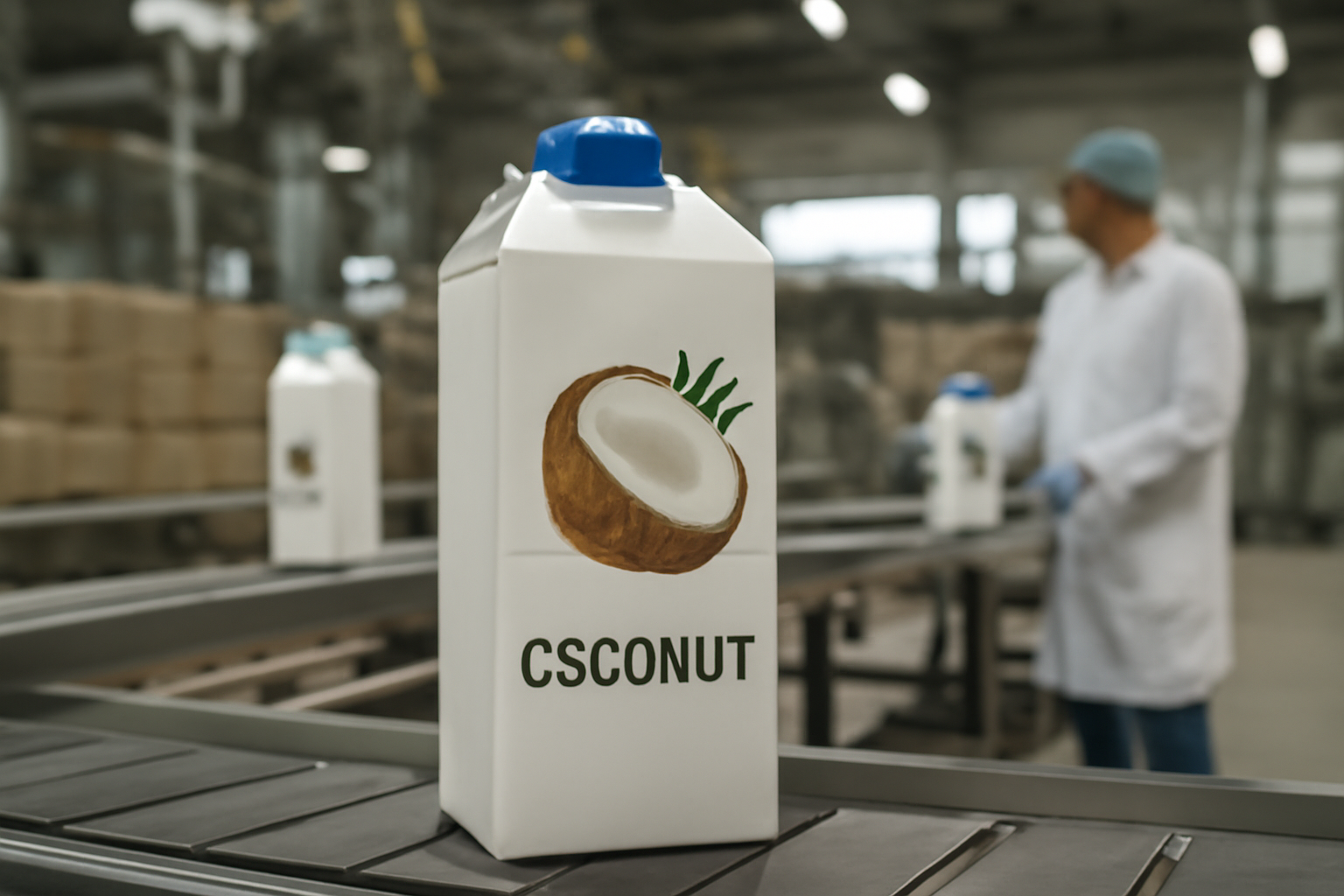
Tetra Pak focuses on expanding consumer markets
Tetra Pak is targeting opportunities in the coconut industry created by strong demand for coconut water and coconut milk in the United States and Europe, according to Bisnis.com. The packaging and food-processing group sees Indonesia and Thailand as particularly well placed to serve these markets because both countries combine substantial coconut supplies with an established processing industry.
The opportunity extends beyond the two markets named in the report. Tetra Pak says China leads demand for coconut cream, while the United States, Europe and South America are recording double-digit growth. Consumers are using coconut products as drinks, cooking ingredients and plant-based alternatives, widening the addressable market for processors beyond traditional Asian food channels.
Processing speed determines export quality
Export growth depends on more than access to coconuts. Coconut water and cream are perishable and react differently during processing. Tetra Pak says extraction must be followed by pasteurisation within less than two hours and at below 5°C to prevent quality deterioration. Coconut water is particularly sensitive to oxygen and heat, while coconut cream requires control of texture, viscosity and stability.
The company is promoting direct ultra-high-temperature processing based on steam injection and flash cooling. The UHT stage takes 4 to 15 seconds, limiting thermal damage to flavour, colour and nutrients. Combined with aseptic packaging, the process can provide an ambient shelf life of 6 to 8 months without a continuous refrigerated supply chain. That is commercially important for producers shipping from Southeast Asia to distant US and European customers, as it reduces dependence on cold storage and gives distributors more time to manage inventory.
Airtight separation can also limit contact between oxygen and naturally occurring enzymes that cause changes in flavour, nutrients and colour. For coconut cream, homogenisation and high-shear mixing help producers deliver a consistent product. These technologies allow processors to develop several products on export-oriented lines, but they also make equipment selection and process discipline central to competitiveness.
Indonesia and Thailand offer different export strengths
Indonesia produced 17.16 million metric tonnes of coconuts in 2021, equivalent to about 27.1% of global output, according to Tetra Pak Indonesia. Its coconut plantations covered 3.7 million hectares. The country therefore has a large raw-material base, although converting that advantage into higher-value exports requires more processing close to production areas and better use of coconut water, flesh and other by-products.
Thailand already has a strong position in processed coconut exports. Government data cited by The Nation showed that Thai coconut milk exports reached $341.11 million, or about 12 billion baht, between January and October 2024. That was 16.85% more than in the same period of 2023. Tetra Pak supports product trials at its Coconut Knowledge Centre and Product Development Centre in Rayong before manufacturers move to commercial production.
For Indonesian and Thai processors, growth in the United States and Europe creates opportunities for branded products, contract manufacturing and ingredient supply. The decisive factors will be consistent quality, compliance with destination-market requirements and the ability to preserve delicate products over long shipping routes. For packaging and equipment suppliers, greater coconut-beverage output should translate into demand for aseptic lines, UHT systems, separators and homogenisers.