Water depletion in southern Spain puts Europe's fruit and vegetable supply at risk
Southern Spain supplies roughly a quarter of Europe's fresh fruit and vegetables, but the aquifer under Doñana National Park is being drained by decades of irrigation and thousands of illegal wells. Spanish authorities have sealed nearly 300 wells and agreed a €1.4 billion recovery plan, while growers switch to drip irrigation and less thirsty crops.
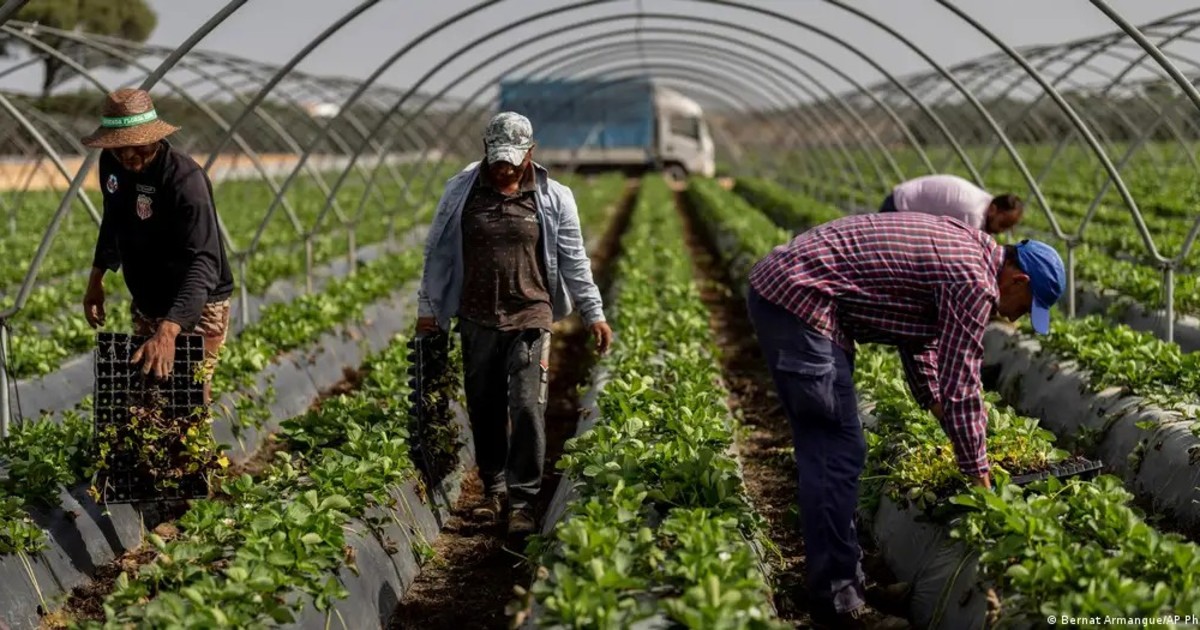
Spain's southern growing regions supply roughly a quarter of Europe's fresh fruit and vegetables, keeping colder markets stocked year-round. The groundwater that underpins that output is running down. In Doñana National Park on the Atlantic coast — a UNESCO-protected wetland that hosts millions of migratory birds and threatened species such as the Iberian lynx — large areas are drying out under a combination of rising temperatures, prolonged drought and decades of intensive irrigation, according to reporting by Deutsche Welle carried by vneconomy.vn.
From dryland farming to red gold
Parts of the Doñana area, once a royal hunting ground of marshes and lakes, were brought into dryland cultivation early in the 20th century. In 1971, under the government of General Francisco Franco, irrigation in the area was declared a national interest. The Almonte-Marismas Plan, named after the aquifer it tapped, formed part of a state-funded push to raise food output, and the authorities bet on strawberries, labelling the crop red gold.
The economics explain the bet. Based on calculations using data from the UN Food and Agriculture Organization, strawberries can generate gross revenue of up to €150,000 — about $170,000 — per hectare per year, against roughly €20,000 for potatoes and €15,000 for grapes. Water allocations and quotas were granted generously, apparently without a full account of what the aquifer could sustainably yield. As planted area kept expanding, even legal quotas stopped covering demand, and some growers turned to unauthorised boreholes and reservoirs to make up the shortfall.
More than 1,000 illegal wells
WWF Spain reported that in 2016 the Doñana wetland contained more than 1,000 illegal wells and more than 1,700 reservoirs used for unlawful irrigation, covering an area equivalent to about 4,200 football pitches. Those structures draw down the aquifer, cut supply to local residents and add pressure on the protected ecosystem.
Every year is hotter and the water disappears astonishingly fast, a resident of El Rocío, north of the wetland, told DW. Another said his main concern was his livestock, because the well could not deliver enough water to cover all needs at once. Pedro Banez of the Condado water users association said severe, prolonged drought combined with official inattention had let the problem run out of control, noting that some farms, or parts of them, sit outside land classified as irrigable yet still seek water.
Courts, drones and tampered meters
Enforcement intensified after a two-year-old child fell into a deep, reportedly illegal borehole on a farm near Malaga in 2019 and died. Spain's Civil Guard subsequently created specialised units focused on illegal water extraction and use. In 2021, the Court of Justice of the European Union ruled that Spain had failed to protect the Doñana aquifer, in breach of EU law.
Police and environmental organisations including WWF Spain now combine several tools to trace illegal abstraction, in Doñana and in other water-stressed farming regions across Spain. Investigations typically start with satellite imagery, cross-checked against land-rights maps to identify plots that look greener than their legal status allows. Suspect areas are then inspected by drone. Some wells are entirely unlicensed; others hold permits but pump beyond their limits, which requires on-site inspection to document. Investigators say tampering with flow meters is common, including placing powerful magnets near the device to disrupt its internal mechanism so that water can be pumped without being fully recorded. Farmers caught extracting water illegally can face environmental crime and fraud charges, usually punished by fines but carrying sentences of up to five years in prison.
A €1.4 billion plan and a new cost line
To reverse decades of over-abstraction, Spain's regional and central authorities have negotiated a coordinated plan worth €1.4 billion. The government continues to seal illegal wells, with nearly 300 closed in the Doñana area alone. Authorities have also begun buying back farmland, restoring ecosystems and converting those areas into protected zones, while funds support job creation in tourism and renewable energy as alternatives to water-intensive farming.
Growers are changing practice in parallel. Drip irrigation, which delivers water to each plant through an individual emitter and is paired with soil-moisture sensors, is now widely used to cut both water use and excess fertiliser. Some farmers are shifting to crops that need less water and moving planting into cooler months. The effect is that water per unit of output is becoming a cost variable alongside land, labour, fertiliser and energy. If supply keeps shrinking, Spain's year-round production advantage is exposed — at a time when fruit and vegetable output is increasingly moving to regions with lower labour costs, lighter restrictions and favourable climates. Mexico, Brazil and Colombia serve part of the US market, Southeast Asian countries ship large volumes to China and Japan, and Morocco and Egypt are expanding in North Africa.