Spain's book sales on course to top €1.3 billion as market grows 3.9%
Book sales in Spain could exceed €1.3 billion this year after rising 3.9% in the first half, according to GfK data presented at the Forum Edita conference and reported by La Vanguardia. Backlist titles account for 77% of copies sold, bookshops hold 43% of the market, and Portugal's parallel growth has slowed to 1% from 8%.
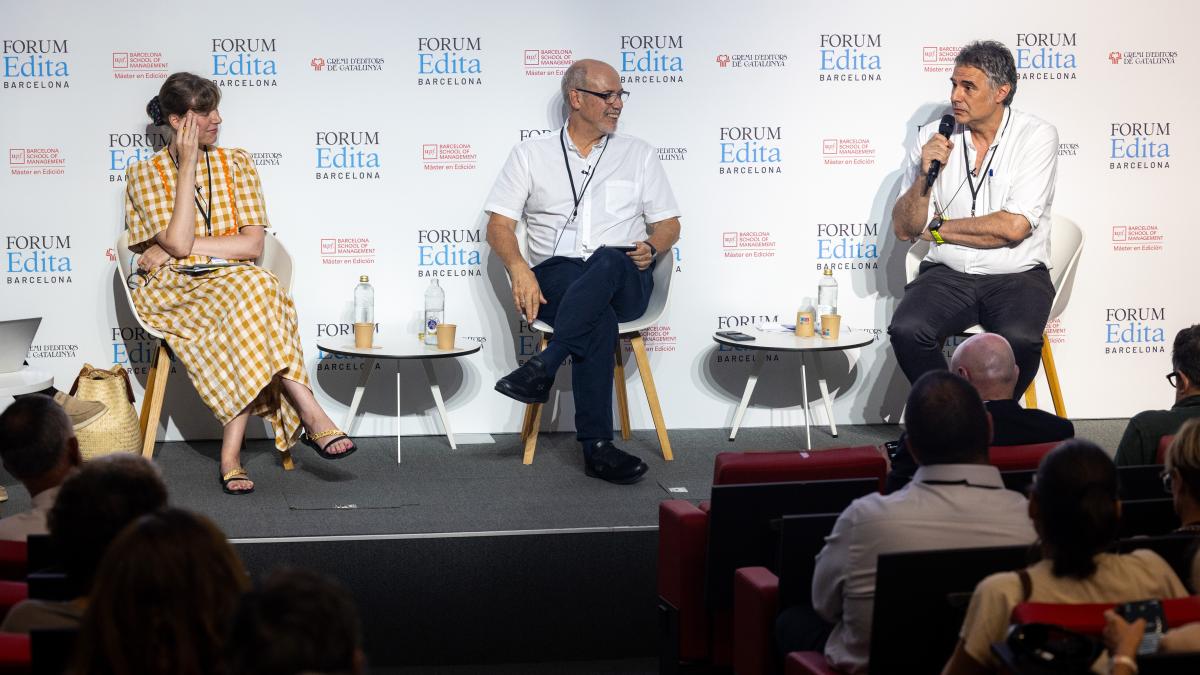
Book sales in Spain could exceed €1.3 billion this year after growing 3.9% in the first six months, according to figures presented by GfK at the Forum Edita publishing conference and reported by La Vanguardia.
Growth on top of growth
Ignacio López, head of market intelligence at the auditing firm GfK, told the conference's session on the Spanish market that the printed book sector “has been rising without interruption since the pandemic”. The pattern has been striking enough abroad that the trend is regularly described as an Iberian miracle, since it was shared for several years with Portugal. In the Spanish case, López said, the market is now posting growth on top of growth rather than recovering lost ground.
The Portuguese leg of that story is weakening. Portugal is up only 1% this year after an 8% gain in the previous one, according to the GfK data cited by La Vanguardia. Elsewhere in Europe, Italy is growing 5% this year, while Ireland and the United Kingdom are each up 2%. Within Spain, Catalonia accounts for 21.5% of the market and is growing 5.2% year on year, at record levels, which López identified as the country's publishing engine.
Four dates decide the year
Seasonality is unusually concentrated. Christmas alone can account for more than 13% of annual turnover, and combined with Black Friday the two periods exceed 20%. López listed four commercial peaks for Spanish publishers and retailers:
- the start of the summer season;
- the back-to-school period;
- Christmas, which together with Black Friday accounts for more than 20% of annual sales;
- Sant Jordi, which is felt not only in Catalonia but also in the Basque Country, Navarre and Galicia.
Backlist carries the volume
Fiction is the best-selling genre and is growing 16.1%. Comics account for 8% of the market with growth above 10%. Despite the commercial pressure of new releases, novelties represent only 23% of the books sold, against 77% coming from backlist catalogue.
Bookshops sell 43% of books in Spain and 57% in Catalonia, and have recovered the turnover levels of 2011, the year their sales began to fall with the arrival of internet retail, a decline consolidated and deepened during the pandemic. Online sales have since stabilised at around 29% of the total. López also cited a record 220 minutes of daily internet connection, adding that more than 15 million people go online to look for literature, which he framed as an opportunity rather than a threat.
France loses readers as AI enters the agenda
The contrast came from France. Renaud Lefebvre, director general of the Syndicat National de l'Édition, said 17% of French people over 15 report never reading, up from 12% in 2019, a gap equivalent to more than three million lost readers. Teenage reading has fallen while the second-hand book market is growing strongly, helped by online sales. Lefebvre also pointed to the rising production of artificially generated content as a new challenge for the sector.
German publishing consultant Rüdiger Wischenbart told the forum that authors are gaining weight across the value chain, boosted by the rise of self-publishing, although the large publishing groups still hold a substantial share of the market, and argued that digitalisation and artificial intelligence “will go much further and transform the market”. A panel on copyright brought together CEDRO director general Jorge Corrales, RELX European public affairs head Richard Mollet and Kopinor chief executive Hege Munch Gundersen, who presented the Norwegian model of licensing agreements between rights holders and institutions developing AI projects. Forum Edita, organised by the Gremi d'Editors de Catalunya, closes on Wednesday with a review of the sessions by Sergio Vila-Sanjuán, co-director alongside Patrici Tixis and Javier Aparicio.