Russian sugar output will cover domestic market and targeted exports in 2026/27, industry union says
Russia's sugar plants will produce enough in the 2026/27 season to supply the domestic market in full and meet the industry's export targets, according to Andrey Bodin, chairman of the board of the Union of Sugar Producers of Russia. Of 63 plants, 54 are running with combined capacity of 38,500 tonnes per day against domestic consumption of 16,000 tonnes. Since the season opened, processors have handled 6.3 million tonnes of beet and produced 815,500 tonnes of sugar.
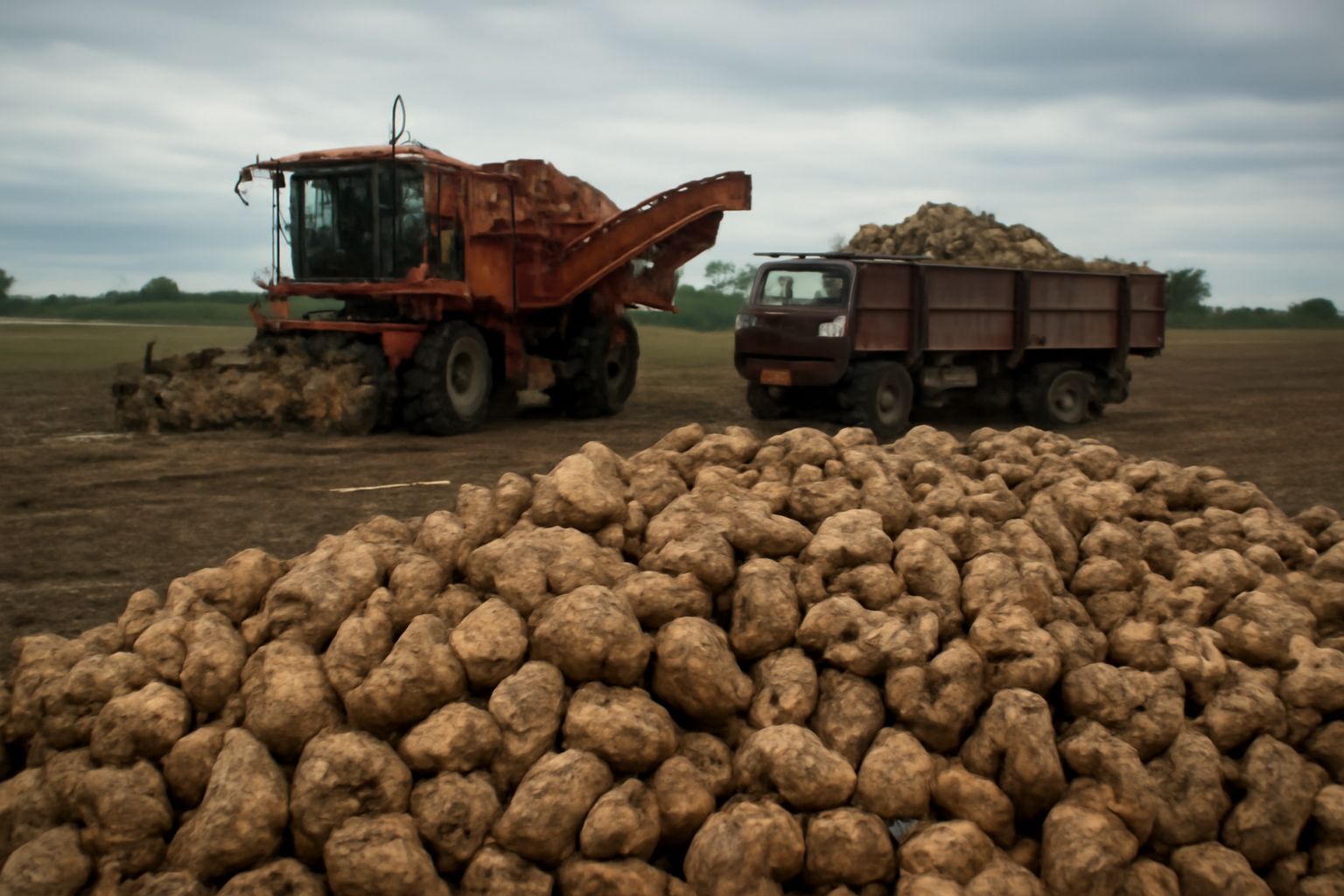
Russia will produce enough sugar in the 2026/27 season to cover the domestic market in full and to meet the industry's targeted export volumes, according to Andrey Bodin, chairman of the board of the Union of Sugar Producers of Russia. His assessment was reported by TASS and by InvestFuture, and comes as the country's processing campaign moves toward full capacity on the new beet crop.
Campaign running at 54 of 63 plants
Sugar plants have been producing sugar from new-crop sugar beet since the end of July, Bodin said. Of the country's 63 plants, 54 are currently in operation, with combined capacity of 38,500 tonnes of sugar per day. The remaining nine are expected to start production within a month, after which daily output across the industry will reach 51,000 tonnes.
Russia's daily sugar consumption stands at 16,000 tonnes, according to the same figures. The plants now running therefore hold capacity equal to roughly 2.4 times daily domestic demand, and the full complement of 63 plants would operate at about three times consumption. Capacity is not the same as realised daily throughput, which depends on beet deliveries, root sugar content and equipment availability. Even so, the spread between the two figures shows how quickly stocks accumulate once a beet campaign reaches its peak, and why the balance of the season is decided on the disposal side rather than on the production side.
Volumes processed since the season opened
Since the start of the 2026/27 season, Russian plants have processed 6.3 million tonnes of sugar beet and produced 815,500 tonnes of beet sugar, on the figures cited by Bodin. That implies a sugar yield of about 12.9 percent of the beet handled so far — a ratio that typically strengthens as the campaign moves deeper into the harvest and root sugar content rises.
- 54 of 63 plants in operation, combined capacity 38,500 tonnes of sugar per day
- Daily output to reach 51,000 tonnes once all plants are running
- Domestic consumption of 16,000 tonnes per day
- 6.3 million tonnes of beet processed and 815,500 tonnes of sugar produced since the season began
Bodin did not give a full-season production forecast, a planted beet area or a specific export target. He framed the outlook in terms of sufficiency: enough sugar to supply the domestic market, plus the volumes the sector has set for itself as export benchmarks. No breakdown was given between white sugar for retail and industrial-grade deliveries.
Prices tied to working capital and Central Asian parity
Further price movement on the domestic market will depend on two factors, Bodin said: the sugar plants' need for working capital to pay for raw material and to compensate for costs, and the level of export parity for Russian sugar in the countries of Central Asia.
The first is a cash-flow question specific to beet processing. Plants take in root across the autumn and must settle with growers and cover operating expenses at precisely the moment output is heaviest, which pushes volumes onto the market when supply is at its most abundant. The second links the domestic floor to demand beyond the border: when export parity in Central Asia is workable, sugar moves out and pressure on domestic balances eases; when it is not, the surplus stays inside the country and weighs on quotations.
Neither report gave current domestic price levels, export volumes for the previous season, or named individual buying countries in the Central Asian region. For processors, traders and regional importers, the operative figures at this stage are the 51,000 tonnes of daily capacity once the campaign is complete and the 16,000 tonnes a day that the domestic market absorbs.