Russia’s grain harvest seen at 134-135 million tonnes as high yields offset delays
Russia’s grain harvest is forecast at 134-135 million tonnes, including 88.5 million tonnes of wheat, despite delays caused by weather and late spring sowing. High yields, strong Siberian wheat quality and a proposed export-duty moratorium could support shipments, while Kazakhstan is restricting Russian wheat imports.
Yields remain high despite a delayed harvest
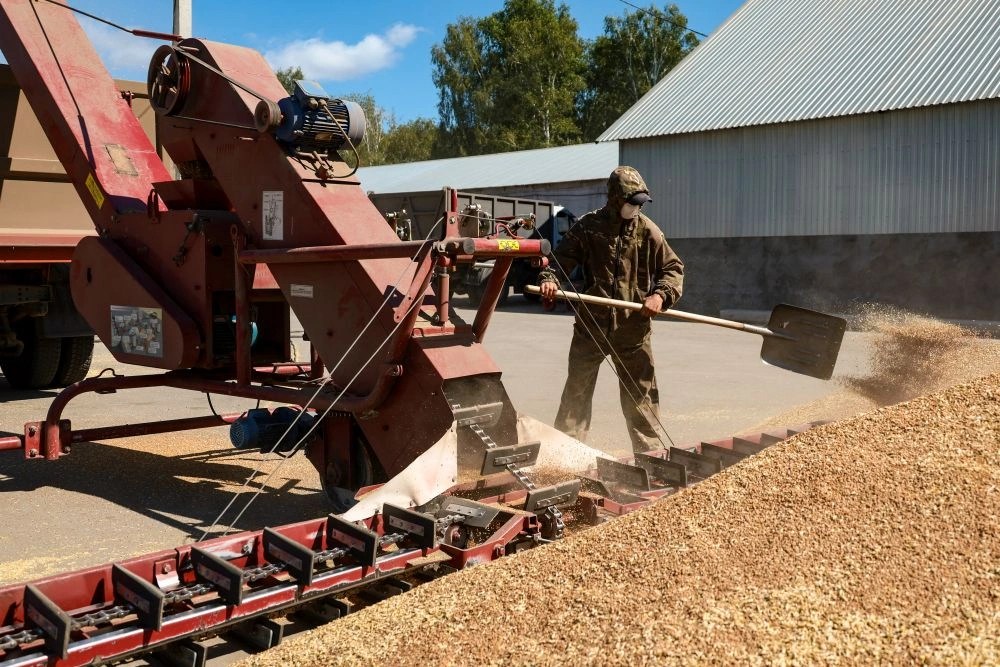
Russia’s grain harvest is progressing successfully despite delays caused by weather and late spring sowing, OleoScope reported from the Grain of Siberia forum. Vladimir Petrichenko, director of Moscow-based consultancy ProZerno, expects the national yield to finish above 30 centners per hectare.
ProZerno currently forecasts Russia’s total grain crop at 134-135 million tonnes, including 88.5 million tonnes of wheat. Southern yields have avoided the declines recorded during the previous two seasons, supporting the national result. Siberian yields are above their long-term average, although below the records set in the past two years.
Initial quality monitoring shows that 31% of harvested Russian wheat is third class and 47% is fourth class, according to Maria Shostak, director of the Altai branch of the Federal Centre for Safety and Quality Assurance of Agricultural Products. Another 22% does not meet food-grade standards. In the Siberian Federal District, 68% of grain is food-grade.
Siberia leads on protein and gluten
Siberia recorded Russia’s highest wheat protein level in 2026 at 13.6%, compared with 12.5% in the Southern Federal District and 12% in the Volga region. The national average was 12.7% last year. Siberian grain also led on weighted-average gluten content at 24.5%, an important indicator for exporters and millers.
Altai Territory ranked first within Siberia for grain quality. In Western Kulunda, 93% of the crop was classified as third-class wheat, with 618,000 tonnes already stored in Altai. These quality volumes could strengthen the region’s position with buyers seeking higher-protein milling wheat.
The outlook for peas is less favorable. Russian Pulses Analytics head Sergei Pluzhnikov said his earlier forecast for a 10-15% year-on-year crop decline may need to be lowered further because of drought in Altai, one of Russia’s three largest pea-producing regions. Even a 15-20% reduction from the reported record crop of 5.7 million tonnes would still leave a large harvest. Lower Canadian production may create additional opportunities for Russian suppliers serving China, India and other major markets, although buyers are increasingly demanding clean, variety-specific cargoes.
Trade policy moves into focus
Lower Russian wheat prices have made the crop attractive to processors in Kazakhstan. Russian wheat shipments to Kazakhstan reached 1.92 million tonnes between September 2025 and July 2026, according to the Grain Union of Kazakhstan. The organization expects the 12-month total to reach 2.05 million tonnes, around six times the previous marketing year’s volume.
Kazakhstan introduced a partial ban on Russian wheat imports on July 27, 2026, but Russian grain continues to be purchased actively, Grain Union representative Yevgeny Karabanov said. Supply is now being offered not only by Siberian regions but also by the Rostov, Samara, Saratov and Volgograd regions, Bashkortostan and Tatarstan.
Forum participants also discussed the Russian Agriculture Ministry’s plan for a grain export-duty moratorium from September 1 through December 31, 2026. Petrichenko cautioned that the government decree had not yet been published. Participants argued that renewed state intervention purchases would provide stronger support. Russia’s grain reserve stands at about 3.7 million tonnes, while the ministry is considering purchases of 1-3 million tonnes. Petrichenko compared that with around 9.5 million tonnes bought in 2008-2009 and annual domestic grain consumption of 83-84 million tonnes.