Punjab farmers rally in Chandigarh against proposed India-US free trade deal
Thousands of farmers gathered in Chandigarh under the Samyukt Kisan Morcha banner to oppose a proposed India-US free trade agreement and Punjab's new land pooling policy. Farm unions say the deal would let cheaper foreign farm and dairy goods into the Indian market, hurting incomes and small industry.
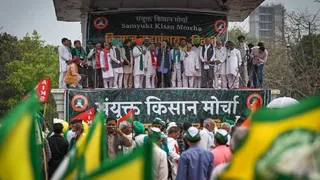
Thousands of farmers from across Punjab converged on Chandigarh to protest a proposed India-US free trade agreement (Indo-US FTA) and the Punjab government's new land pooling policy, according to Jagran. The demonstration was called by the Samyukt Kisan Morcha (SKM), a coalition of farm unions, and centred on the Exhibition Ground in Sector 34.
What the protest targets
The SKM opposes the free trade agreement that the central government has proposed with the United States. According to Jagran, the coalition argues the deal runs against the interests of Indian agriculture, the dairy sector and small industry. Farm leaders say that if the agreement takes effect, cheaper foreign agricultural products would enter the Indian market, reducing farmers' incomes and hurting local industry.
The protest also targets Punjab's new land pooling policy. The SKM says the policy works against farmers' interests and would have an adverse impact on agricultural land.
Scale and logistics
According to Jagran, the SKM called on farmers, farm labourers, women, youth and members of the public to join the rally in large numbers. Farmers from various districts of Punjab began arriving in Chandigarh on Friday morning, many travelling by tractor-trolleys and other vehicles. The administration granted permission for the demonstration at the Sector 34 ground.
Security and traffic measures
Chandigarh Police made extensive security arrangements and deployed additional forces in anticipation of the large turnout of tractor-trolleys and other vehicles, Jagran reported. The police issued a traffic advisory and urged residents to avoid unnecessary movement in Sector 34 and surrounding areas. With traffic expected to be affected on several routes during the demonstration, drivers were advised to use alternative routes.
Why it matters for trade
The dispute centres on market access. Indian farm unions view the prospective FTA as a channel for lower-priced imports of agricultural and dairy products, which they say would undercut domestic producers. For exporters in the United States, the same agreement would represent an opening into one of the world's largest consumer markets. The outcome of the negotiations, and the strength of farmer opposition in states such as Punjab, will shape how far India moves to open its agriculture and dairy sectors.