Poland's Food Industry Pivots From Low-Cost Production to Brand and Quality
Rising labour, energy and logistics costs are eroding the price advantage that made Poland one of the EU's largest food exporters. According to portalspozywczy.pl, producers are shifting toward processed, specialised and own-brand goods, with dairy and markets beyond the single market in focus.
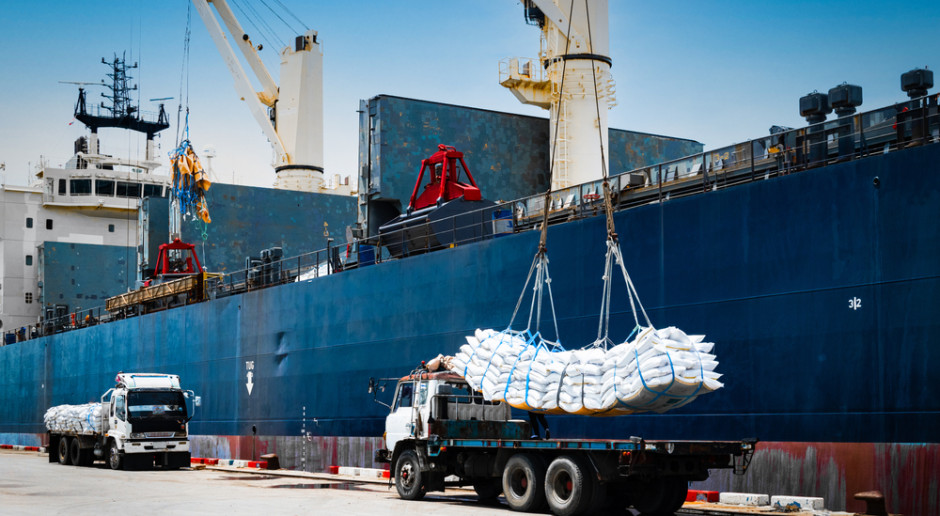
Poland spent more than two decades establishing itself as one of the European Union's largest food exporters on the strength of a single advantage: low production costs. According to portalspozywczy.pl, a favourable quality-to-price ratio pushed Polish meat, dairy, fruit, vegetables and bakery goods onto the shelves of the continent's biggest retail chains. That model is now under pressure, and producers are rebuilding their export strategy around brand and quality rather than price.
Why the cost advantage is fading
Rising labour, energy and logistics costs are eroding the price edge that Polish companies long relied on, while competition across the single market intensifies. Olga Niebylska, an expert at the Analysis and Data Management Department of the Polish Investment and Trade Agency (PAIH), told portalspozywczy.pl that competing on price alone no longer guarantees satisfactory margins. The emphasis is shifting toward added value: more processed, specialised and innovative goods, increasingly sold under Polish producers' own brands.
The change is also visible inside companies. Firms are setting up dedicated export departments, hiring staff with international-trade experience and building cross-cultural negotiation skills. Entering a new market is now treated as a process that requires capital, time and consistency rather than a one-off attempt to sell abroad, Niebylska said. Before a product ships, companies study local demand, competition, price levels, consumer requirements and distribution channels, and factor in halal or kosher certification, US FDA rules and China's GACC requirements.
Sectors moving up the value chain
Progress varies by sector. The meat industry, covering poultry, beef and pork, holds the strongest position, built on modern plants, high efficiency and long experience serving foreign buyers. Portioned, processed and food-service products are gaining weight alongside raw commodities because they carry higher margins.
Dairy is shifting just as clearly. Where exports once meant large volumes of basic products, cheese, butter, UHT milk, milk powders, whey and specialised food-industry ingredients now play a growing role. Durable, highly processed goods travel best to distant markets, where high unit value offsets transport costs. The fruit and vegetable sector is following the same path through concentrates, IQF frozen produce, freeze-dried goods and processed products that ship without quality loss, reducing dependence on seasonal fresh sales.
- Sweets, snacks and bakery producers are strengthening their position on large capacity and long shelf life.
- Functional, organic and convenience foods are among the fastest-growing segments, matching consumer interest in health and convenience.
Looking beyond the single market
The European Union remains the largest buyer of Polish food, and Germany, the Netherlands, France and the Czech Republic will still account for a substantial share of foreign sales. But margins are hard to grow on mature European markets, so companies increasingly treat expansion outside the bloc as a way to diversify revenue and manage risk. Niebylska cautioned that not every non-European destination delivers higher profitability, as the outcome depends on product type, transport costs, regulatory requirements and the investment needed to build sales.
Dairy may gain the most from opening new markets. Polish producers rank among Europe's leaders in exporting cheese, butter, UHT milk, milk powders and whey, and their durable, concentrated goods justify high shipping costs. The Gulf states, chiefly Saudi Arabia and the United Arab Emirates, stand out for high purchasing power, heavy reliance on food imports and a developed HoReCa sector. For Polish dairies that is an opening for premium products, provided they meet certification requirements and work with a reliable importer.