Palm oil futures close lower on Bursa Malaysia as export estimates weaken
Crude palm oil futures on Bursa Malaysia Derivatives closed lower on 10 September, pressured by weaker estimates of Malaysian palm oil exports, Bernama reported. The session was driven by shipment data rather than by production or policy news, leaving the next export estimates as the decisive input for the market.
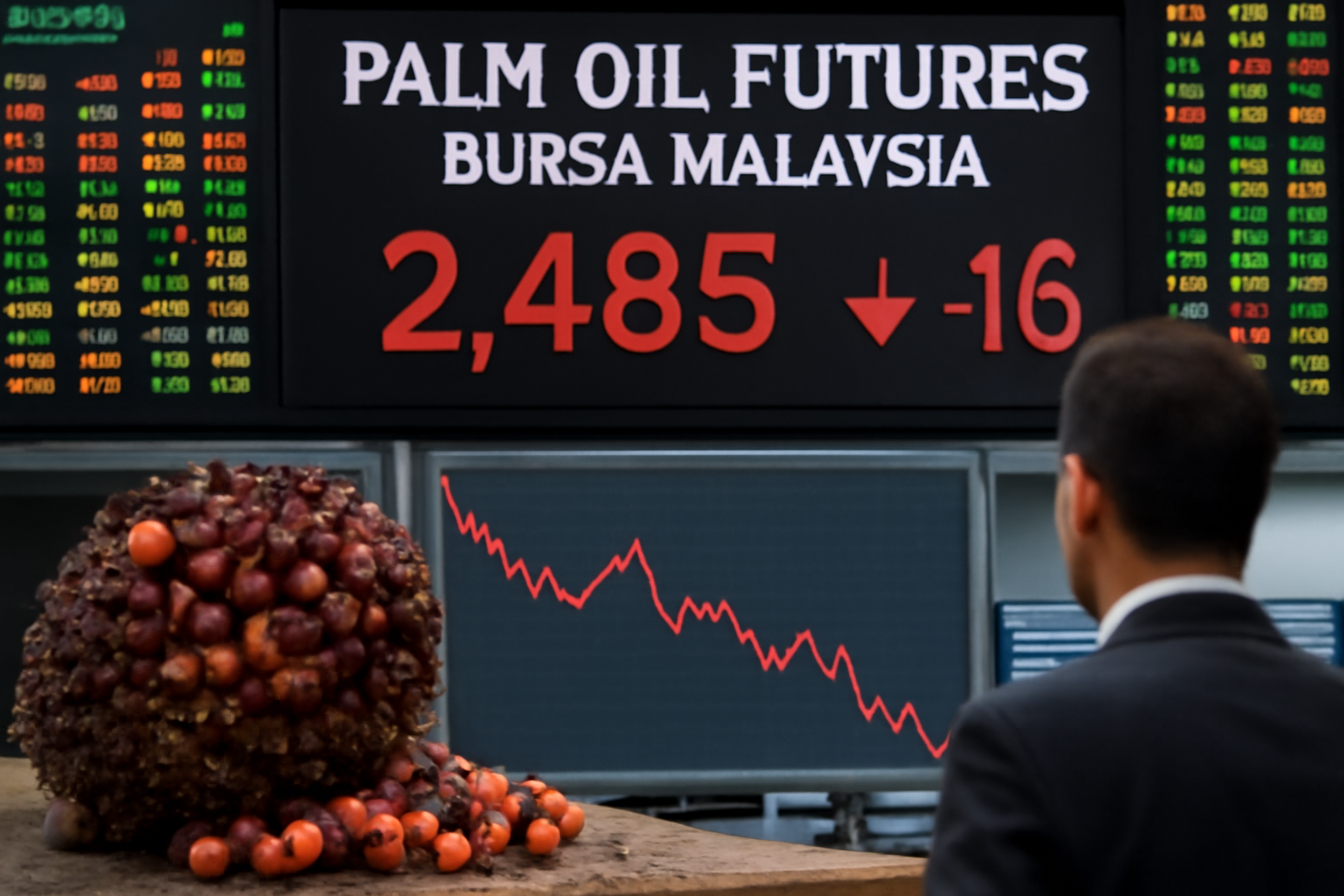
Crude palm oil futures on Bursa Malaysia Derivatives closed lower on 10 September, pressured by weaker estimates of Malaysian palm oil exports, Bernama reported from Kuala Lumpur. The agency headlined its market wrap Niaga Hadapan MSM Rendah, Eksport Lemah Tekan Pasaran — crude palm oil futures lower, weak exports pressure the market.
The available summary indicates the contract fell even though at least one supporting factor was present in the session; that factor is not identified in the accessible portion of the report, and no settlement levels, traded volumes or export percentages appear in it. What the report does establish is the driver: the session was set by shipment data rather than by production or policy news.
Why shipment estimates move the market
Palm oil is one of the few agricultural markets in which a partial-month demand signal is published repeatedly within the same month. Independent cargo surveyors compile estimates of Malaysian palm oil exports at regular intervals, and the first release of each month covers loadings over the opening ten days. Malaysian port loadings serve as a proxy for global vegetable oil demand, and the Bursa Malaysia Derivatives contract is the reference price for physical business far beyond Malaysia. Between monthly stock reports, those estimates are the highest-frequency demand indicator the market has.
A weak ten-day figure carries more weight than its size alone suggests, because traders extrapolate it immediately. A shortfall in the opening third of the month has to be recovered over the remaining three weeks, or the monthly export total lands below the previous month. Positioning adjusts before confirmation arrives, which is why the first estimate of a month is often the most abrupt of the series.
Seasonality works against the price
Timing amplifies the effect. Malaysian palm oil output follows a pronounced seasonal cycle, with yields building through the second half of the calendar year before tapering. Fresh fruit bunch arrivals at mills rise, crude palm oil production rises with them, and the market relies on export demand to clear the additional volume. When shipments soften while the crop is still expanding, closing stocks grow and the futures curve registers it: nearby months come under pressure first and the spread structure flattens.
That is the arithmetic behind the session Bernama described. Nothing in the available report points to a supply disruption, a weather event or a change in export policy. The move was demand-led, which makes the next set of shipment estimates the decisive input rather than any production number.
What it means for buyers and sellers
For Malaysian planters and millers, a softer benchmark compresses the margin between mill-gate fresh fruit bunch prices and crude palm oil realisations at the point in the year when volumes are largest. For refiners, weaker crude values can widen processing margins if refined product prices hold. For importers in price-sensitive destinations, a lower Kuala Lumpur benchmark is an entry signal, and buying interest on breaks is one of the mechanisms that usually halts a decline of this kind.
The next moves in the market will be decided by a short list of inputs:
- The remainder of the month's export estimates, and whether the first-ten-day weakness is recovered.
- Malaysian production and end-of-month inventories, which determine whether soft exports translate into a visible stock build.
- The price gap between palm oil and competing soft oils, which governs substitution by refiners and blenders.
- Supply and pricing from Indonesia, the other dominant origin, which sets the competitive reference for Malaysian cargoes.
Until those inputs resolve, the Bursa Malaysia contract remains a demand-driven market, and each new shipment estimate carries outsized weight.