Paddy cultivation expands as farmers in central India return to a trusted crop
Paddy remains a preferred crop in Madhya Pradesh and Chhattisgarh despite farmers’ experiments with alternatives. OneIndia Hindi links its resilience to cultivation traditions, technology, minimum support price policy and changing rural conditions.
Paddy retains farmers’ confidence
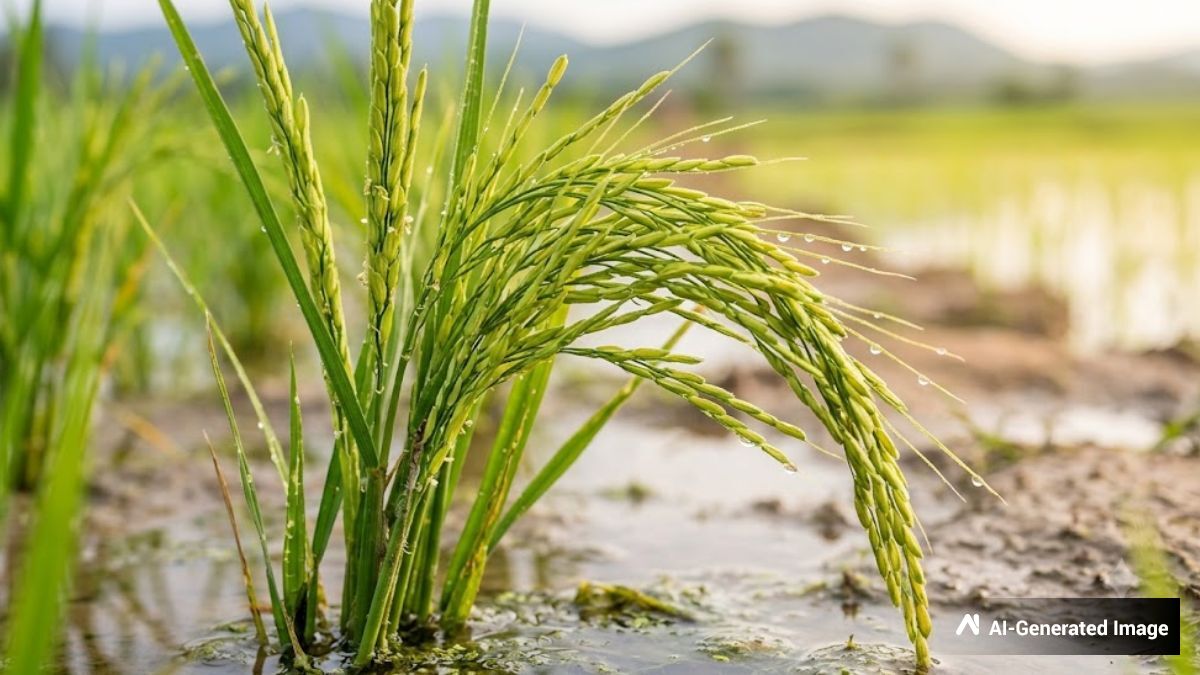
Paddy cultivation is expanding across Madhya Pradesh and Chhattisgarh, where the crop remains one of the most trusted choices for farmers even as agricultural practices and policy conditions change. OneIndia Hindi reports that growers have experimented with other crops but have often returned to paddy, reinforcing its place in the farming systems of the two central Indian states.
The report presents the expansion as the result of several connected forces rather than a single production incentive. Established cultivation traditions continue to influence planting decisions, while new technology is changing how farmers manage the crop. Minimum support price policy also remains part of the calculation, alongside broader social changes affecting agricultural work and household decisions.
Policy and familiarity shape planting choices
The minimum support price, or MSP, provides an important policy reference for Indian farmers when they compare crops. The source material does not provide procurement volumes, planted area, yields or MSP levels, so the scale of the expansion cannot be quantified. It nevertheless indicates that the policy environment has helped paddy retain farmers’ confidence while they assess other production options.
Familiarity is another advantage. Farmers already understand paddy cultivation and have experience managing its production risks. Trying a different crop may offer an alternative, but it can also require new agronomic knowledge and different marketing arrangements. The reported return to paddy after such experiments suggests that reliability remains more important to many growers than changing crops solely in response to new opportunities.
Technology meets an established crop
Technology is contributing to the evolution of paddy farming without displacing the crop’s traditional role. The available report does not identify particular machines, seed varieties or cultivation methods. Its central point is that technical change is occurring within a farming system in which paddy already has strong economic and social acceptance.
That combination matters for producers, processors and grain traders. A crop supported by farmer experience, policy expectations and evolving cultivation techniques can remain resilient even when competing crops are introduced. For processors and buyers, continued farmer preference may support a dependable supply base, although the source provides no figures on output, processing capacity, prices or commercial flows.
Implications for the regional crop mix
The persistence of paddy does not mean that alternatives have disappeared from Madhya Pradesh and Chhattisgarh. It shows instead that diversification must compete with a crop whose position is reinforced by familiarity, policy and local agricultural practice. Farmers’ willingness to test other crops demonstrates interest in change, but their return to paddy highlights the practical limits of that shift.
Future changes in the regional crop mix will therefore depend on more than the availability of alternatives. Farmers will compare production risk, technical requirements and the policy framework surrounding each option. On the evidence reported by OneIndia Hindi, paddy continues to set the benchmark: another crop must offer a sufficiently dependable proposition before growers will move away from it on a lasting basis.