Morocco increases Russian animal feed purchases as suppliers challenge European rivals
Morocco received more than 23,000 tonnes of animal feed and additives from Russia’s Voronezh region between the start of 2026 and July 10. Broader Moroccan purchases of Russian feed products, including soybeans and sunflower seeds, reached about 87,000 tonnes in January-May, according to Russian export data cited by Febrayer.
Shipments from Voronezh exceed 23,000 tonnes
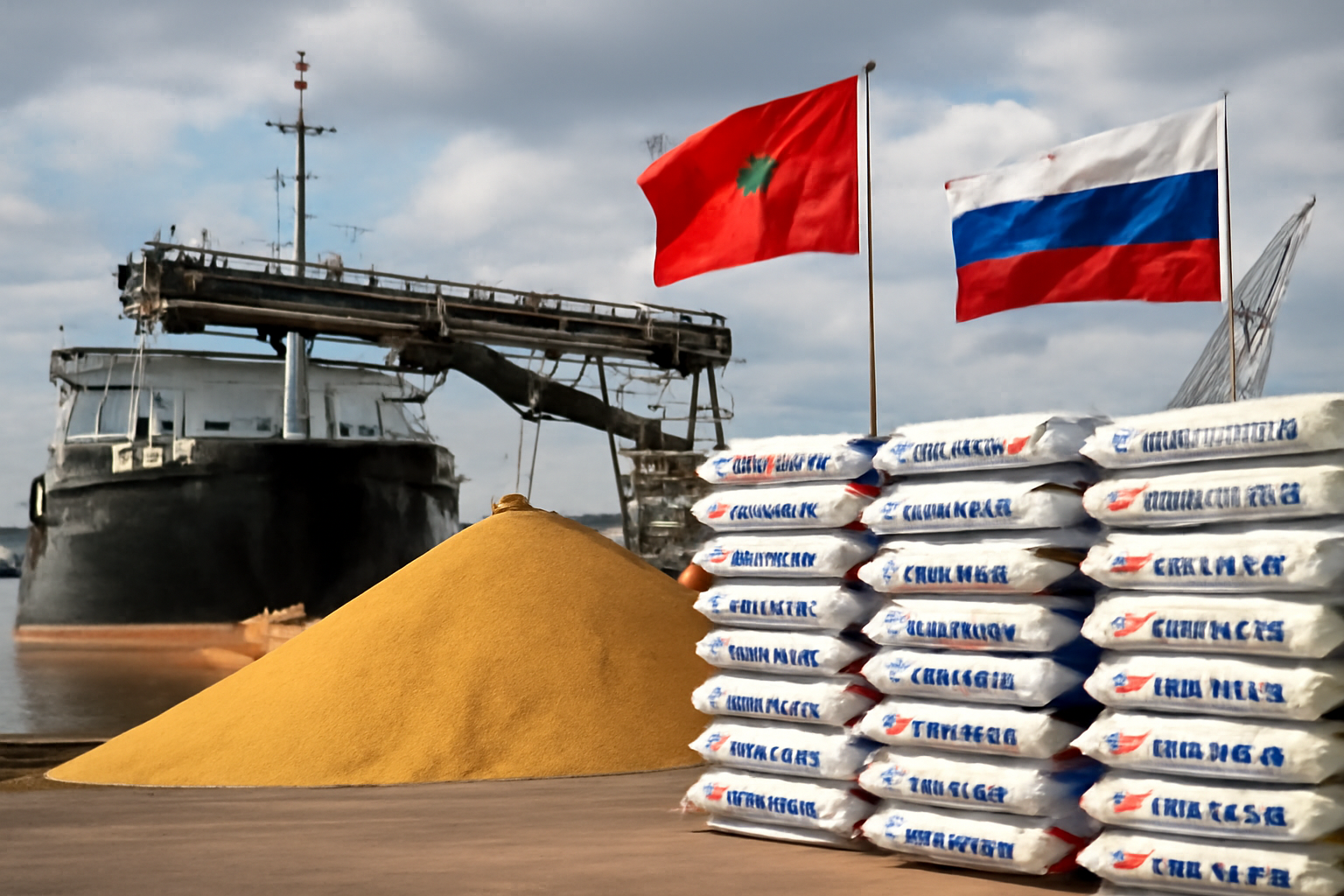
Morocco has sharply increased purchases of Russian animal feed and feed additives in 2026, giving Russian suppliers a larger role in a market traditionally served by Ukraine and European Union countries. According to Febrayer, citing Russia’s Federal Service for Veterinary and Phytosanitary Supervision, the Voronezh region alone exported more than 23,000 tonnes of these products to Morocco between the beginning of the year and July 10.
The Russian authority identified Morocco and Belarus as leading destinations for the shipments from Voronezh. It said the products underwent inspections by its specialists to verify compliance with the health and technical requirements applied by Morocco. The controls are particularly relevant for feed products because their acceptance depends on veterinary, phytosanitary and product-quality standards in the destination market.
Broader feed purchases reach 87,000 tonnes
A wider measure supplied by Agroexport, the agricultural export development centre under Russia’s Ministry of Agriculture, shows that Moroccan purchases of Russian feed products reached about 87,000 tonnes between January and May 2026. Febrayer reported that this category included soybeans and sunflower seeds and that the volume was 27% higher than in the corresponding period a year earlier.
The product mix also changed substantially. Morocco’s soybean purchases from Russia increased fivefold, while demand for sunflower seeds rose by about 1.6 times, according to the Russian centre. The figures indicate that oilseeds, valued as sources of protein and other feed inputs, are an important part of the expansion alongside prepared feed and additives.
The two reported totals cover different periods and product definitions. The figure of more than 23,000 tonnes refers specifically to feed and additives shipped from Voronezh through July 10, while the 87,000-tonne total covers broader Russian supplies, including soybeans and sunflower seeds, during January-May. They therefore describe complementary parts of Morocco’s expanding procurement rather than directly comparable trade totals.
Livestock demand reshapes supplier competition
Agroexport linked the increase to activity in Morocco’s milk and red meat industries, which require larger quantities of protein ingredients and high-quality compound feed. For livestock producers and dairy operators, a broader supplier base can improve access to feed inputs and reduce dependence on established origins. Feed costs are also an important component of domestic meat and dairy prices.
Febrayer said Russian suppliers are competing for market share historically held by Ukraine and EU countries. The publication pointed to competitive prices and stable Russian supply chains as factors supporting the shift. No comparative prices or market-share figures were provided, so the scale of displacement cannot yet be quantified from the available data.
Price pressure remains the domestic test
Morocco is seeking to contain inflation in domestic meat and dairy markets, and competitively priced feed can help livestock businesses manage production costs. The rise in Russian purchases provides importers and processors with another sourcing option, but its effect on retail prices will depend on the cost of individual products, freight, exchange rates and how efficiently lower input costs move through the livestock chain.
For Russian exporters, the growth creates an opportunity to expand in North Africa through both feed products and oilseeds. For European and Ukrainian suppliers, the reported volumes point to stronger competition in Morocco. Continued access will depend on price, reliable delivery and compliance with Moroccan health and technical requirements.