Malaysian palm oil futures fall for a fourth straight session as rival oils and crude weaken
Palm oil futures on the Bursa Malaysia Derivatives Exchange declined on Wednesday for the fourth consecutive session. The weakness was attributed mainly to falling prices for other edible oils, including soybean oil, and for crude oil. With no fresh domestic trigger reported, the direction of the market remains in the hands of the wider oils complex.
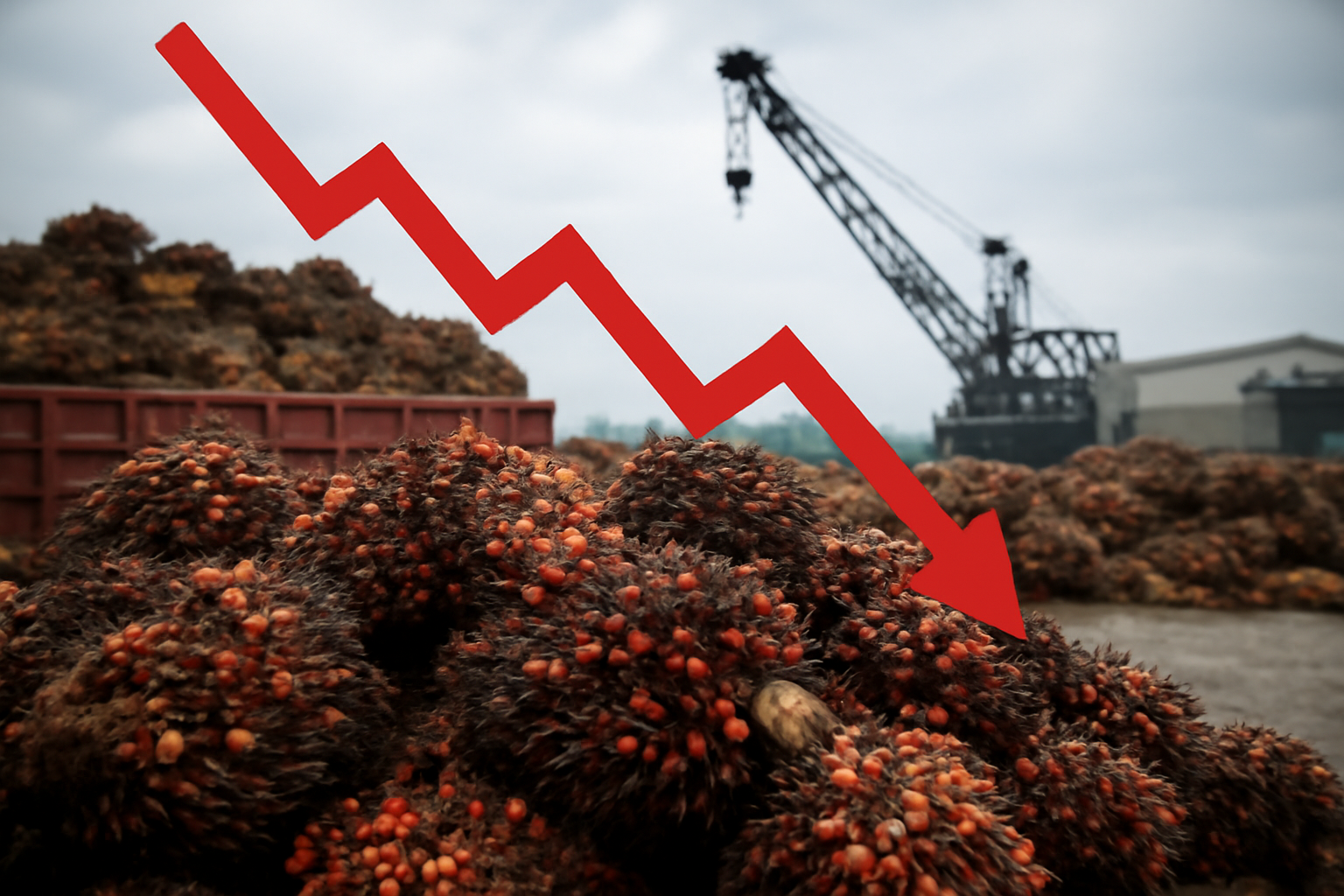
Malaysian palm oil futures declined on Wednesday for a fourth consecutive session, with the weakness attributed mainly to falling prices for other edible oils and for crude oil. Trading on the Bursa Malaysia Derivatives Exchange, the global reference point for the vegetable oil, has moved lower through the week without a domestic trigger, leaving the direction of the market in the hands of the wider oils complex.
Fourth consecutive session in the red
The move reported on Wednesday extended the Malaysian contract's losing streak to four sessions. A run of that length usually reflects a change in sentiment rather than a single piece of news. Once a market has broken lower for several days, technical selling and thinner buying interest from importers tend to reinforce the move, and buyers who were ready to cover requirements at the start of the week step back to wait for a floor.
Palm oil rarely trades on its own account. Prices are set at the margin against the other major vegetable oils and, through the biodiesel channel, against crude oil. When those references soften at the same time, palm seldom holds its ground, regardless of how the local supply picture looks.
Rival oils set the tone
Soybean oil was named among the drivers of this week's weakness. The two oils are close substitutes in cooking, frying and food processing, and the spread between them determines which of them price-sensitive buyers take. Palm is normally the cheaper option and depends on maintaining that discount; when soybean oil falls, the discount narrows and palm has to follow it down to defend its share of the blending pot.
- Refiners in importing countries switch between palm and soft oils on the basis of the spread, so a drop in soybean oil pushes palm lower almost mechanically.
- Buyers in the large import markets typically move to hand-to-mouth purchasing in a falling market, covering only near-term needs.
- Cheaper oil at origin eventually feeds through to food manufacturing costs in importing countries, but with a lag of weeks or months.
For Malaysian producers and refiners, that mechanism means the domestic crop calendar matters less over short horizons than movements in the global oilseed complex. Plantation output and mill throughput determine the medium-term supply picture, but on a day-to-day basis the futures curve tracks what happens to competing oils.
The crude oil link
Crude oil's decline was cited as the second factor behind the fall. Palm oil is a biodiesel feedstock, and both mandated and discretionary blending tie part of its demand to energy prices. When crude weakens, biodiesel made from palm becomes less competitive against fossil diesel, discretionary blending margins compress, and volumes that might have been absorbed by the energy sector remain available to the food market. That adds supply precisely where prices are already under pressure.
The energy link also runs in the opposite direction through costs. Lower crude prices reduce fuel, freight and processing expenses for plantations, mills and refiners, which can partly offset the revenue shortfall. In the short term, however, the demand effect on the biodiesel side usually dominates the cost saving.
What the market is watching
With no fresh domestic catalyst reported, attention stays on the external references: the direction of soybean oil, the crude oil market, and the pace of import demand. A stabilisation in either lead market would take the pressure off palm; continued weakness would extend the run. Producers, refiners and physical traders face the familiar decision of whether to sell into a declining market or carry inventory in the expectation of a rebound, while importers gain room to negotiate on forward shipments for as long as the slide continues.