Khalilabad Tightens Raisin Export Controls as Mixing Practices Threaten Market Reputation
Officials in Khalilabad are tightening inspections after traders mixed the district’s seedless raisins with lower-quality seeded products from other regions. The Iranian production center is also expanding cold storage, laser sorting and alternative export routes through Turkey and Pakistan.
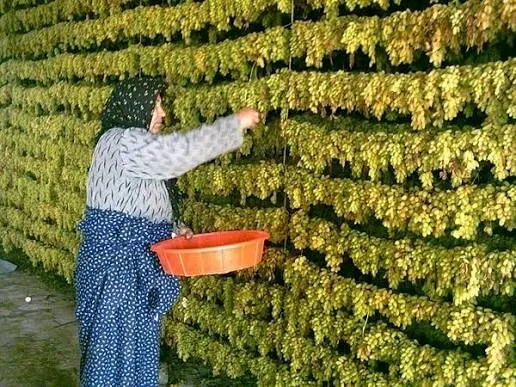
Export reputation faces a quality-control test
Khalilabad in Iran’s Razavi Khorasan province, a leading raisin production center in the country’s east, is moving to protect its name in international markets after reports that some traders mixed its high-quality seedless raisins with lower-grade seeded Shirazi raisins. The blended product was then sold under the Khalilabad name at lower prices, according to reporting by ISNA republished by Saat24.
Raisin exporter Nasser Mohammadzadeh told ISNA that buyers associate Khalilabad with consistent specifications and premium quality. Finding inferior or impure product in a shipment could prompt overseas customers to remove the district from their lists of trusted suppliers, he warned. Producers and exporters have built recognition in neighboring markets and Europe despite sanctions and other trading difficulties, making the potential loss of confidence more costly than any short-term saving achieved through blending.
Containers face inspections and fraud proceedings
Mahmoud Shaban, head of Khalilabad’s agricultural authority, said officials had held several meetings with the district prosecutor and obtained authorization to intervene during container loading. If inspectors find seeded Shirazi raisins mixed with the local product, a fraud case will be opened and the container will not be sealed. Shaban said the resulting cost for the offender would be two to three times higher, creating a direct deterrent against mislabeling.
The district is also using quarantine clinics to increase product oversight and is seeking to place container sealing under agricultural experts. Authorities expect the measure to strengthen control over outgoing cargo. The intervention addresses both deliberate mixing and quality losses caused by unsuitable storage, which can create processing problems even when the raisins originate in Khalilabad.
Cold storage and new routes support exports
Khalilabad has an estimated 6,920 hectares of vineyards, while the records of 16,240 farmers have been identified and fully registered. Shaban said the updated cultivated-area figure reflects improved data and farmer identification rather than a physical expansion of vineyards. Favorable rainfall in the previous year and acceptable raisin prices have nevertheless encouraged farmers to return to grape production.
The district commissioned its sixth cold-storage facility this year, and officials increasingly view the sites as export terminals. Plans call for a laser sorter beside every cold store; two facilities already have the equipment and are loading higher-quality product for export. Trade routes are also changing. Dubai, formerly the destination for 70% of Khalilabad’s raisins and its main global trading hub, has become more difficult and expensive to access. Shaban said exports through Mersin in Turkey and through Pakistan were proceeding well, while shipments to Dubai had recently resumed at higher cost. District governor Ali Garmabi has also called for a syndicate, union or cooperative to improve growers’ financing and reduce forced sales to intermediaries at low prices. Together, stricter inspection, traceable farmer records and better sorting could preserve the premium market position on which both growers and exporters depend.