Kenya milk shortage drives prices up and forces rationing in supermarkets
Milk deliveries to Kenyan processors fell from 88.89 million litres in May to 81.3 million in July as late rains, thin pasture and costlier feed cut yields. Unpackaged fresh milk in Nairobi has risen from Ksh70 to Ksh90 a litre and some supermarkets are capping purchases. Agriculture Cabinet Secretary Mutahi Kagwe blames poor grazing conditions and brokers outbidding processors.
Retail prices climb as shelves thin out
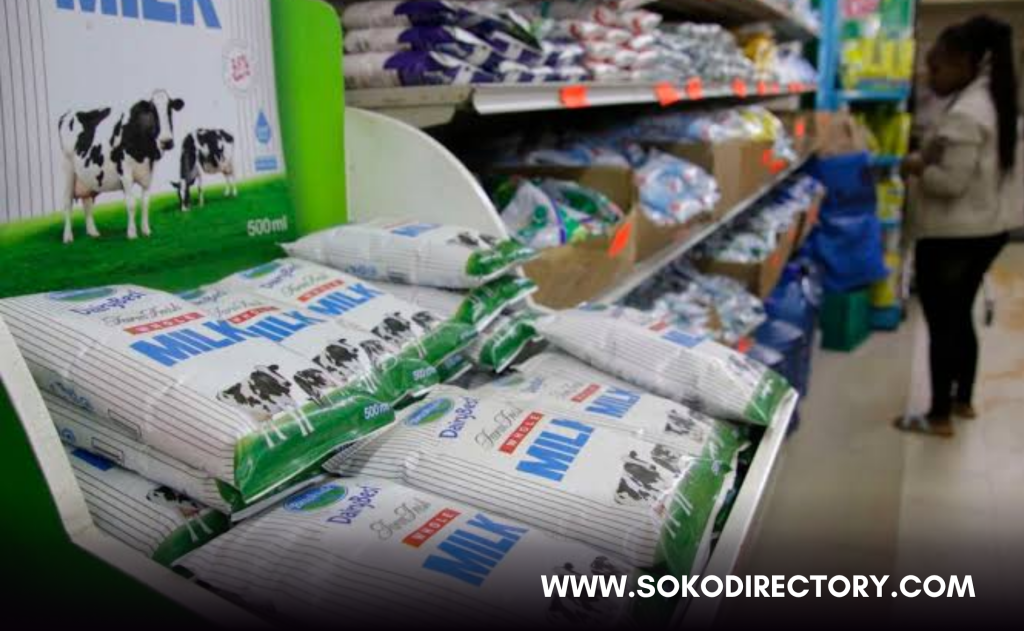
A milk shortage that has been building in Kenya for months is now showing up in retail prices and on supermarket shelves. Soko Directory reports that several brands are running low or missing entirely, and that some stores have capped the number of packets a single customer can buy. Farmers, processors, retailers and shoppers are all absorbing part of the cost.
According to the Consumer Federation of Kenya (COFEK), unpackaged fresh milk at the Waithaka Dairy Centre in Nairobi has risen from Ksh70 to Ksh90 a litre. Retailers have added Ksh5 to Ksh10 to the price of a packet, and in some outlets a 500ml packet that used to sell for around Ksh60 now costs Ksh90. The exact figures vary by location and brand, but the direction is consistent across the market.
Thin pasture and costlier feed cut yields
The immediate driver is dry weather. Rains have been late, pasture is thin and the cost of commercial animal feed has climbed, a combination that falls hardest on smallholders, who produce roughly 80 percent of Kenya's milk. COFEK says some farmers have seen daily output per cow drop from 7 to 9 litres down to just 4 or 5, leaving them to choose between charging more for what they have and scaling back their herds altogether.
Agriculture Cabinet Secretary Mutahi Kagwe has named two causes of the shortage in major-city supermarkets: poor grazing conditions and brokers outbidding processors for raw milk. He urged dairy cooperatives to pay farmers more.
Processor intake down three months running
Volumes delivered to processors have fallen every month through the middle of the year:
- May: 88.89 million litres
- June: 84.44 million litres
- July: 81.3 million litres
The June-to-July decline works out at about 3.7 percent, and July intake was roughly 8.5 percent below the May level. Early indications suggest August brought little relief. Fresh pasteurised milk has taken the heaviest hit because it depends on farmers delivering daily rather than on stockpiles; long-life products have held up better by comparison.
Costs stack up along the chain
Farmers are paying more to feed animals that are producing less. Processors have smaller volumes to work with. Retailers are absorbing higher procurement and transport costs, made worse by rising fuel prices, a particular problem for milk ATM vendors whose business depends on frequent restocking. Consumers are paying the difference at the till, and COFEK has called on the government to step in and stabilise the market before conditions deteriorate further.
The Kenya Dairy Board describes the situation as a seasonal blip rather than a lasting crisis and points to the October to December rains as the likely turning point for pasture and fodder. Recovery will not be immediate: cows that have been underfed for months take time to return to full production, so elevated prices are likely to persist even after the rains arrive. The longer-term question is whether Kenya's dairy sector can be structured so that smallholder farmers, the backbone of its milk supply, can earn a living from it in normal years as well as in shortage years.