Indonesia targets Lebanon with expanded palm oil and coconut exports
Indonesia is seeking to increase crude palm oil and coconut exports to Lebanon as part of a wider push into Middle Eastern markets. The initiative draws on Indonesia’s large production base and Lebanon’s reliance on imports for 65% to 80% of its food needs.
Indonesia seeks a larger Lebanese market
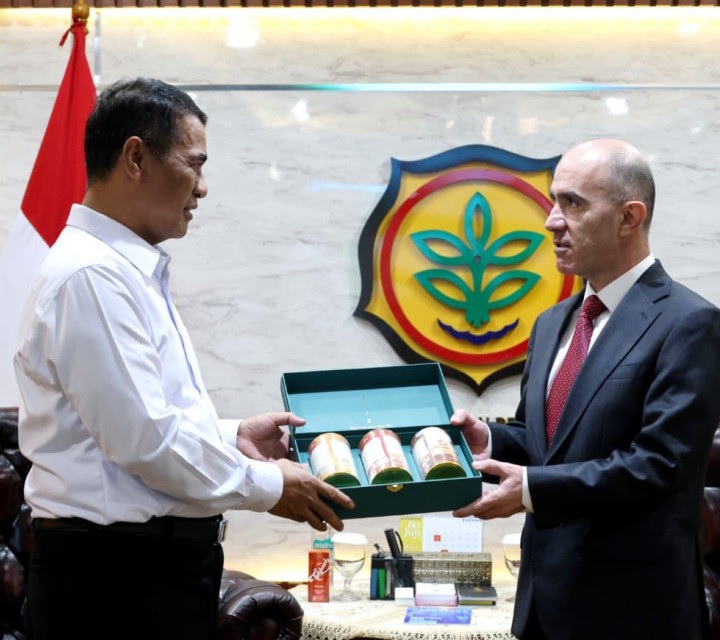
Indonesia is pushing to increase exports of crude palm oil and coconuts to Lebanon, positioning the bilateral trade relationship as a potential route into wider Middle Eastern markets. Agriculture Minister Andi Amran Sulaiman presented the proposal during a meeting with Lebanon’s ambassador to Indonesia, Salam Al Achkar, at the Agriculture Ministry’s headquarters in Jakarta on Thursday, July 9, 2026.
According to Jambi Ekspres, the two countries agreed to create more room for bilateral trade that could complement their respective food requirements. Lebanon offered to supply olive oil, while Amran requested additional access for Indonesian coconut products and crude palm oil, commonly known as CPO.
The talks remain an expression of government intent rather than a disclosed commercial contract. The report did not specify proposed shipment volumes, contract values, delivery schedules or the Lebanese companies that could purchase the Indonesian commodities. These details will determine whether the initiative produces a material increase in physical trade.
Large production base supports the proposal
Indonesia’s case rests on its scale as the world’s largest palm oil producer. The country’s combined production of CPO and palm kernel oil in 2025 was estimated at approximately 56 million tonnes, according to figures cited by Jambi Ekspres. This capacity gives Indonesian suppliers room to serve additional destinations, although export availability also depends on domestic consumption and other market commitments.
Coconut production offers another supply base. Indonesia has more than 3.3 million hectares planted with coconut palms and produces 2.8 million tonnes annually. Expanding sales to Lebanon could provide another outlet for growers, processors and exporters, particularly if demand includes both raw coconuts and processed coconut products. The report did not identify the specific coconut products under discussion.
Lebanon’s dependence on imported food underpins the commercial opportunity. Between 65% and 80% of its food requirements are currently met through imports, according to the report. That reliance makes access to reliable suppliers important for Lebanese importers, while giving Indonesian producers an opening in a market where freight costs, product specifications and established supplier relationships will influence competitiveness.
Food cooperation could extend beyond vegetable oils
Amran also said Indonesia was prepared to support Lebanon’s food security with staple commodities, including rice. He described domestic rice supplies as abundant following agricultural intensification programs. No rice export volume, timetable or purchasing arrangement was announced during the meeting.
For Indonesia, Lebanon could serve both as an individual destination and as a commercial reference point for further expansion in the Middle East. For Lebanon, broader sourcing from Indonesia could diversify supplies of vegetable oils, coconut products and potentially rice. The immediate test will be whether the diplomatic commitment is followed by buyer negotiations, regulatory approvals, logistics arrangements and contracts with defined volumes.
Full market analysis