Indonesia Urges Palm Oil and Cocoa Exporters to Compete on Standards, Not Only Price
Indonesia’s trade minister has urged palm oil and cocoa exporters to prioritize sustainability, food safety and supply-chain reliability alongside price. The government is also promoting higher-value processing, market diversification and wider use of trade agreements.
Buyers raise requirements for Indonesian commodities
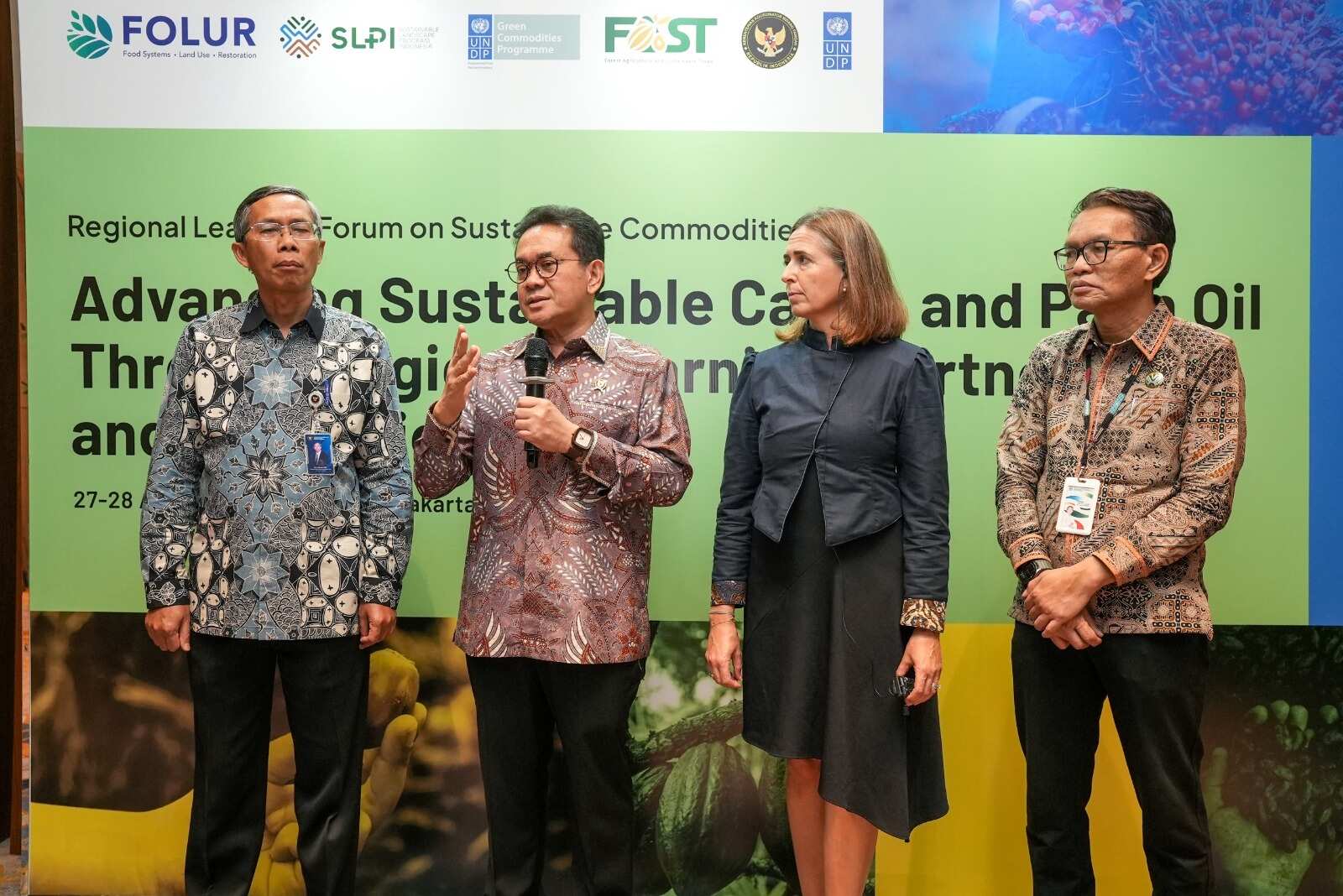
Indonesia’s palm oil and cocoa exporters must compete on sustainability, food safety and supply-chain reliability rather than price alone, Trade Minister Budi Santoso said at a sustainable commodities forum in Jakarta on 27 August. His comments, reported by Majalah Hortus, set out the government’s response to increasingly demanding international markets.
Santoso said Indonesia’s export strategy should focus on increasing value added, meeting international standards, diversifying destination markets and making better use of international trade agreements. These priorities affect the entire supply chain, from growers and processors to exporters seeking access to premium or tightly regulated markets.
Cocoa export value almost triples
Cocoa illustrates the commercial potential of this approach. Indonesia’s cocoa exports were valued at $3.6 billion in 2025, up from $1.21 billion in 2021. That represents an increase of $2.39 billion over the period. According to Majalah Hortus, the rise was supported by the growing dominance of processed cocoa products in the country’s export mix, reflecting the government’s policy of developing downstream industries.
Indonesia has also been recognized by the International Cocoa Organization as a producer of cocoa with distinctive flavor characteristics. The recognition could support a stronger position in premium cocoa markets, particularly when combined with product innovation, geographical-indication protection and sustainable production practices. For producers and processors, however, capturing that premium will depend on consistently meeting buyer specifications and demonstrating the origin and handling of the commodity.
Trade agreements and commercial support
The trade ministry sees international agreements as another route to improved market access. Indonesia has implemented 25 trade agreements, while 2 are undergoing ratification and 13 remain under negotiation. The ministry is also seeking faster completion of cooperation agreements with the European Union and the United States to strengthen access and competitiveness for Indonesian cocoa and palm oil.
Exporters can use the ministry’s network of 46 trade representatives across 33 destination countries for product promotion, market identification and business matching. Between January and July 2026, ministry-supported matching activities involved 1,021 businesses and generated potential transactions worth $275.61 million. These figures indicate the scale of the government’s commercial outreach, although potential transactions are not the same as completed sales.
Trade Expo Indonesia targets global buyers
Trade Expo Indonesia is another part of the promotion strategy. The 2025 event recorded total transactions of $22.8 billion, including $474.7 million attributed to products from micro, small and medium-sized enterprises. Santoso invited cocoa and palm oil stakeholders to participate in the 41st edition, scheduled for 14–18 October 2026.
For Indonesia’s commodity industries, the policy message is clear: processing capacity and preferential market access need to be matched by credible compliance. Competitive pricing remains relevant, but exporters able to document sustainability, protect food safety and deliver reliably will be better positioned to retain buyers and pursue higher-value segments.