Indonesia pushes coconut downstreaming across 151,554 hectares in 28 provinces
Indonesia produces around 2.1 million tonnes of coconut a year and has announced plans for 151,554 hectares of coconut downstream zones across 28 provinces. Discussion at World Coconut Day 2026 in Manado centred on whether processing and packaging capability can keep pace with raw material supply. Global coconut water and coconut cream markets are projected at €4.7 billion and €3.9 billion by 2029.
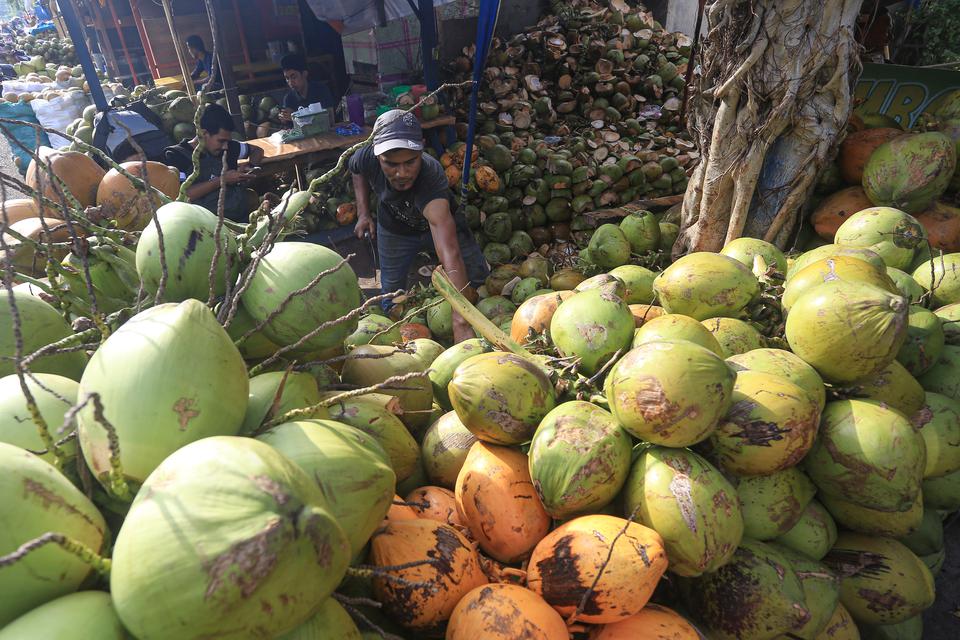
Indonesia's coconut sector has room to capture more value from its raw output as the government presses ahead with its hilirisasi, or downstream processing, agenda. Building a derivative product business, however, requires more than feedstock: it depends on processing and packaging capability matched to what the market actually wants, katadata.co.id reported.
The opportunity was among the themes discussed at World Coconut Day 2026, held in Manado, North Sulawesi, from 7 to 10 October 2026. The event, organised by the North Sulawesi provincial government together with the International Coconut Community (ICC), was expected to draw more than 700 participants from over 20 countries under the theme "Coconuts in Times of Uncertainty: Securing Food, Energy, and Livelihoods". Discussion centred on strengthening the coconut value chain at a time of rising pressure to create higher value-added products.
A 2.1 million tonne base and a 151,554 hectare plan
Indonesia currently produces around 2.1 million tonnes of coconut a year, according to katadata.co.id. The government has announced plans to develop 151,554 hectares of coconut downstream zones spread across 28 provinces.
North Sulawesi is one of the key locations in that build-out, as one of the country's national coconut production centres — the reason the province hosted this year's forum.
Beverages carry the demand case
On the demand side, the range of coconut-based products continues to widen. Ready-to-drink beverages that combine coconut water with categories such as tea, coffee, energy drinks and sports drinks recorded a compound annual growth rate of 42% between 2022 and 2025.
The global coconut water and coconut cream markets are projected to reach €4.7 billion and €3.9 billion respectively by 2029. For producers, that points to headroom beyond traditional coconut commodities and towards processed goods aimed at a broader set of consumer segments and markets.
Processing and packaging set the limits
Coconut processing carries specific technical constraints. Coconut-based products can undergo chemical and biochemical changes during processing, and coconut water is relatively sensitive to oxygen exposure once a pack has been opened, which makes process control central to preserving quality, flavour and nutritional characteristics.
Hemang Dholakia, Processing Director for Malaysia, Singapore, Philippines and Indonesia (MSPI) at Tetra Pak, said product diversification is one of the openings available to coconut producers in Indonesia and Southeast Asia. "We see strong growth opportunities for coconut products in Indonesia and Southeast Asia, particularly in the expanding coconut water and coconut cream categories," he said. In his view, coconut processing needs flexible production lines so that manufacturers can develop several product types from the same raw material, while improving efficiency and cutting raw material losses.
Packaging is the second lever, particularly for distribution and export:
- Carton accounts for 59% of the global coconut water market, according to Tetra Pak data.
- The company says it supplied more than 2 billion packages for coconut drinks and coconut water worldwide in 2025.
- Aseptic packaging allows a range of coconut-based products to be distributed at ambient temperature, removing the need for a cold chain and widening distribution options, including for export markets.
The capability gap
For Indonesia's coconut industry, value-added product development becomes more relevant as the government's downstreaming agenda advances. The test is whether increases in raw material output can be matched by the industry's ability to process, pack and market coconut derivatives competitively. Tetra Pak used World Coconut Day 2026 to present processing and packaging technology for coconut products at Booth 11.
Full market analysis