Indian Rice Export Prices Hit One-Year High as Thai Quotations Also Rise
Export prices for Indian rice have climbed to their highest level in a year, with Thai quotations rising at the same time, according to recent rice market reports. The simultaneous move at the world's two largest export origins has renewed concern about a broader upturn in global rice prices.
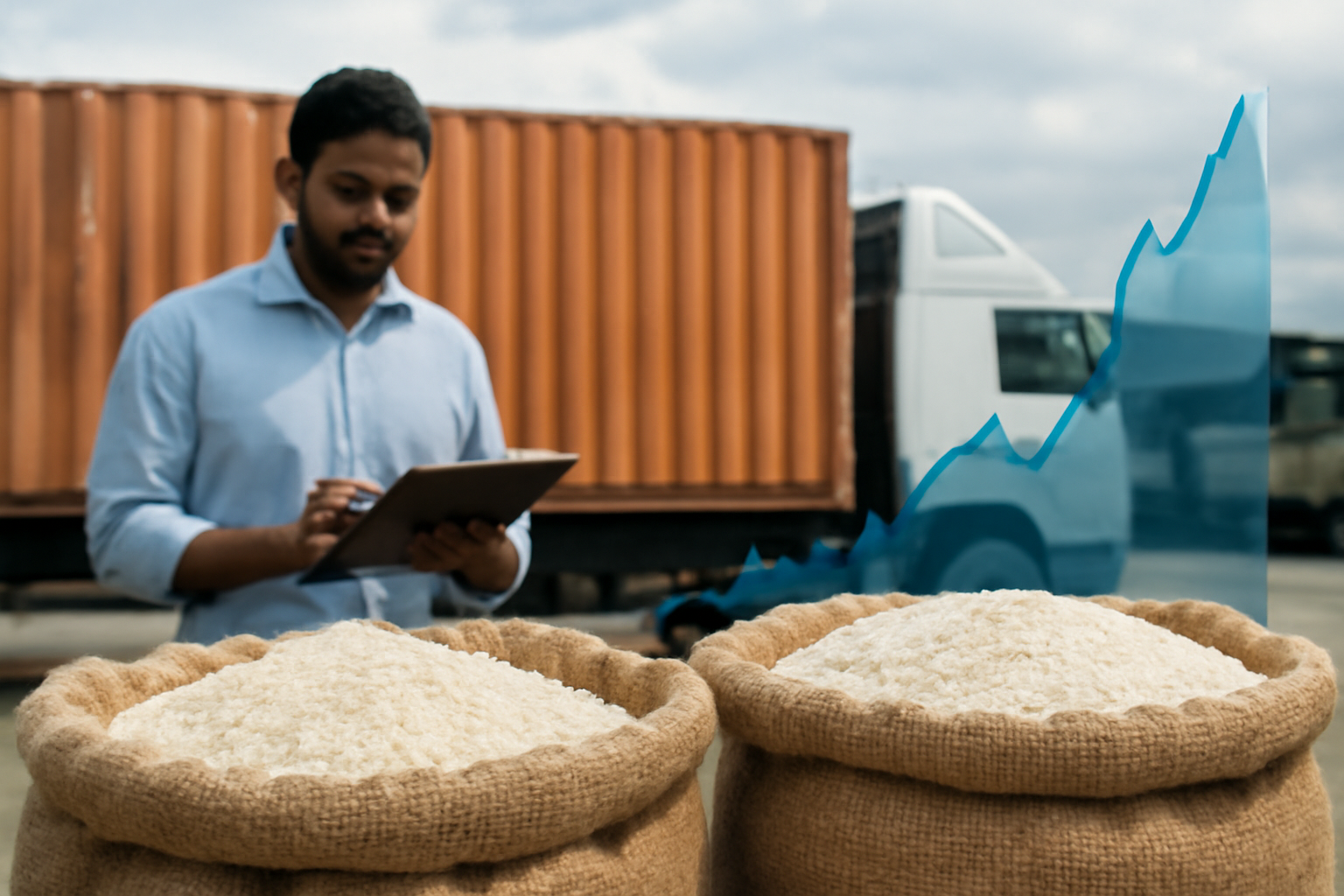
Export prices for Indian rice have risen to their highest level in a year, while Thai quotations have moved up at the same time, according to recent rice market reports. The simultaneous gain at the world's two largest export origins has renewed concern among traders and importing governments that the global rice market is entering a broader upward phase.
Indian offers set the reference price
India ships more rice than any other country, which makes its export quotations the effective reference point for the rest of the market. Non-basmati white and parboiled rice from India serves price-sensitive buyers across West Africa, East Africa and parts of Asia, while basmati grades go mainly to Middle Eastern markets. When Indian offers move, competing origins usually follow rather than lead.
The reports place current Indian export prices at a one-year high but do not specify the size of the increase, the grades involved, or the drivers behind the move. Indian quotations typically respond to a mix of domestic paddy procurement, the level of state rice stocks, the rupee exchange rate and export policy decisions, any of which can reset offers within weeks.
Thailand moves in the same direction
Thai prices rising alongside Indian prices is the detail that turns a single-origin move into a market-wide one. Buyers normally manage price risk by switching origin, moving between India, Thailand, Vietnam and Pakistan depending on who is cheapest on a delivered basis. When the two largest suppliers appreciate together, that option narrows and the entire Asian price structure resets higher.
Thailand competes mainly in white and fragrant rice and sells into Africa, the Middle East and Asia. Its offers are sensitive to the baht and to freight costs, so an origin-switching strategy that looks attractive on paper can lose most of its advantage once delivered costs are calculated.
Importers face a narrower set of options
Rice is a staple for a large share of the world's population, and import demand is relatively inelastic: households and state buyers cannot postpone purchases for long. Import-dependent markets in West Africa and Southeast Asia, including the Philippines, are the most exposed, because tender-based and licence-based buying tends to lock in prevailing market levels rather than wait them out.
For exporters, millers and paddy growers in origin countries, higher quotations improve margins, particularly where domestic paddy was bought before the move. The risk on that side is demand rationing: if prices hold at elevated levels, importers trim volumes, draw down reserves or shift part of consumption to other staples, which eventually feeds back into export volumes.
What to watch
- Export policy decisions in India, historically the single largest swing factor in the global rice trade.
- Harvest outcomes and monsoon performance in the main South and Southeast Asian producing belts.
- Thai and Vietnamese offers, which show whether the move is origin-specific or market-wide.
- Currency direction for the rupee and the baht, which changes competitiveness without any change in local prices.
- Government purchase tenders in major importing countries, which reveal how much of the increase buyers are willing to accept.
The reports available so far describe the direction of the market rather than its magnitude: they confirm a one-year high in Indian export prices and firmer Thai quotations without publishing grade-level prices or traded volumes. Until that detail appears, the scale of the move and how much of it is already reflected in signed contracts remain open questions for buyers planning their next purchasing cycle.