Heatwaves, costs and uneven demand reshape Europe’s strawberry season
Prolonged heat has disrupted strawberry quality, ripening and availability across Europe, while higher costs and uneven consumer demand are squeezing growers. Italy, the Netherlands, France and Spain illustrate how weather shocks are producing sharply different price, production and trade outcomes.
Heat creates a multi-speed European market
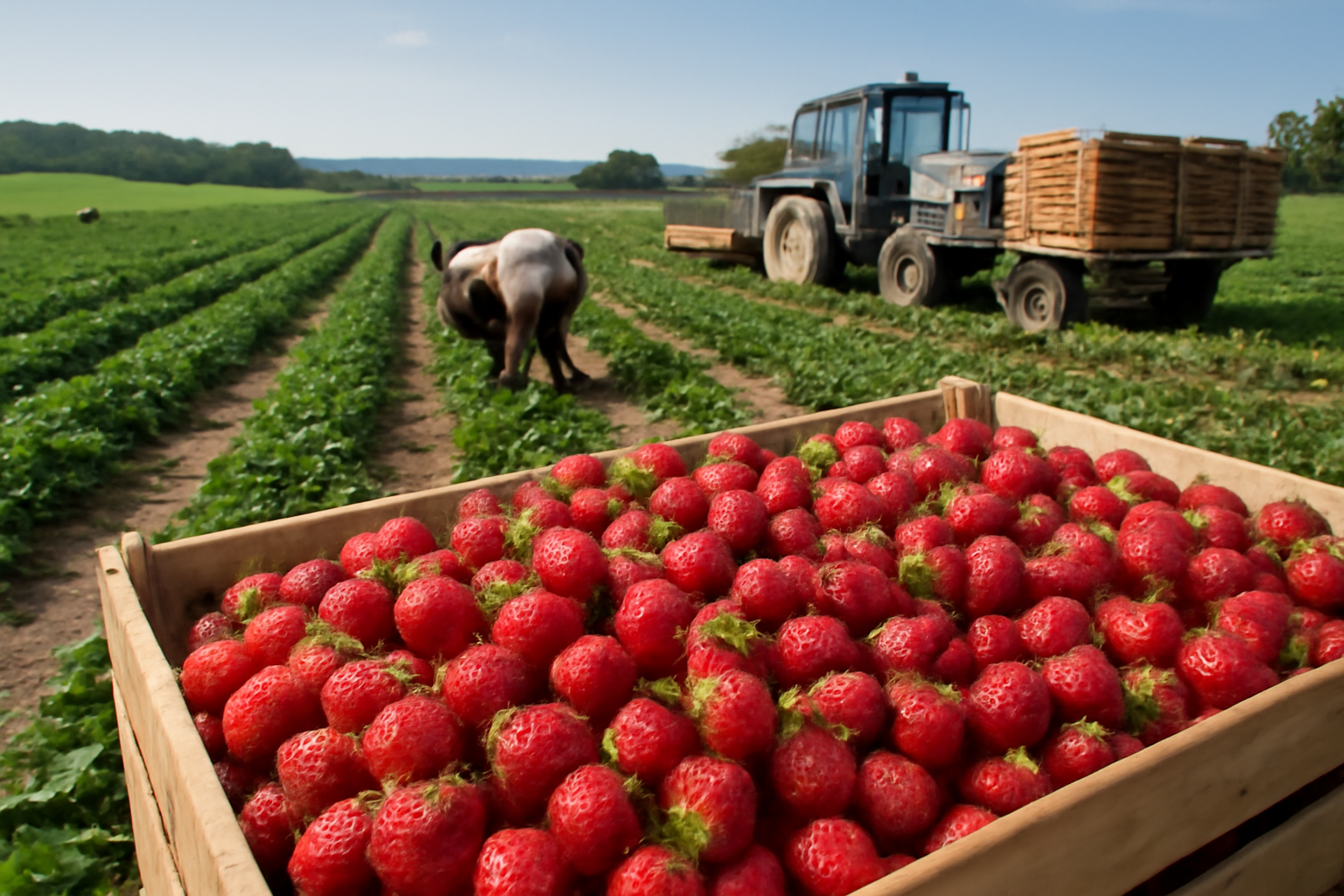
Prolonged heatwaves, rising production costs and shifting consumer demand are producing sharply different outcomes across Europe’s strawberry market. Ypaithros, citing a FreshPlaza market review, reports that high temperatures are pressuring production, fruit quality and availability, while competition from other seasonal fruit is slowing consumption in several markets. The effects vary by country and production system, leaving growers, processors and retailers to manage irregular harvest timing and less predictable commercial quality.
Protected cultivation is becoming more important as producers seek a steadier supply. Greenhouses, hydroponics and tabletop growing systems can offer greater control, but this season shows that they do not eliminate exposure to extreme heat or higher operating costs. Italy’s experience is particularly instructive: high temperatures in June affected summer crops even in mountain areas using hydroponic strawberry production. Growers reported irrigation difficulties, an approximately 10% increase in production costs and demand below expectations.
Prices diverge in Italy and the Netherlands
Despite those pressures, Italy’s average farmgate price remained stable at €5.58 per kilogram, according to Ypaithros and Gargalianoi Online. Strawberries also continued to strengthen their position in Italian consumer baskets. The stable headline price, however, must be viewed against the reported 10% cost increase, which implies tighter margins for growers unable to offset additional irrigation, energy or cultivation expenses.
In the Netherlands, heat accelerated ripening and created a temporary surplus. Prices fell by as much as €2 per kilogram before recovering quickly to around €6.50. The episode demonstrates how compressed harvesting windows can generate short-lived oversupply even when the wider season is not defined by abundant supply. Dutch investment in greenhouses and tabletop production continues, with supply stability becoming an increasingly important commercial objective.
Quality losses push French fruit into processing
France began the season with historically high production, but prolonged heat damaged fruit quality. A significant share of the crop was redirected to processing, where prices did not cover production costs. Consumption also slowed because quality problems coincided with competition from other summer fruit. For growers, the result is a double penalty: lower marketable volumes for the fresh channel and insufficient returns from fruit diverted to processors.
Germany is showing signs of market saturation after the seasonal peak, while the quality of domestic output varies substantially. Austria recorded a notably positive season, with above-average yields despite difficult weather. Switzerland’s harvest began earlier than usual, but unstable conditions subsequently affected production. These contrasts underline why retailers and traders face different supply risks even among neighboring European markets.
Spanish exports fall as North Africa adjusts
In Huelva, which produces almost all Spanish strawberries, successive storms reduced production by 3% and cut export value by 3.3%. Germany remained the leading destination for Spanish exports, followed by the United Kingdom and France. Lower volumes and export value from Spain matter beyond the domestic sector because these three markets are central outlets for Huelva’s crop and important components of Europe’s seasonal supply balance.
Outside Europe, unusually high temperatures in California continue to affect strawberry quality, although supply and prices remain relatively stable. Morocco has recorded a noticeable decline in planted area and export volumes amid production difficulties and stronger competition from Egypt. Egypt is entering the new season with reduced plantings after the previous year’s problems and faces stricter European controls on pesticide residues. Across the main producing regions, weather exposure, quality compliance and production costs are therefore determining which suppliers can maintain access to premium fresh markets and which fruit must move into lower-value channels.