Grapes, sugarcane and livestock lift Pernambuco agriculture in Brazil’s record year
Pernambuco’s grape production generated R$4.20 billion in 2025, making it the state’s most valuable agricultural product. Sugarcane contributed R$2.20 billion, while poultry, sheep, goats and dairy reinforced the state’s position as a major livestock center in northeastern Brazil.
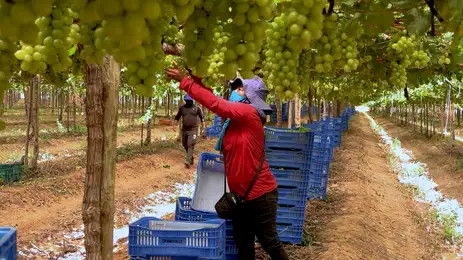
Grapes lead Pernambuco by production value
Pernambuco’s irrigated fruit industry, sugarcane fields and livestock sector supported agricultural growth in 2025, when the value of Brazilian agricultural production reached a nominal record of R$927.2 billion. Figures published by the Brazilian Institute of Geography and Statistics (IBGE) place grapes at the top of Pernambuco’s agricultural ranking by financial value.
Grape production generated R$4.20 billion in the state, according to Petrolina OFC’s account of the IBGE Municipal Agricultural Production and Municipal Livestock Production surveys. The São Francisco Valley remained the main engine of this business, combining irrigated cultivation with fruit destined for fresh consumption and wine production. Exports and grapes’ high added value helped the crop exceed the value generated by Pernambuco’s other agricultural products.
The result underlines the economic importance of irrigated fruit production in Brazil’s semiarid northeast. For growers, packers and exporters, the São Francisco Valley’s performance makes grapes a central source of farm revenue rather than simply a complementary crop. Its orientation toward fresh markets also links production closely to quality standards, packing capacity and access to domestic and foreign buyers.
Sugarcane retains the volume lead
Sugarcane remained Pernambuco’s largest crop by physical volume and generated R$2.20 billion. The crop continues to support employment and economic activity in the Zona da Mata, supplying mills that manufacture sugar and ethanol. While grapes led in value, sugarcane’s scale preserves its role in the state’s industrial agricultural base.
The distinction between value and volume shows the two different pillars of Pernambuco farming. Grapes generate more revenue through a higher-value product, while sugarcane supplies large volumes to processors. This mix gives the state exposure to fresh-fruit demand, wine production and the sugar and biofuel industries.
Livestock strengthens the state’s agricultural base
Pernambuco also retained the largest poultry flock in the Northeast and the seventh-largest in Brazil, with 68.6 million birds. Production is concentrated around the poultry center of the Agreste. The state additionally recorded 3.9 million sheep and 3.4 million goats, herds that are particularly important to economic activity in the semiarid region.
Dairy farming provides another source of livestock output. The principal milk-producing area is located in the southern Agreste, including the municipalities of Itaíba, Buíque and Pedra, and supports the state’s production of milk and dairy products. Together, poultry, small ruminants and dairy reduce Pernambuco’s dependence on a single agricultural segment.
National recovery broadens the market backdrop
Brazil’s production of cereals, pulses and oilseeds rose 18.2% as farming recovered from the effects of El Niño on the previous cycle. Harvested area exceeded 100 million hectares for the first time. Across the Northeast, agricultural production value totaled R$113.7 billion, supported by irrigated fruit centers and expanding grain and cotton production in Matopiba. Bahia led the region with R$55.5 billion.
Cotton output increased 16.4%, helping Brazil become the world’s largest exporter of the fiber, while coffee production value rose 44.7% to R$100 billion as international prices strengthened. IBGE’s R$927.2 billion national figure is measured in the current currency of each year and represents the highest nominal value in the historical series. Within that record, Pernambuco’s results show how high-value fruit, processing crops and livestock can contribute through different production and market channels.