Georgia and Azerbaijan Expand Food Shipments to Russia as Armenian Trade Faces Curbs
Georgia and Azerbaijan increased shipments of several agricultural products to Russia after Moscow began restricting Armenian goods in May. Georgian cherry deliveries rose almost 30-fold in June, while Armenia’s bilateral trade with Russia fell 20% in the first half of the year.
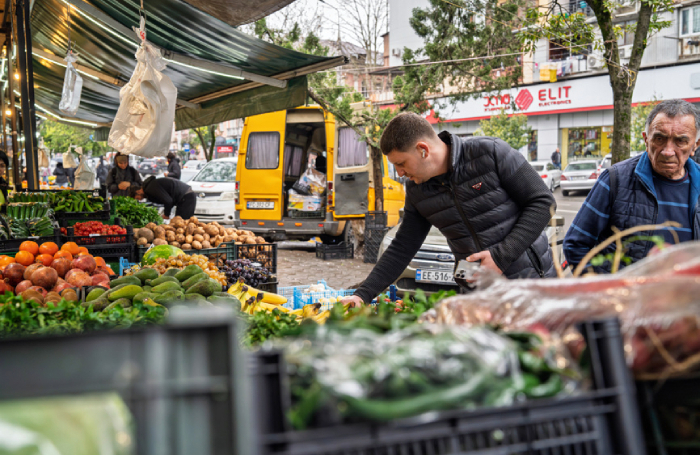
Restrictions disrupt Armenian agricultural sales
Russia began imposing restrictions and bans on imports and transit of Armenian goods in May, according to Business FM. The measures covered flowers, nuts, berries, fish, Jermuk mineral water, and wines and cognac from certain producers, although the publication said the list was not exhaustive.
Armenian fruit and vegetable exports to Russia fell almost 80-fold in May and June, according to estimates cited by Business FM. Armenia earned $364,000 from shipments to the European Union during that period, compared with $36 million a year earlier, when the goods were sent to Russia.
Agricultural producers were among the businesses most exposed. Samvel Davtyan, founder of the family farm Davtyan Farms, told Business FM that his company previously produced 70–80% of its goods for Russia and is now shipping to Singapore and Dubai.
Georgia and Azerbaijan increase deliveries
National statistics show rapid growth in several supply lines from neighboring countries. More than 95% of Georgian apple exports during the first six months of the year went to Russia. Georgian cherry and sweet cherry shipments increased almost 30-fold in June.
Azerbaijan increased tomato exports to Russia in the first half of the year, lifting exporters’ revenue by 10%. Georgia also shipped a record $1.6 million of trout to Russia in June, with Russia serving as the fish’s only foreign buyer.
A Georgian supplier of peaches, juices and fruit purées told Business FM that producers favor Russia because it is close and fresh fruit spoils quickly. Turkey has its own production, while reaching European markets takes more time. Political uncertainty is nevertheless encouraging Georgian businesses to look for additional destinations.
Substitution and re-export remain uncertain
Armenia belongs to the Eurasian Economic Union, while Georgia and Azerbaijan do not. However, many agricultural products from all three countries enter Russia without import duties. That raises the possibility that some Georgian fruit and vegetable shipments could be re-exports of Armenian produce.
Alexander Daniltsev, director of the HSE Institute for Trade Policy, told Business FM that nobody knows whether such re-export is occurring. He said the possibility exists but is not conclusive because Georgia and Azerbaijan produce the same goods themselves.
Fruitnews chief executive Irina Koziy also questioned whether Armenian restrictions were the main reason for the growth. Azerbaijan and Georgia have supplied Russia for years, she said, and Azerbaijani exports of tomatoes, berries and garden strawberries had already been expanding since the end of the previous season. Georgia has also developed blueberry production within the past few years and now ships several thousand tonnes annually.
The Armenian Statistical Committee reported that trade turnover between Armenia and Russia declined 20% in the first half of the year, while Russia’s share of Armenia’s foreign trade fell by 7%. The head of Armenia’s central bank had previously estimated that goods directly affected by the Russian restrictions represented 1.5% of gross domestic product. The figures indicate a significant shock for Armenian suppliers, but available evidence does not establish how much of Georgia’s and Azerbaijan’s growth resulted directly from the curbs.