EU moves to bring CO2 removals into emissions trading as Berlin readies €500m programme
The European Commission has proposed integrating carbon dioxide removals into the EU emissions trading system as part of this summer's ETS revision. Germany's federal budget earmarks more than €500 million for carbon removal, partly through a certificate purchase programme. Estimates of the current CDR market range from $56 million to over $9 billion, reflecting the absence of a central data source.
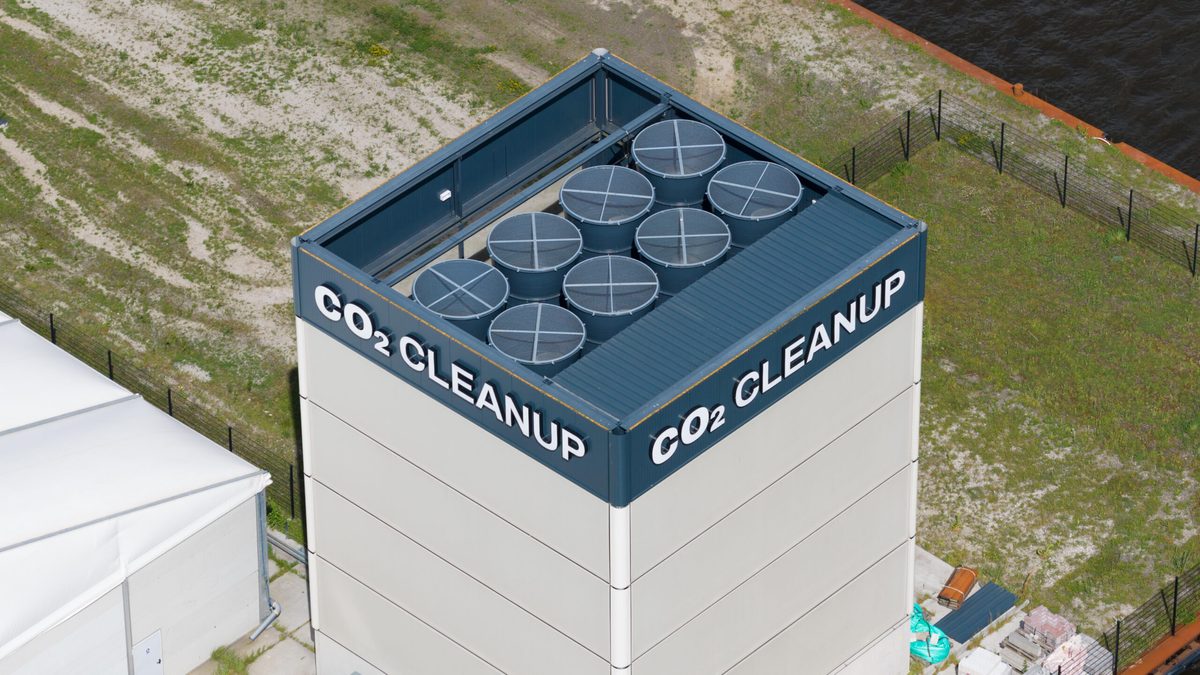
The European Commission has proposed integrating carbon dioxide removals into the EU emissions trading system as part of the ETS revision tabled this summer, a step that would connect one of the smallest and least transparent segments of the carbon economy to Europe's main compliance market. Börsen-Zeitung reported the plans, citing Stefan Schlosser, managing director of the German Association for Negative Emissions (Deutscher Verband für negative Emissionen, DVNE), speaking on the publication's “Nachhaltiges Investieren” podcast.
Carbon dioxide removal differs from carbon capture and storage in where the gas is taken from. CCS captures CO₂ at the source, typically at an industrial stack. CDR pulls it out of ambient air and stores it permanently. The methods in commercial use or under development span afforestation, biochar, enhanced rock weathering and direct air capture. According to Schlosser, roughly 40 gigatonnes of CO₂ enter the atmosphere each year, while the Intergovernmental Panel on Climate Change puts the volume of removals required by 2050 at up to 10 gigatonnes a year. Removal never substitutes for cutting emissions, he said: “That means we have to reduce massively.”
A market nobody can measure
Sizing the sector remains the central problem. The voluntary carbon market turns over around €1 billion a year worldwide on DVNE figures, against roughly €45 billion in revenue from the EU emissions trading system. Estimates of the CDR market specifically range from $56 million to more than $9 billion for 2024 and 2025 — a spread of two orders of magnitude that reflects the absence of a central data source. An EU register is intended to close that gap.
A certification framework is to provide the basis for trading, making removals measurable and standardised. Without a verifiable, standardised unit, removals cannot be set against the obligations of participants in a system that currently covers emissions only.
Berlin's €500 million and a purchase programme
Germany's federal budget provides more than €500 million for carbon removal over the coming years, Börsen-Zeitung reported. Part of that money is intended to reach the market through a purchase programme for removal certificates. The cabinet is also expected to adopt a long-term strategy setting target volumes, which would be given statutory status and fill gaps in the German climate protection act. Schlosser said it is explicitly not “a paper that then describes in vague terms how things should one day be”.
Work by DVNE together with Boston Consulting Group puts the global potential at €1 trillion in gross value added per year, of which €70 billion would fall to Germany. Schlosser called CDR “definitely not a flash in the pan” and pointed to roles for banks in financing projects and for insurers in covering the risks.
Delivery risk and buyer concentration
Those risks are substantial. Sequestered carbon can escape its storage. Young suppliers can fall short of delivery commitments. Asked about greenwashing, Schlosser said it cannot be ruled out entirely, “as with so many risks”.
The market also depends heavily on a handful of large buyers. Microsoft paused new contracts in the spring — the company had “simply put the brakes on to some extent”, in Schlosser's words — while Google signed a large offtake agreement in mid-September. Scaling the sector will require growth capital, Schlosser said, adding that Germany has good starting conditions but must not fail at the scale-up stage as it has in other areas.