EU Auditors: Illegal Cigarette Plants Now Operate Inside the Bloc and Relocate Every Two to Four Months
A new European Court of Auditors report finds that organised crime has moved cigarette manufacturing inside the European Union, running compact plants that relocate after two to four months. Belgium recorded 81 to 100 detected illegal production sites in 2023-2024, ahead of Poland and Germany. The European Commission estimates illegal products made up about 8.8 percent of EU cigarette consumption in 2023.
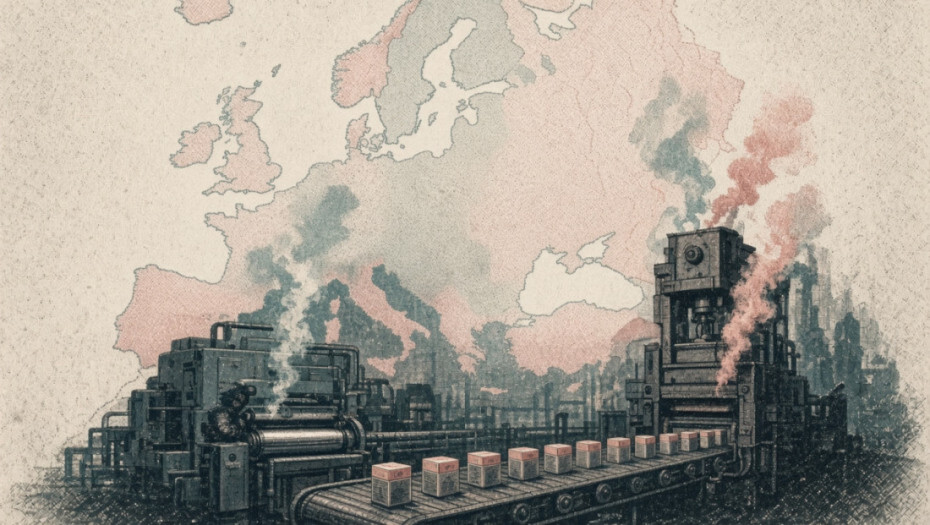
Organised crime groups supplying Europe with illegal tobacco have largely abandoned long-distance smuggling and moved manufacturing inside the European Union, according to a new report by the European Court of Auditors summarised by euronews.rs. The change undercuts an enforcement model built around intercepting consignments at the bloc's external borders.
For years the European strategy rested on a single assumption: contraband cigarettes were produced outside the EU, crossed a border, and were then distributed on the internal market. The auditors conclude that the criminal business model has changed while the European response has not adapted quickly enough. Efforts remain fragmented, cross-border cooperation shows serious gaps, and reliable data on the real size of the illegal market is still missing.
Smaller plants, built close to the consumer
Rather than shipping large volumes of finished cigarettes from non-EU countries, networks now assemble smaller and more flexible production units near the markets they intend to supply. As euronews.rs reports, these are no longer improvised workshops. The sites are equipped with modern machinery, specialised operators, heavy-duty power generators, video surveillance systems and professional sound insulation.
The plants can run 24 hours a day and frequently split the production process across several separate buildings, so that a single police raid cannot dismantle an entire network. Their operating life can be as short as two to four months: they are installed, produce millions of cigarettes, and move to another location before the authorities have managed to map the chain.
Belgium leads detections
Figures cited in the European report place Belgium at the top of the EU for detected illegal production sites in the 2023 to 2024 period:
- Belgium: 81 to 100 sites
- Poland: 61 to 80 sites
- Germany: 21 to 40 sites
A case in Spain in 2023 shows the volumes involved. Authorities seized around three million packs of counterfeit cigarettes in an operation connected to a criminal network active in six further countries. The pattern of distributed production means that closing one site does not necessarily interrupt output, because other stages of the process continue elsewhere.
Shorter chains after the shift from Ukraine
In parallel, research by the Council of the EU found that criminal networks have relocated part of their production from Ukraine into the Union. The economics are straightforward: a shorter supply chain, fewer borders to cross, a far lower risk of seizure, and faster access to the end consumer. Manufacturing inside the bloc also removes the need to move bulky finished goods through customs checkpoints, which is where enforcement resources have historically been concentrated.
A market nobody can size precisely
The European Commission estimated that illegal products accounted for about 8.8 percent of total cigarette consumption in the EU in 2023. Beyond conventional cigarettes, the illegal market in other tobacco products is put at 21,000 tonnes. The difficulty of calculating the true scale of the trade is one of the central criticisms in the auditors' report, because enforcement priorities and resources depend on figures that remain uncertain.
Criminal groups are also following changes in consumer habits. They are no longer confined to conventional cigarettes and are expanding quickly into heated tobacco and liquids for electronic cigarettes. Those newer categories already account for roughly 13 percent of the value of the EU's total legal tobacco market, which makes them an increasingly attractive target for counterfeit and untaxed supply.
The outcome is a continuous game of cat and mouse. The more European authorities tighten controls at the external borders, the more criminal networks simply reduce their need to cross them. The illegal cigarette sold in Europe no longer has to travel a long distance; increasingly it is produced a few kilometres from the consumer who will eventually buy it.