EU egg imports jump 82.2% as prices fall, raising pressure on major producers
EU egg and egg-product imports rose 82.2% in the first half of 2026, while the average Class A egg price was 8.2% below a year earlier in week 40. Spain remained the bloc’s third-largest producer, with 962,000 tonnes of reference production in 2024.
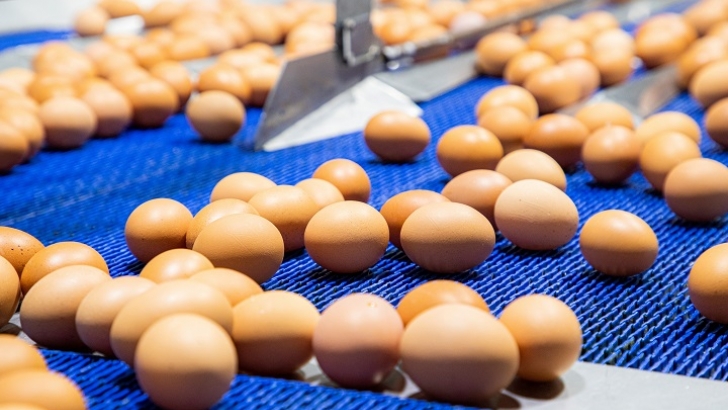
Imports accelerate as egg prices retreat
European Union imports of eggs and egg products from non-EU countries rose sharply in the first half of 2026, adding competitive pressure to a market where prices remain high by historical standards but below last year’s level. AgroNews Castilla y León, citing the European Commission’s Eggs – Market Situation Dashboard, reported that imports reached 144,300 tonnes of egg equivalent between January and June, up 82.2% from 79,207 tonnes in the same period of 2025.
The average EU price for Class A eggs at packing stations stood at €247.53 per 100 kilograms in week 40 of 2026, according to the report, which was updated on October 7. That was 8.2% lower than a year earlier. Prices had increased during the opening months of 2026, corrected between May and August and subsequently recovered. Despite the year-on-year decline, quotations remained above the 2021-2025 historical average.
The Commission’s report does not establish a direct causal relationship between increased imports and the price decline. The two trends nevertheless matter for EU producers because rapidly expanding external supply is entering a market where domestic quotations have already eased from 2025 levels.
Ukraine and Turkey lead supply growth
Ukraine remained the EU’s largest non-member supplier, shipping 72,635 tonnes in the first six months of 2026, compared with 58,669 tonnes a year earlier. Turkey recorded the largest percentage increase: its deliveries climbed from 1,775 tonnes to 37,390 tonnes, a rise of 2,006.5%. Shipments from China increased 596.6%, although their volume remained below those of Ukraine and Turkey.
EU exports moved far more slowly. Sales to non-EU markets reached 202,464 tonnes of egg equivalent in January-June 2026, against 200,226 tonnes in the corresponding period of 2025, an increase of 1.1%. Switzerland became the leading destination, overtaking the United Kingdom. Shipments to the UK fell 18.5%, while those to Japan declined 8.4%.
The bloc still recorded a positive external trade balance of 58,164 tonnes in the first half. EU egg prices were also well above reference quotations in Brazil, the United States and India, although the Commission cautioned that differing market and pricing methodologies prevent a like-for-like comparison.
Spain retains third place in EU production
Spain remained the EU’s third-largest egg producer, behind France and Germany. Its reference output was 962,000 tonnes in 2024, about 14% of total EU production of 6.664 million tonnes, including eggs for consumption and hatching. France produced slightly more than 1 million tonnes, while Germany recorded 970,000 tonnes, only 8,000 tonnes more than Spain.
Declared Spanish laying-hen capacity reached 47,223,460 places in 2025, or 11.8% of the EU total. Alternative systems accounted for 40.2% of Spanish capacity, leaving a comparatively large role for enriched cages. Their share was only 0.7% in Germany and 31.1% in France.
Across the EU, declared maximum capacity totalled 399.8 million laying hens. Cage-free systems represented 257.8 million places, while enriched cages accounted for 142 million. The combination of rising imports, uneven national production models and continued conversion toward cage-free housing will shape costs and competitive positioning for producers, processors and buyers across the European egg market.