Crémant sales up 58% since 2016 as French producers warn of foreign imitations
France's eight crémant regions sold about 122.9 million bottles in 2025, 58% more than in 2016, against a shrinking overall wine market. In Burgundy, crémant sales rose 6.5% over 12 months while red wine fell 4.9%. The FNPEC says producers in Italy, Germany, Austria and Eastern Europe are using the crémant name without meeting the EU production rules.
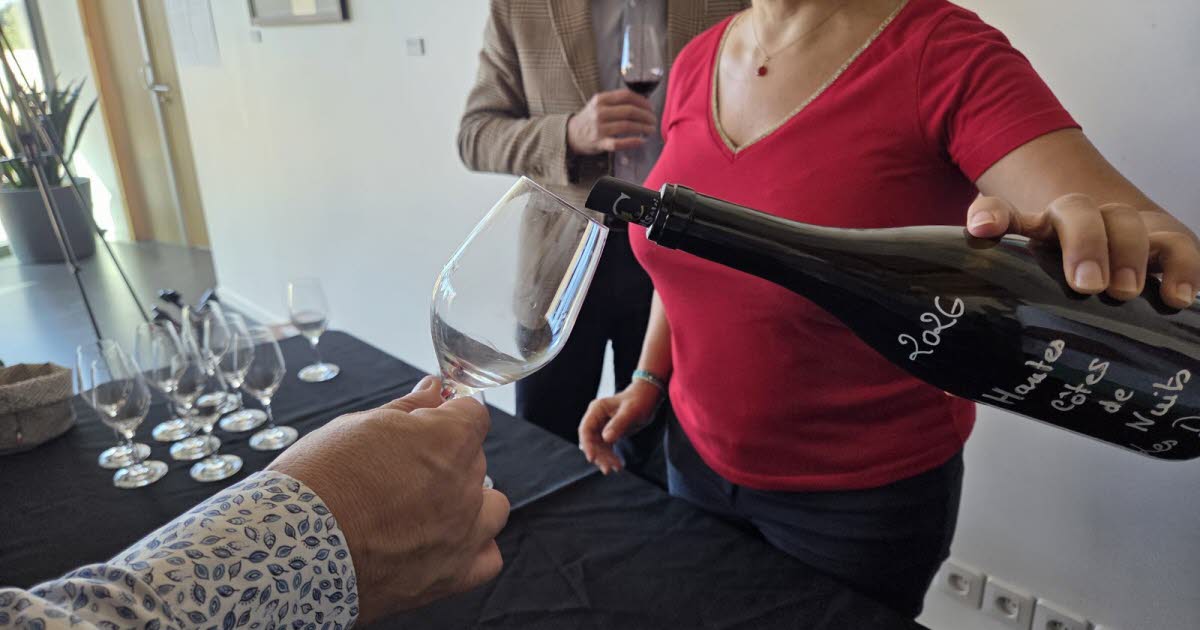
French crémant producers sold about 122.9 million bottles in 2025, 58% more than in 2016, even as the wider wine market contracted. The Fédération nationale des producteurs et élaborateurs de crémant (FNPEC) published the figures alongside a warning that producers in Italy, Germany, Austria and Eastern Europe are putting the crémant name on bottles that do not meet the European rules behind it, BFMTV reported.
Growth concentrated in one category
The volume comes from France's eight crémant regions — Alsace, Bordeaux, Bourgogne, Die, Jura, Limoux, Loire and Savoie. Growth has not slowed with scale: each of the past two years delivered annual growth of 7%. France remains the largest single market, but exports now account for 43% of total volumes, with demand described by the FNPEC as sustained in the United States, Canada, the United Kingdom and Germany.
The expansion is running against the direction of the rest of the category. It is also reshaping vineyards: FNPEC president Dominique Furlan, a winegrower in Bordeaux, operates in a region where the share of plantings devoted to crémant increases every year.
Burgundy shows the divide
Regional figures reported by Le Bien Public, drawn from the Comité des vins de Bourgogne, quantify the split. Between the end of July 2025 and the end of July 2026, bottled sales of still Burgundy wines fell 1.3%, and stocks dropped 2.8%.
- Still wines: sales down 1.3%, stocks down 2.8%
- White wines: sales up 0.4%, at 116 million bottles
- Red wines: sales down 4.9%, with Côte-d'Or grands crus down 12%
- Crémant de Bourgogne: sales up 6.5%, stocks up 0.9%
The white wine gain is narrower than it looks. Laurent Delaunay, co-president of the Comité des vins de Bourgogne, called it a growth «in trompe-l'œil», resting on the regional Bourgogne and Mâcon appellations plus Chablis and Petit Chablis, while other whites are in retreat. Growth, he said, is in the most affordable whites, and it is coming from abroad: exports rose 4.3% inside the European Union and 1.9% outside it, while the French market fell 1.6%.
Red wine offers no such ambiguity. The 4.9% decline covers every appellation, and even Côte-d'Or grands crus, in principle shielded by scarcity and prestige, lost 12% over the period, according to the Comité des vins de Bourgogne. The French market accounted for most of it, down 7.6% against 0.7% on export. Delaunay attributed the fall to global disaffection with red wine, a run of small harvests and weaker purchasing power. Crémant de Bourgogne moved the other way, adding 6.5% and lifting its share to 17% of the vineyard's bottled sales volumes, against 12% in 2021.
The rules behind the name
France, Belgium and Luxembourg are the historic producers of crémant. Three conditions for using the name were written into EU regulation in 2009: production by the traditional method, manual harvesting, and attachment to a defined region, which allows the wine to form a protected designation of origin (PDO). Since 2024 the French sector has recorded growing interest from producers in Italy, Germany, Austria and Eastern Europe, and the FNPEC is calling for vigilance so that all operators respect the same quality requirements as defined at European level.
The federation is not claiming exclusivity. «We are not the owners of the term crémant. But it matters that all producers wishing to use it respect these production conditions», it said. Representatives report having to take «educational steps» with German and Italian producers that had placed the word crémant on their bottles without meeting all the conditions, or had folded it into a set of specifications with no dedicated PDO. «The Italians and the Germans have heard that crémant sells», Furlan said. «They just add a sticker marked crémant on their bottle and it can boost their sales. On that we do not really agree.»