China’s sustainable palm oil policies open opportunities for Indonesian producers
China’s green-development policies and expanding sustainable sourcing commitments could create additional demand for certified Indonesian palm oil. Certified sustainable palm oil accounted for almost 12% of China’s national palm oil consumption in 2024, according to InfoSAWIT.
Green policies support certified palm oil demand
China’s growing commitment to green development is creating a larger potential market for certified sustainable palm oil and new opportunities for producing countries, particularly Indonesia. InfoSAWIT reported that demand for raw materials meeting sustainability standards is expected to increase as China begins implementing its 15th Five-Year Plan in 2026.
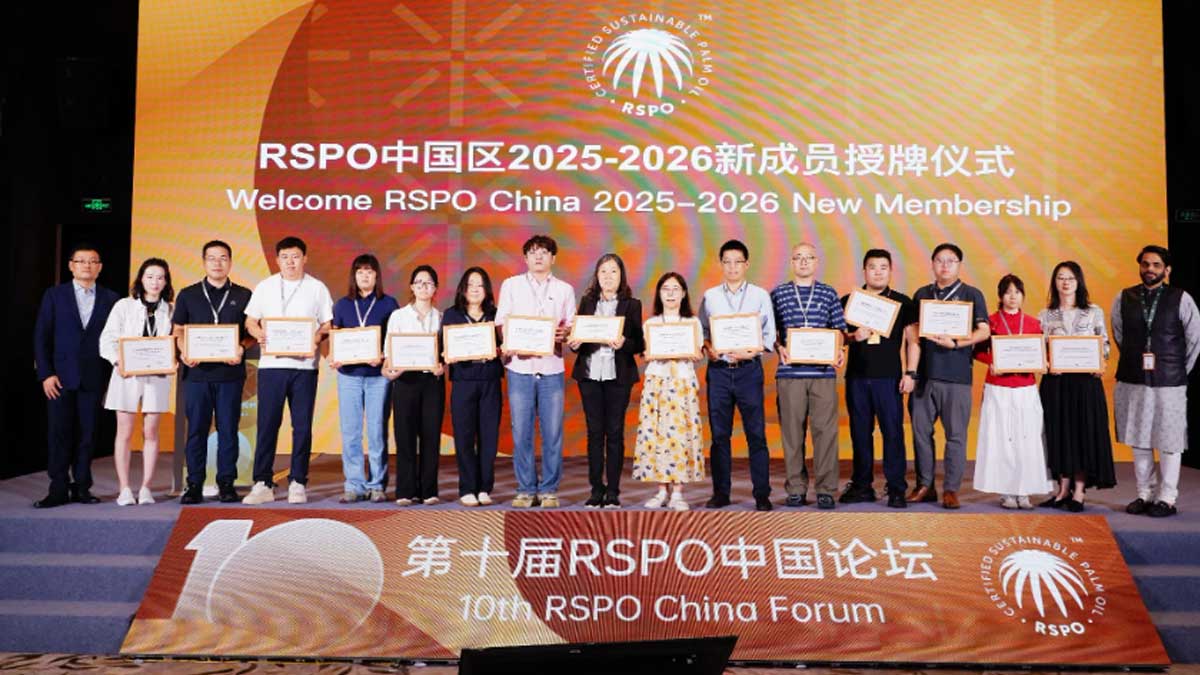
The policy direction was a central topic at the 10th RSPO China Forum, held in Shanghai on 3 July 2026. The event marked more than a decade of work by the Roundtable on Sustainable Palm Oil to encourage adoption of sustainable palm oil in China, which InfoSAWIT described as the world’s largest palm oil-consuming country. RSPO Chief Executive Officer Joseph D’Cruz said China was entering a new phase in its transition toward a green economy. Its purchasing policies and procurement decisions could therefore have a substantial effect on the development of global sustainable palm oil supply chains.
Finance and procurement enter the supply chain
Several Chinese policy measures introduced during 2026 could support this market. The 15th Five-Year Plan advances the “Beautiful China” development theme, while the government has established an Ecological Environment Code as a new legal foundation for environmental protection. China has also launched a Green Finance-Supported Project Catalogue that broadens access to green financing across the palm oil value chain, covering production, trade and consumption.
Xu Yingming, director at the Chinese Academy of International Trade and Economic Cooperation under China’s Ministry of Commerce, told the forum that green trade could strengthen economic competitiveness while supporting climate-change mitigation. RSPO plans to deepen cooperation with Chinese industry through greater member participation, the integration of sustainability principles into procurement and investment policies, and broader strategic partnerships addressing regulatory changes and international market requirements.
Certified consumption reaches 550,000 tonnes
China had more than 540 RSPO members and 510 certified supply-chain facilities by 2026, according to figures reported by InfoSAWIT. Chinese consumption of Certified Sustainable Palm Oil reached approximately 550,000 tonnes in 2024, representing almost 12% of total national palm oil consumption. The figures indicate that certified material has gained a measurable position in the market, although most palm oil consumed in China remained outside the reported certified volume.
Lifeng Fang, RSPO’s head of China market transformation, said responsible procurement practices could strengthen the resilience of global palm oil supply chains and expand demand for certified products. Elaine Chan, head of climate change and reporting for group sustainability at SD Guthrie, said sustainable palm oil could contribute to China’s target of reaching peak carbon emissions in 2030 through regenerative agriculture, biodiversity conservation, supply-chain transparency and integrated decarbonisation strategies. For Indonesia, described by InfoSAWIT as the world’s largest palm oil producer, stronger Chinese demand offers a potential route to wider market access and higher-value certified exports in Asia. Capturing that opportunity will depend on producers and traders being able to document compliance, maintain certified supply chains and align their products with Chinese procurement and financing requirements.