Chile activates new agreement to expand fresh fruit exports to China
Chile has activated a new agreement intended to increase shipments of fresh fruit to China, lu17.com reports. The outlet describes it as the result of technical negotiations aimed at optimising logistics and strengthening Chilean competitiveness in the Asian market. No effective date, covered species or target volumes have been made public.
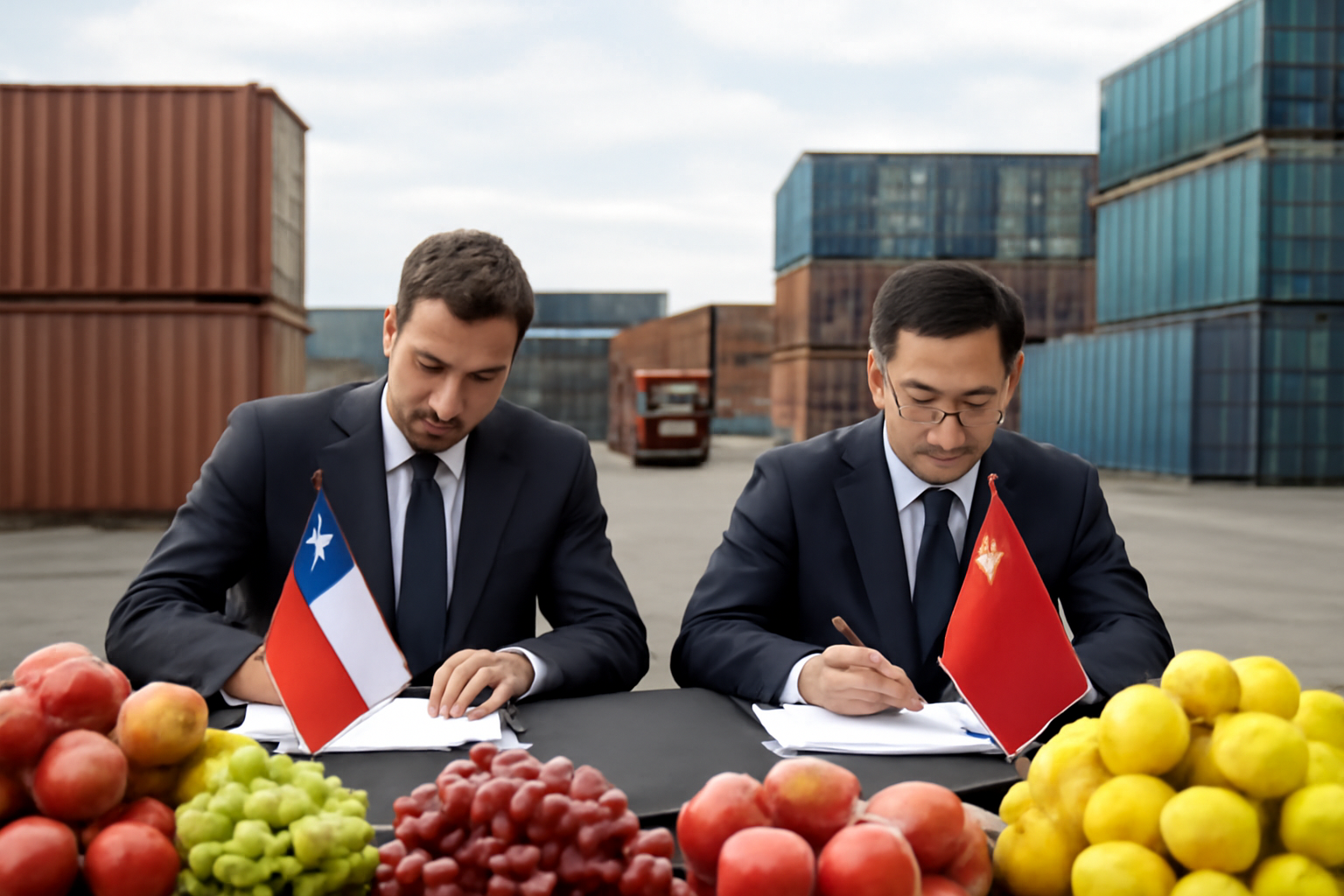
A technical agreement aimed at the Chinese market
Chile has activated a new agreement intended to expand shipments of fresh fruit to China, according to lu17.com. The outlet describes the arrangement as the outcome of technical negotiations, with the stated aim of optimising logistics processes and strengthening the competitiveness of Chilean fruit in the Asian market.
As reported, the measure is an adjustment to how trade is handled rather than a tariff change or the first-time opening of the market to a new product. lu17.com frames it around process — the handling, movement and clearance of consignments — which places it in the category of trade facilitation. Agreements of that type rarely carry a headline figure, but they change the operating conditions under which every box moves.
Logistics is where the margin sits
For a southern-hemisphere supplier, the route to China is long and almost entirely maritime, and fresh fruit is a perishable cargo whose value falls with every day in transit. Competitiveness on that lane is measured less in landed cost per box than in the share of a consignment that arrives in sellable condition. Procedures that cut dwell time at origin or destination, or that reduce how often a container is opened and re-cooled, feed directly into arrival quality and therefore into the price the fruit realises at wholesale.
That is the lever the report points to. Exporters control orchard practice, packing standards and vessel bookings; they cannot unilaterally change inspection sequences, documentary requirements or the rules governing release at the port of entry. Bilateral technical agreements are the instrument through which those steps are modified, which is why the trade treats them as commercially material even when no volume target is attached.
What the reporting does not specify
Key operational details are absent from the available coverage. lu17.com does not state:
- the date the agreement takes effect, or the period it covers;
- the agencies or ministries that concluded it;
- which fruit species or producing regions fall within its scope;
- any target volume or value, or an expected reduction in transit or clearance time.
Until an operating protocol is published, those gaps leave exporters, importers and freight operators without the detail needed to build the agreement into shipping programmes for the coming campaign.
What the trade will watch
The first practical indicator will be documentation: whether Chilean shippers receive revised instructions on inspection, certification or cold-chain handling ahead of the next export season, and whether Chinese importers see matching changes at the point of entry. Process agreements show up in paperwork before they show up in volumes.
The second is performance at destination — rejection rates, the time between berthing and release, and the condition of fruit reaching wholesale markets. Those numbers are compiled by exporter associations, port authorities and importers rather than announced in bilateral statements, and they are the measure by which the arrangement will be judged. A third open question is scope: whether the agreement covers the fresh fruit basket as a whole or applies only to specific products, since that determines how widely the benefit reaches Chilean growers and how much of the export programme it can realistically affect.